Saturday 6 December 2025
We’ve left Canberra and are now unwinding at the Sydney Rydges by the international terminal. We like to come up the day before we fly so the trip begins at a relaxed pace. Our Qantas flight is scheduled for midday, so we’ll stroll over to check‑in at about nine in the morning.
This evening we wandered over to the terminal and had dinner at Grand Cru. The food at the Rydges is decent, though a little pricey for what’s on the menu.
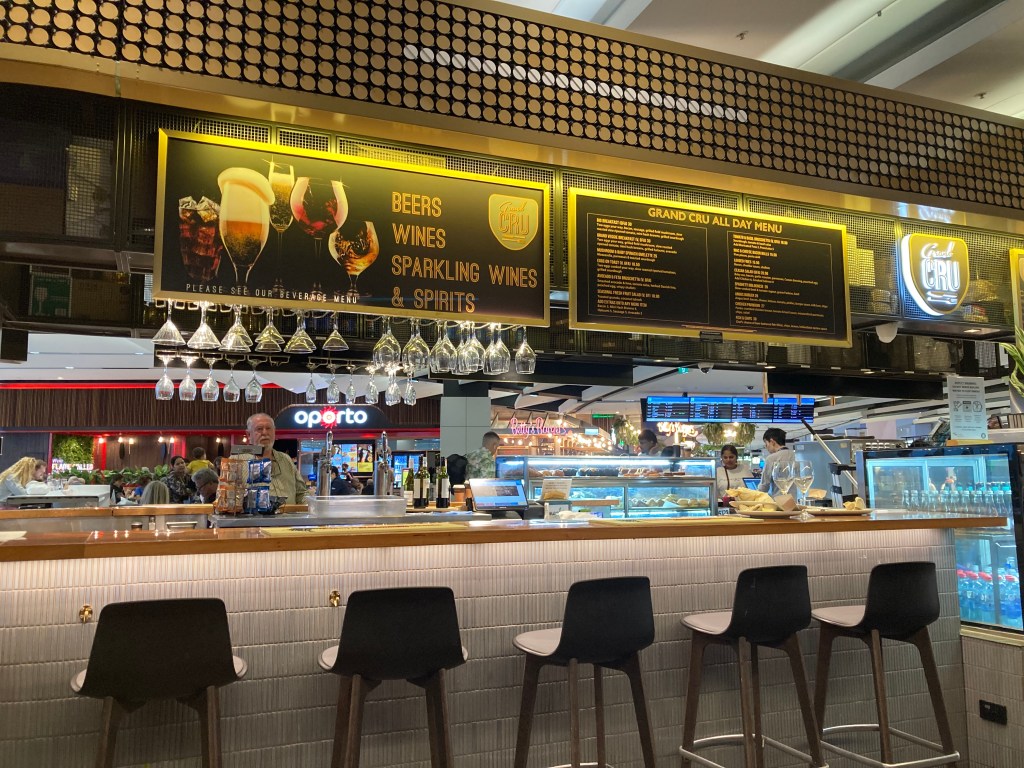
We enjoyed a lovely dinner and some fine Pinot Grigio wine. Who says you can’t get great food in an airport. Prices were very good as well; an added bonus.
Sunday 7 December 2025
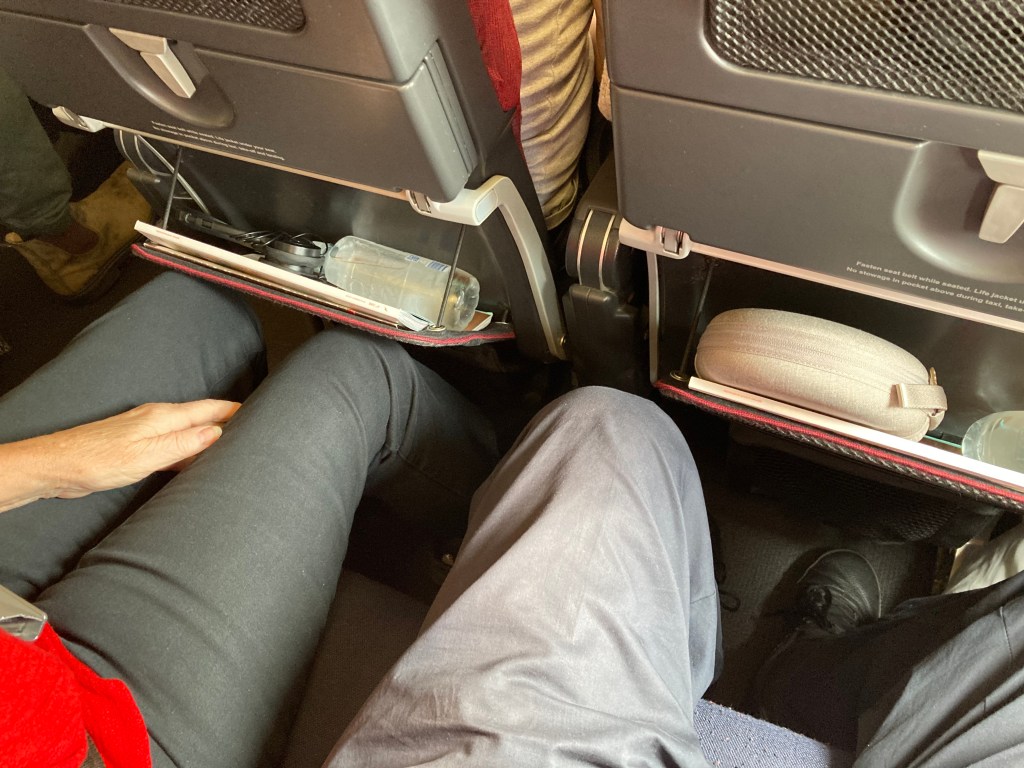
We figured that, since it was only a daytime hop to Tokyo, we’d make do with Qantas economy. The seats were packed in so tightly that moving was almost impossible, and being wedged in like that for hours was far from enjoyable. As the photo shows, legroom was in very short supply.
The ten‑hour flight certainly felt long, though the food was a definite highlight. Everything was well prepared, hot, and genuinely tasty. Lunch was served about two hours after take‑off, and dinner arrived roughly an hour before landing. For the first couple of hours, however, all service was suspended due to moderate turbulence with occasional severe patches. The captain came over the intercom to explain that every aircraft in the region was experiencing the same conditions. At one point I could hear what sounded like rain hitting the fuselage, but given our altitude it must have been ice. We were flying through stratus cloud for several hours, which explained the bumps. Eventually the turbulence eased and the rest of the flight was pleasantly smooth.
We touched down at Haneda twenty minutes ahead of schedule. Even with the travelators, it was still a fifteen‑minute walk from the aircraft to immigration.
Immigration itself was an experience. You can complete the immigration and customs process online before travelling, which I had done. In theory, you then receive a QR code confirming your registration. I got the “registration successful” message but no QR code. After spending about fifteen minutes trying—unsuccessfully—to retrieve one from the machines provided for passengers in the same situation, we gave up and filled out the manual forms. Once that was done, the actual clearance through immigration and customs was quick and easy. Lesson learned: when travelling to Japan, make sure you have that QR code.
Our luggage appeared on the carousel fifteen minutes later, and from there it was straight through customs and on to the hotel. We’re staying four nights at the Royal Park Hotel at Tokyo Haneda Airport. It’s directly accessible from the departure level on Level 3—just one elevator ride up and a five‑minute walk. If you’re heading there, go to check‑in bay “N” on the departures level and follow the green signs. The hotel also offers an airside option for passengers transiting through Haneda, which is very convenient.
We chose this hotel because our next destination is Sapporo in Hokkaido, and our flight departs from Haneda. Getting into Tokyo from here is simple thanks to the monorail—an easy twenty‑minute ride that connects to the Yamanote Line. The Yamanote Line runs above ground in a loop around Tokyo, taking about an hour to complete the full circuit.
Once we were checked in, we headed down to the restaurant for a wine for Maree and a beer for me—just what we needed to unwind before calling it a night.
Monday 8 December 2025
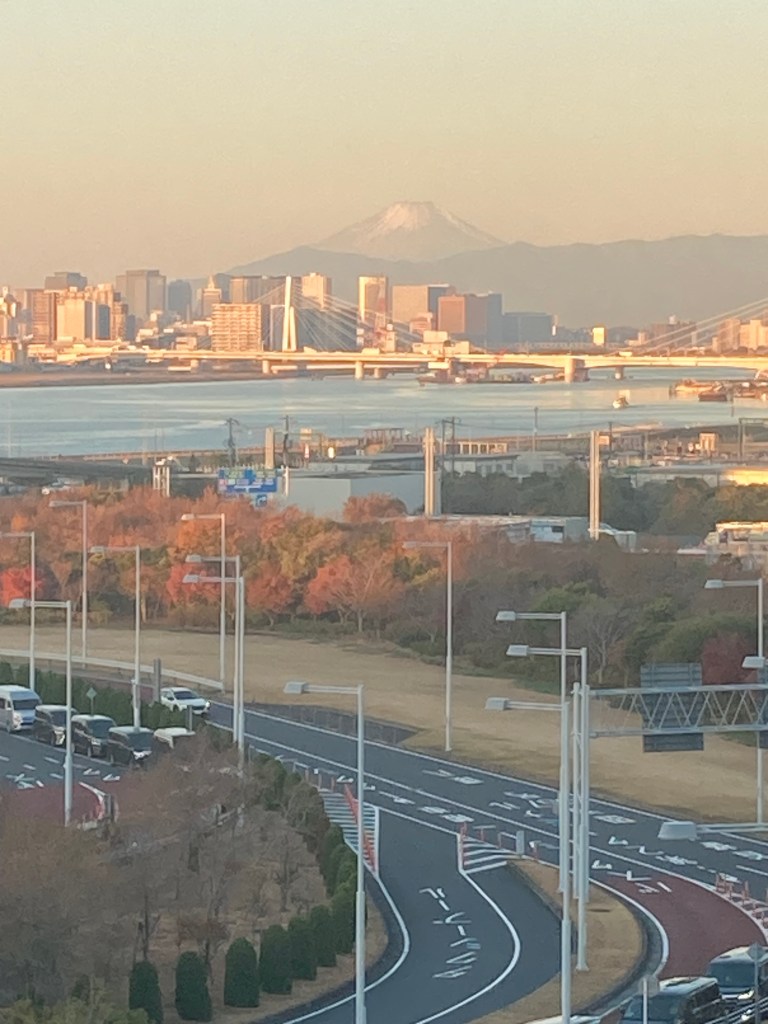
This morning we awoke to a nice view of Mount Fuji in the distance from the hotel window. It isn’t often that you get a great view of Fuji without a ring of cloud around the top. So I took a photo through the window which hasn’t turned out too bad.
We left the hotel around 09:00 and made our way to Harajuku, home to one of the area’s main shopping streets. Back in the 90s, Omotesando was dotted with charming small boutiques, but three decades have transformed it completely. Today, the street is lined with major luxury brands—Rolex, Louis Vuitton, Giorgio Armani, Fendi, and plenty more.
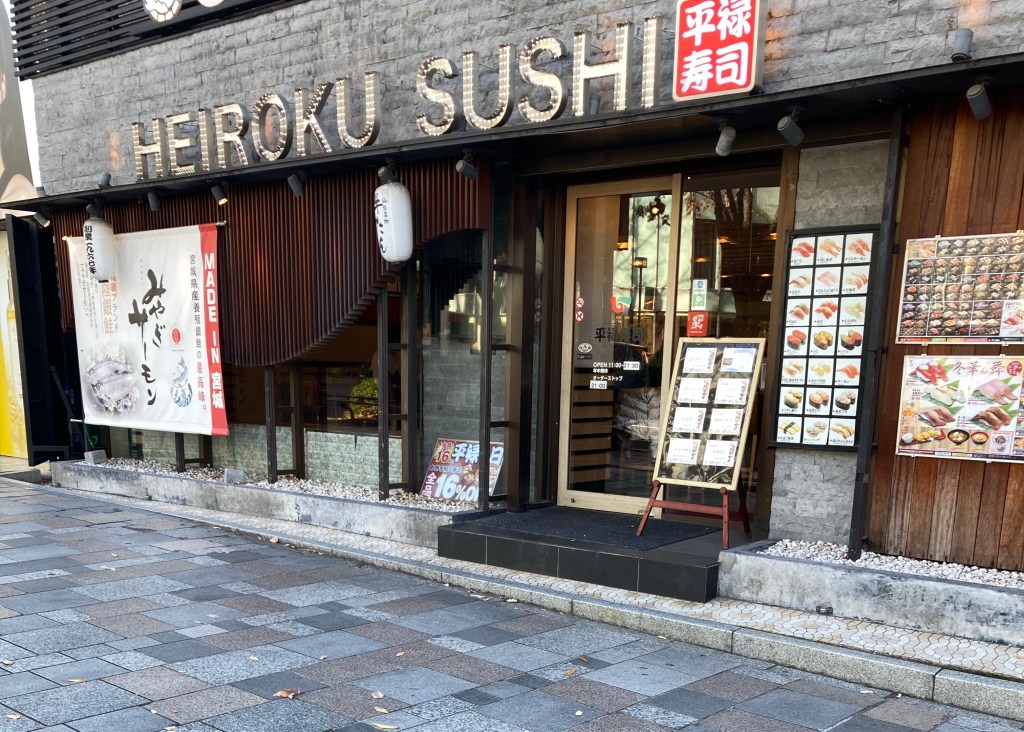
Amid all the high-end storefronts, one thing caught us off guard: a tiny conveyor-belt sushi bar tucked between the designer labels. As we got closer, we realised it was the very same place we used to visit regularly during our posting from 1994 to 1998. The staff were new, naturally, but the restaurant itself was exactly as we remembered. So we sat down for lunch—and the food was every bit as good as it was thirty years ago.
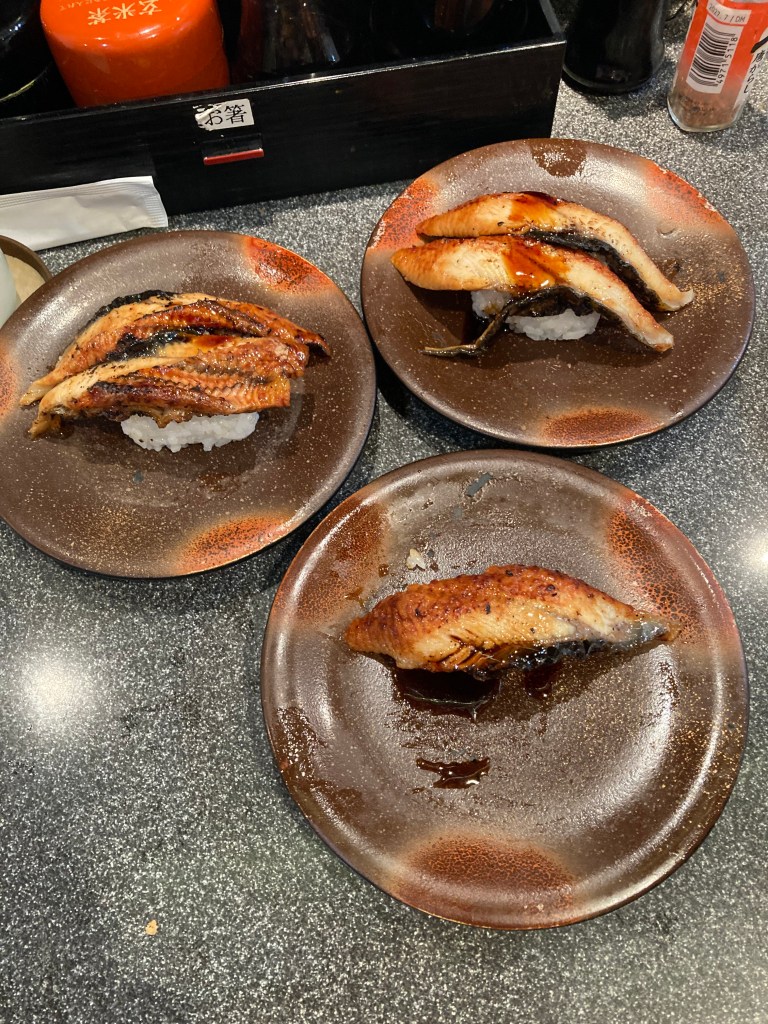
After lunch we wandered around Harajuku for a while and then returned to the hotel for a rest. My son and his partner are flying up to Tokyo today to join us so we want meet then on arrival before they head off to their accommodation in the Ginza.
So we decided to have dinner at one of the airport’s restaurants while we waited for their flight. They have some really good traditional Japanese restaurants at Haneda airport so we were not disappointed with the choice we made.
As we travelled on the monorail from Hamamatsucho back to Haneda, I took some photos of the scenery during the twenty minute journey. I have attached several below.
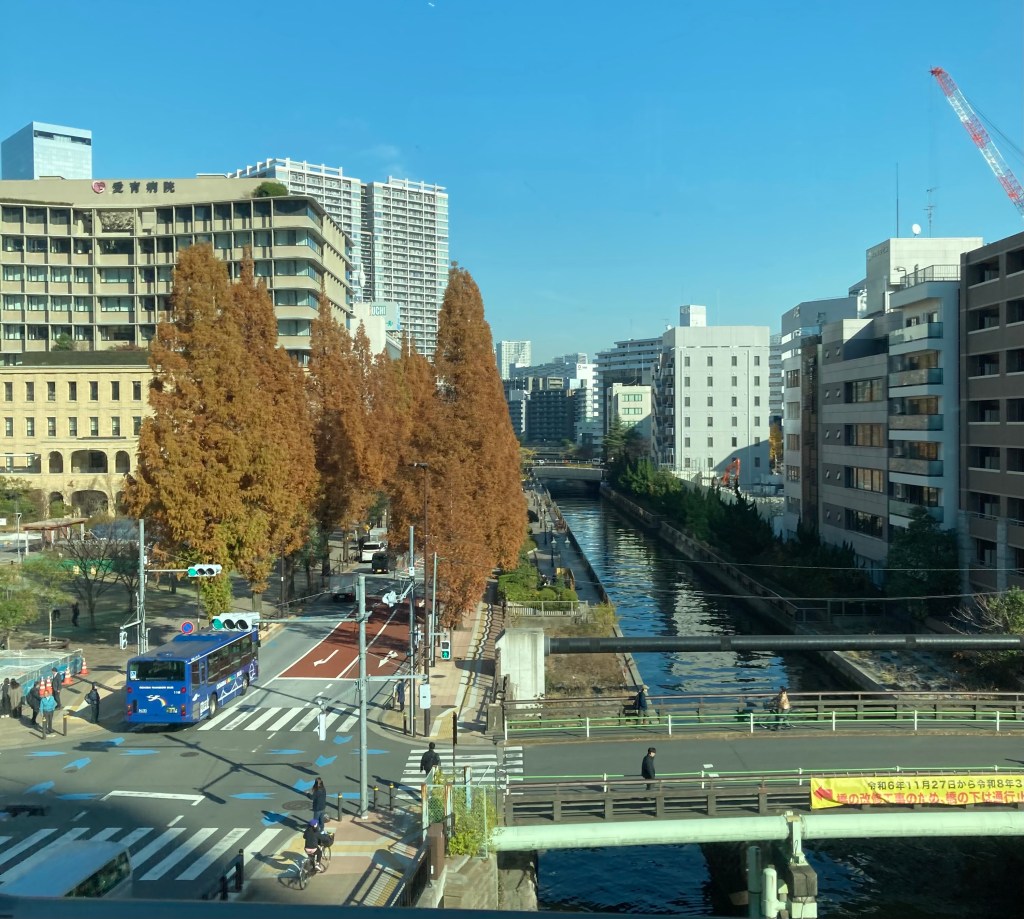
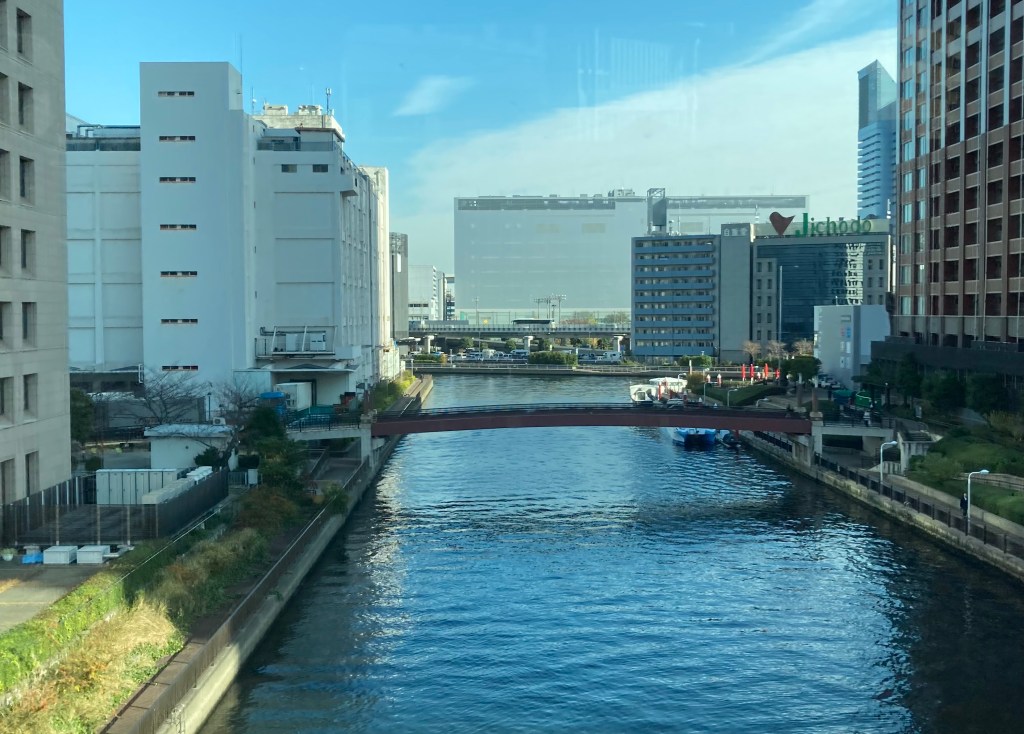
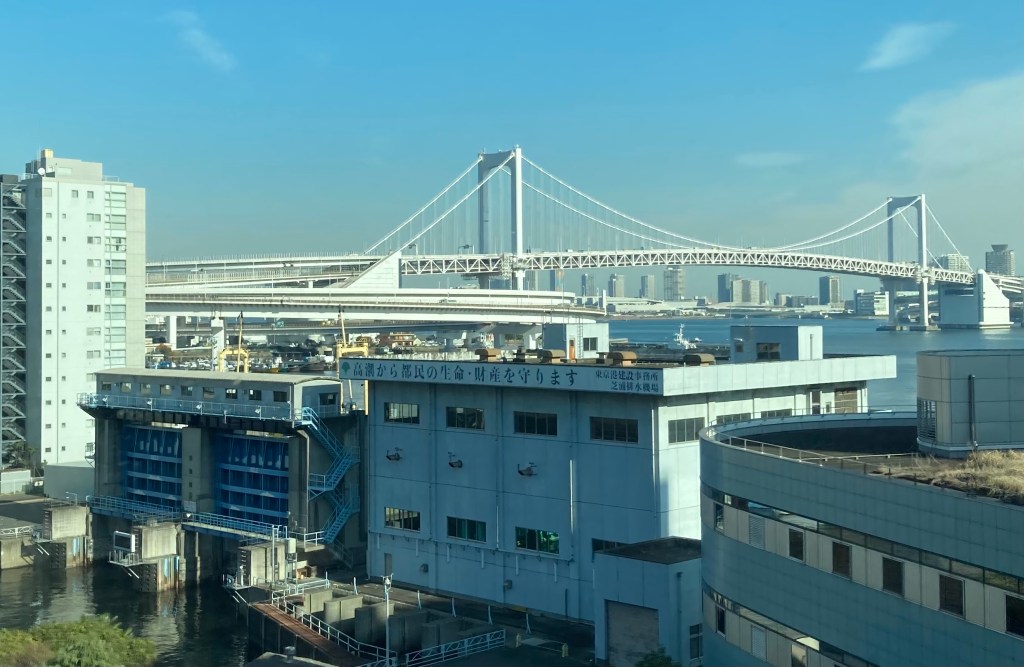
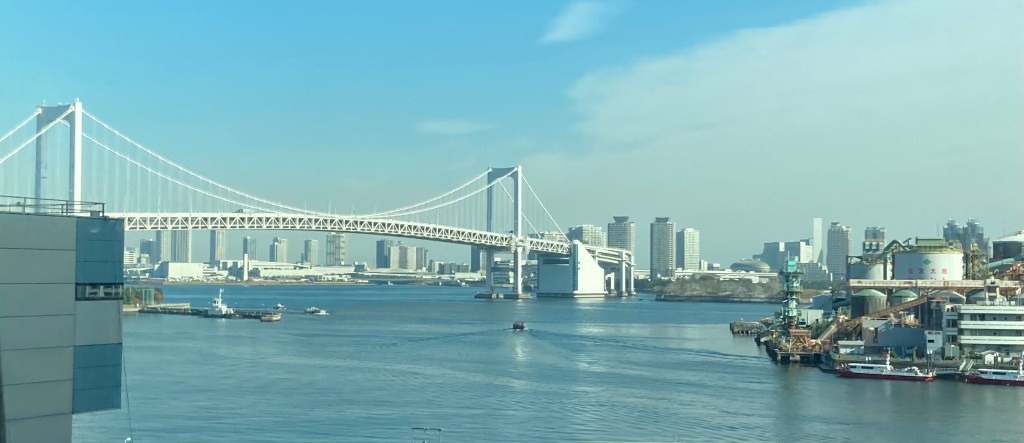
Tuesday 9 December 2025
Hi everyone. You’ve probably heard about the earthquake in northeast Japan, roughly 80 kilometres off the coast of Aomori. We’re still in Tokyo, and we definitely felt it here in Haneda. Our hotel shook for about 20 seconds, which woke both Maree and me during the night. We’re not yet sure whether it will affect our plans to travel to Sapporo and Lake Toya later this week.
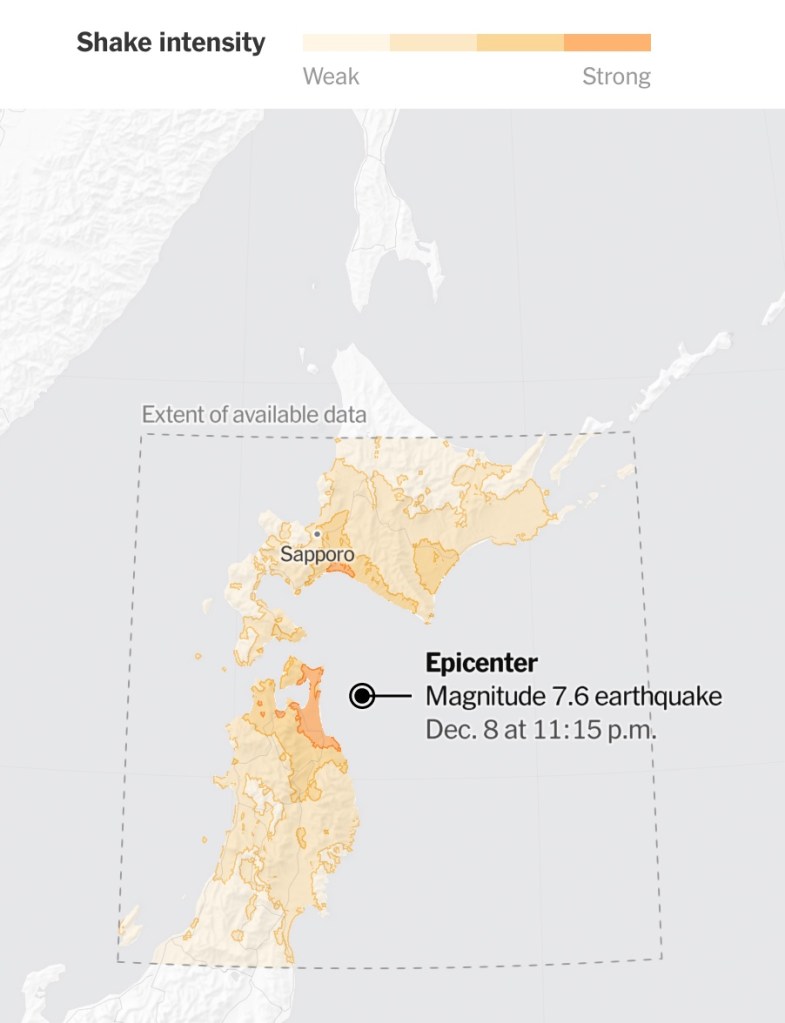
It looks like our travel plans to Sapporo on Thursday are still on track.
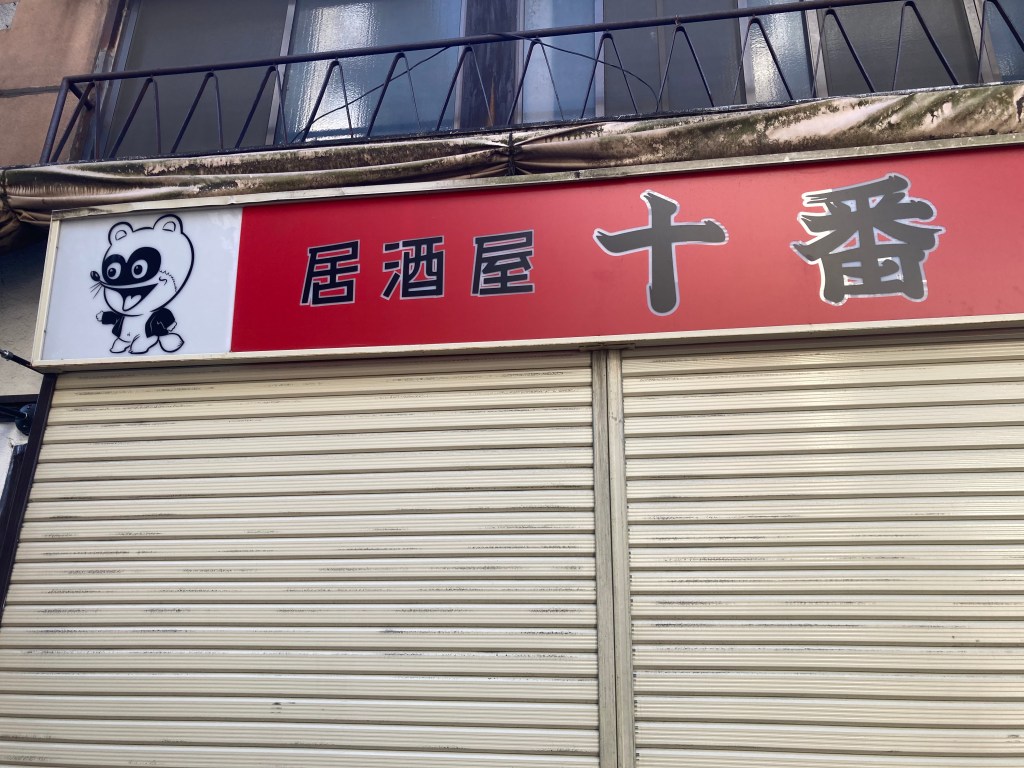
After a morning coffee and a quick bite, we caught the monorail to Hamamatsucho and then transferred to the Oedo subway line for Azabu Juban. This neighbourhood, home to the Australian Embassy, was our go‑to area for food and entertainment during our four‑year posting in Tokyo. With our accommodation so close to the Chancery, it was always an easy stroll down to our favourite yakitori spot, the “Raccoon.” We never did learn why a raccoon adorned the sign above the door, but the name stuck and became our way of directing others there.
Naturally, the Raccoon was our first stop on this little nostalgic wander. Sadly, we discovered it had closed permanently. Such a disappointment, given how perfect the food, service, and atmosphere always were.
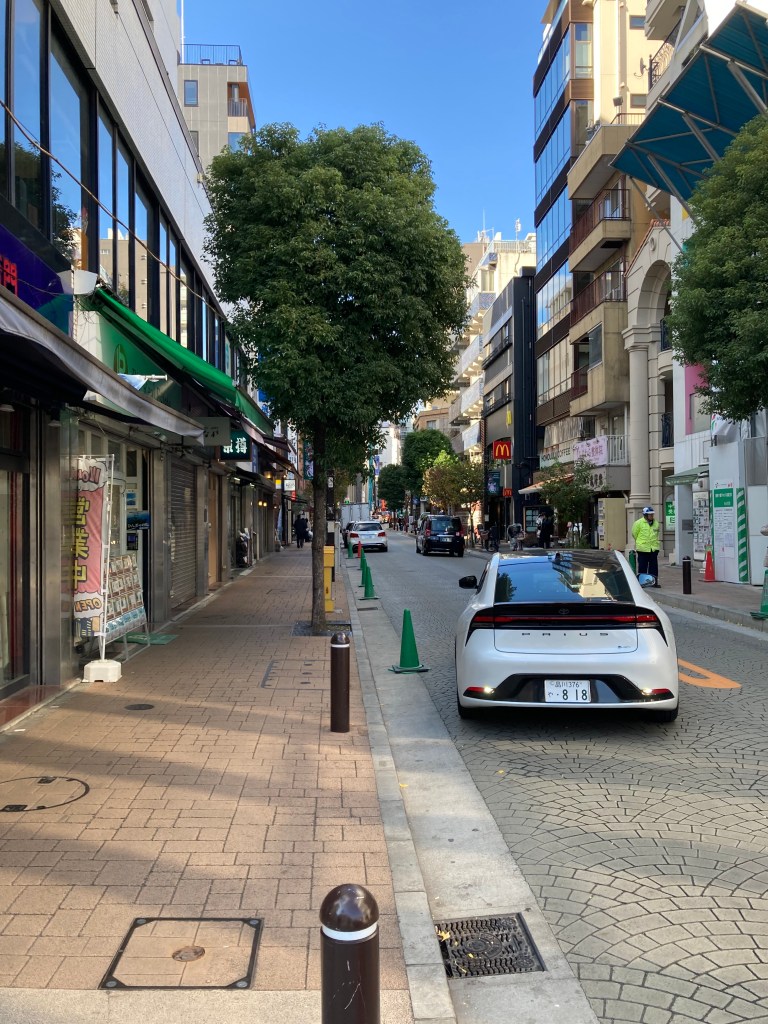
This street scene is in Azabu Juban where our Raccoon restaurant was located.
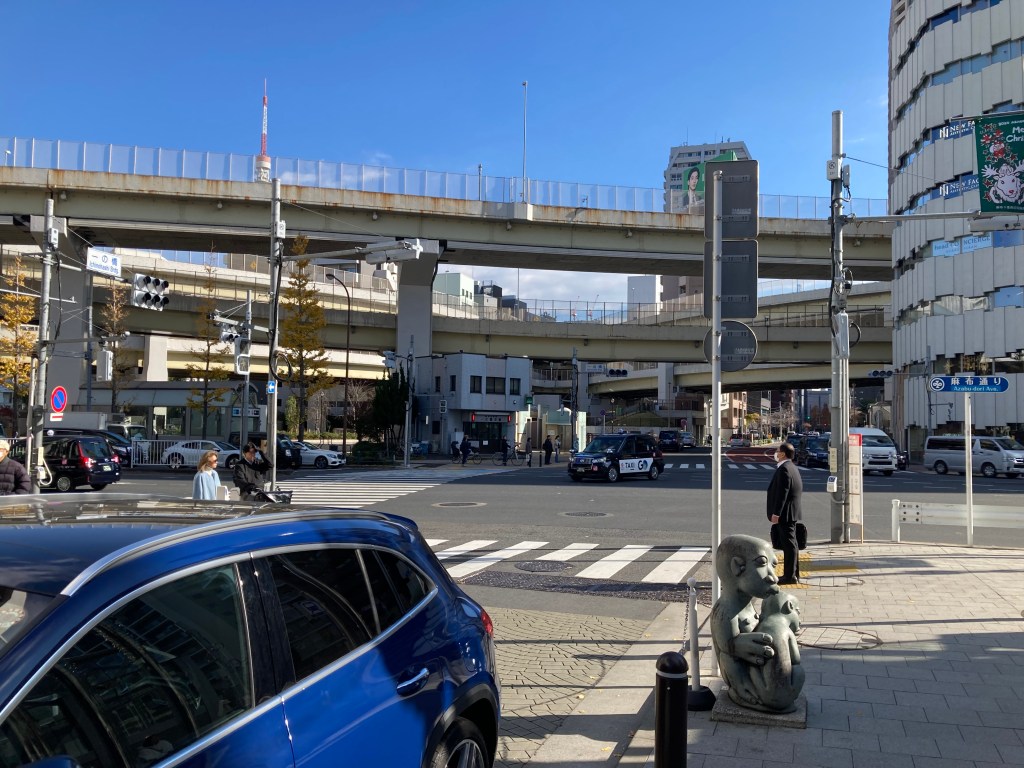
The busy intersection at Azabu Juban with the Shuto (raised expressway) in the background.
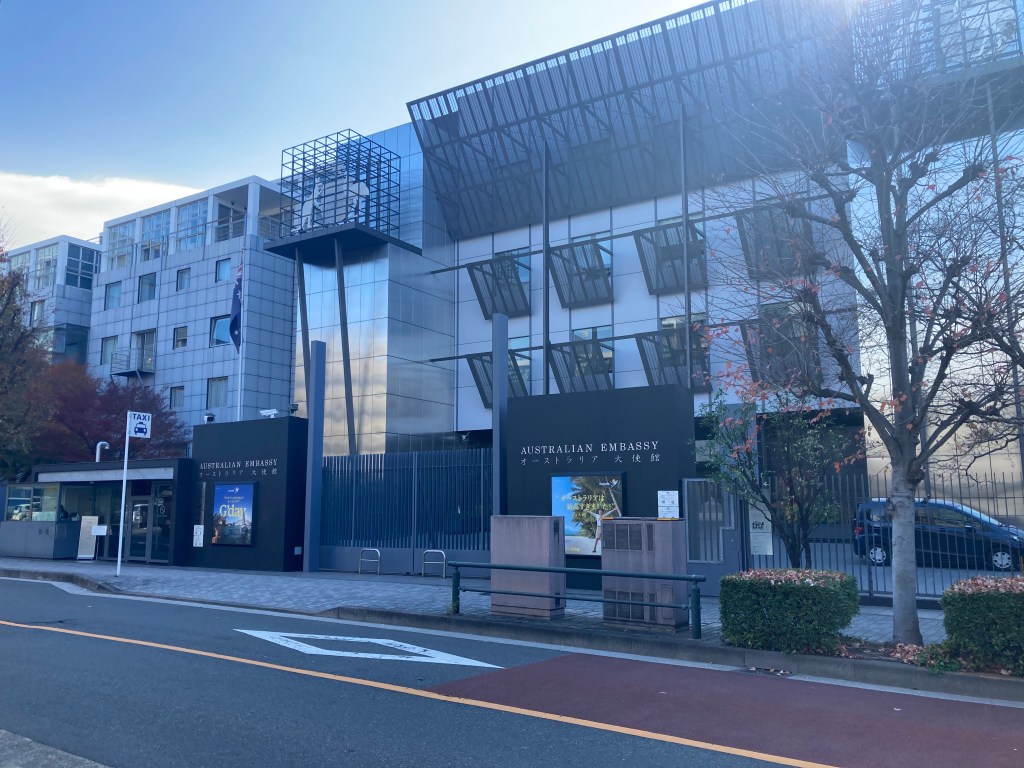
We wandered up to our Embassy at an easy pace, curious to see whether much had changed. Very little had—aside from a few extra security cameras and the absence of long visa queues now that everything is handled online. The line for the Immigration Section, on occasions, would stretch far enough to spill down the street, past the neighbouring Japanese government offices. As we stood looking at the mission, memories from our four years here came warmly back to us.
From here we walked back down the hill to Ichinobashi to catch a number six bus to Shibuya. Shibuya is a popular shopping area as well as a busy business precinct.
After wandering around Shibuya for a while—and pausing for a coffee and something to eat—we eventually decided to make our way back to the hotel. Since Shibuya sits on the Yamanote Line, it was a quick ride to Hamamatsucho, followed by the monorail out to Haneda. You’ve probably seen those photos of commuters being squeezed into trains at Japanese stations; well, our train had been held at Shibuya longer than usual, so by the time it departed it was absolutely packed. We squeezed on, but only just. Sardines would’ve had more room.
Once we arrived at Haneda, it was time to get our luggage ready for the transfer to Sapporo. The Yamato service is ideal when you don’t want to drag suitcases through airports or haul them on and off various forms of transport on the way to your hotel. It’s a seamless door‑to‑door service, and we’ve decided to use it for our bags to Sapporo. Tomorrow we’ll be travelling with nothing more than a light backpack, leaving Yamato to deliver our luggage directly from Tokyo to the hotel.
All in all, it was a wonderful day revisiting the places we used to frequent during our time living here—a period we both look back on with real fondness.
Wednesday 10 December 2025
This morning started bright and early as we headed out to meet Alex and his partner for breakfast at the Tsukiji Outer Markets.
The former wholesale area of Tsukiji, known as the “inner market” and once famous for its lively tuna auctions, officially closed on October 6, 2018. It has since relocated to Toyosu, where it reopened as the modern Toyosu Market.
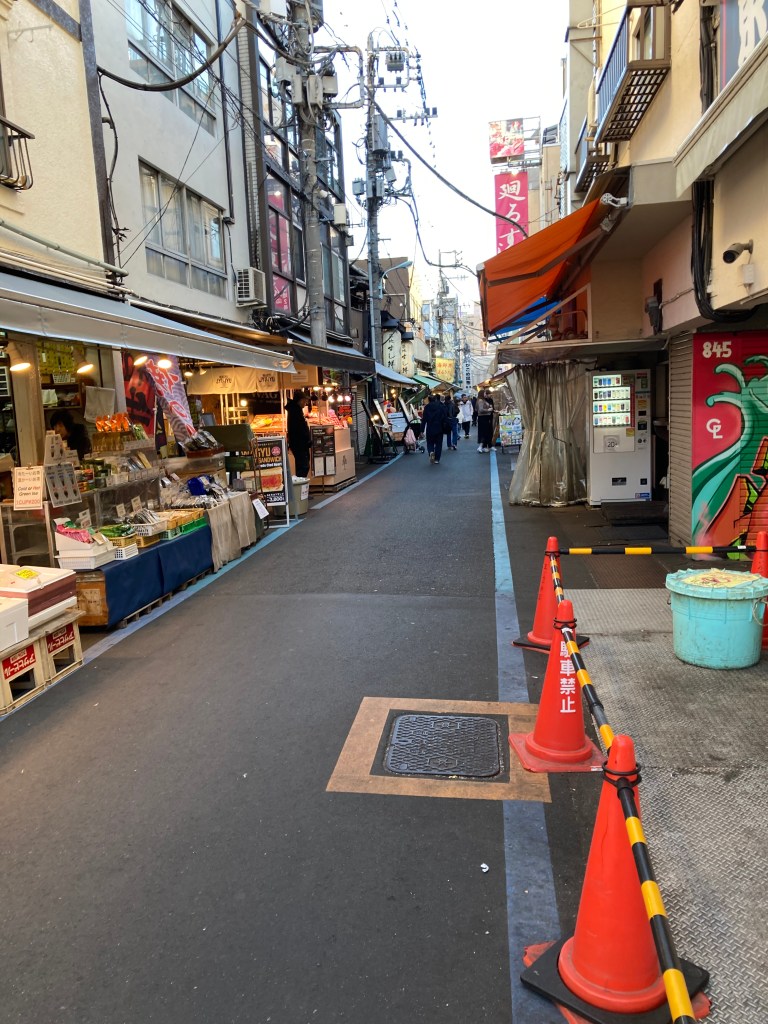
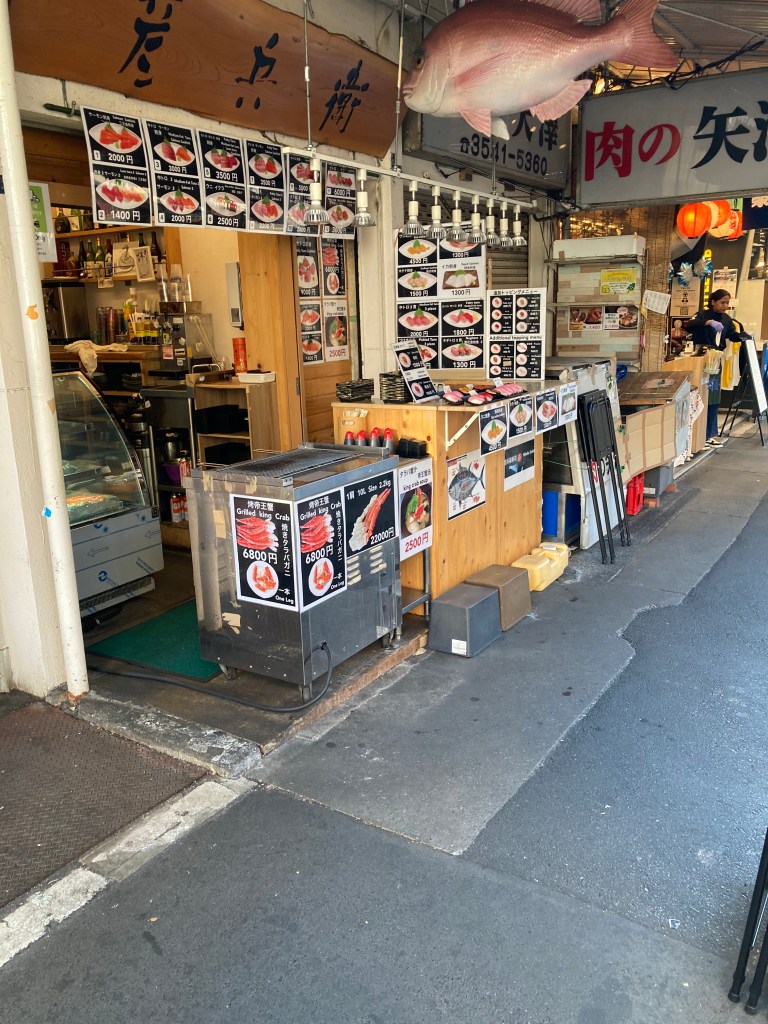
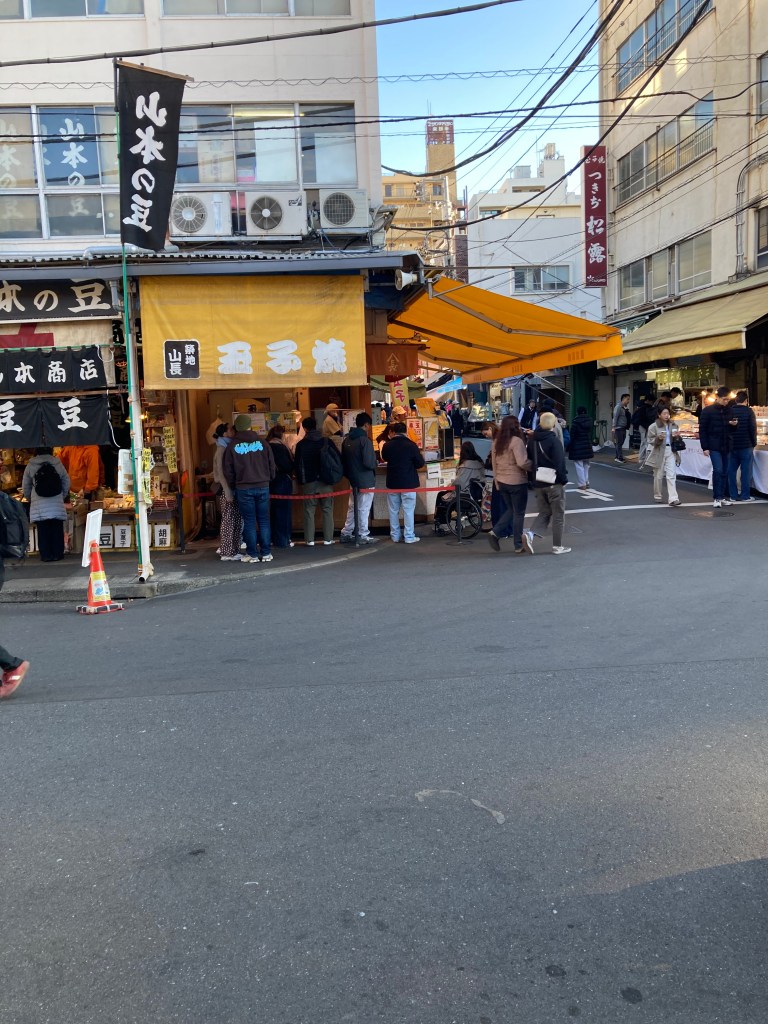
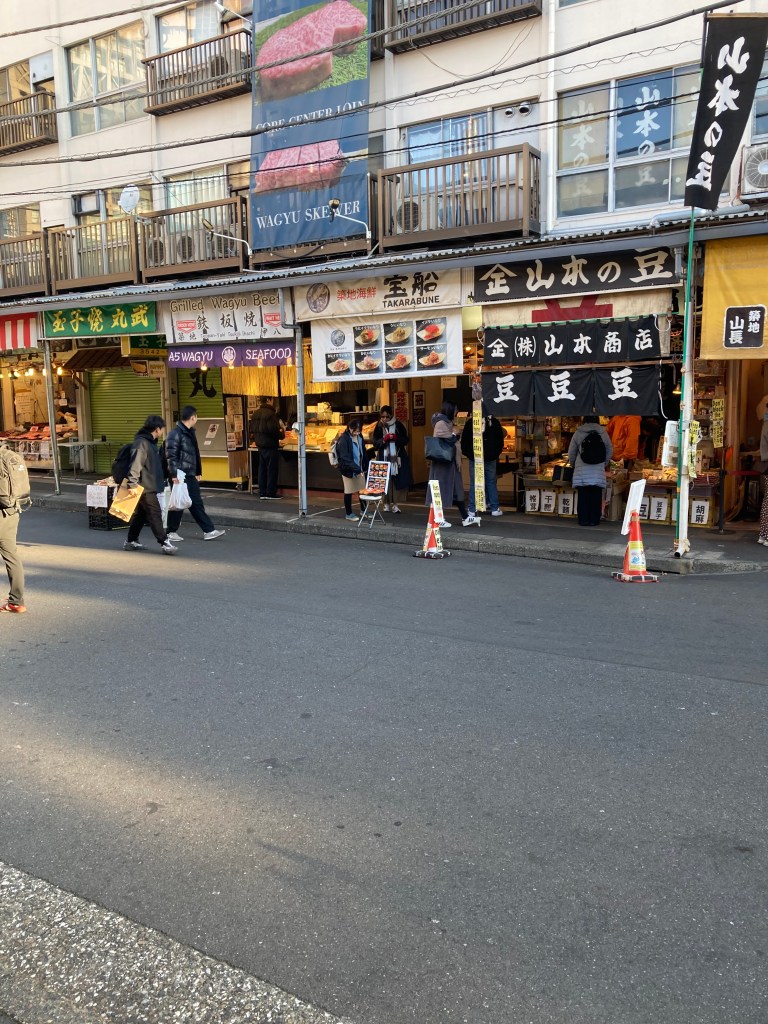
Tsukiji Outer Market sits just beside the former Tsukiji Wholesale Market site and is made up of several lively blocks packed with wholesalers, retailers, and small restaurants tucked into narrow lanes. The area is famous for its incredible selection of fresh and prepared seafood.
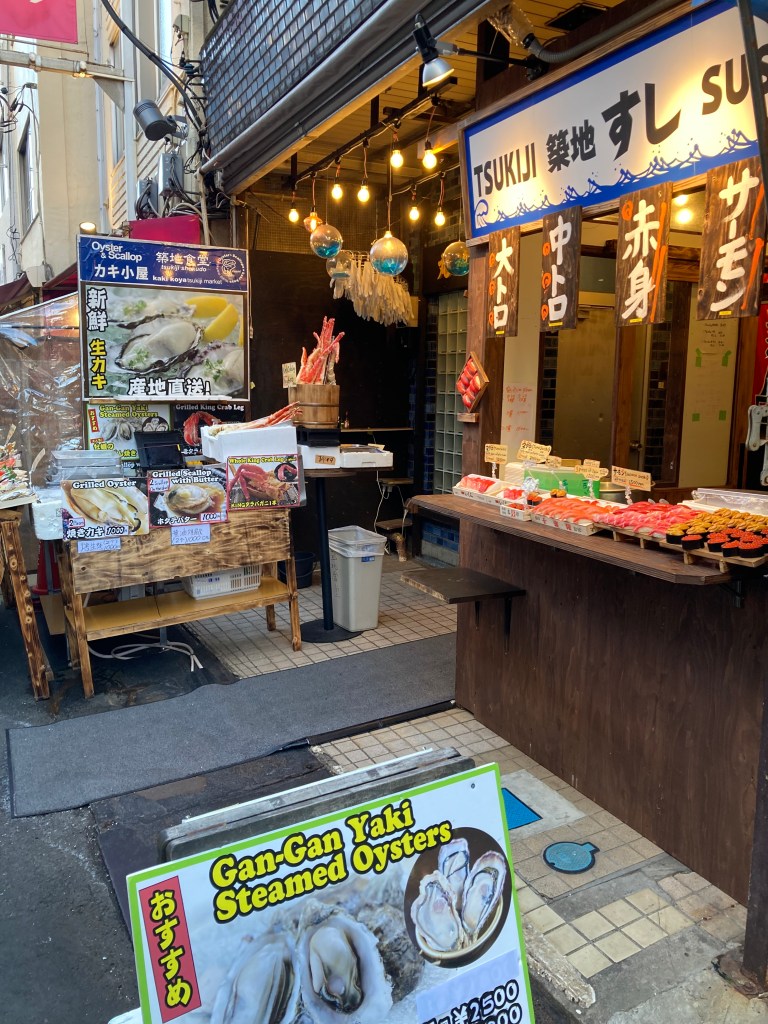
Many visitors pair their trip with an early-morning sushi breakfast — exactly what we did today. Most eateries open around 5:00 a.m. and close by midday or early afternoon. Since much of the seafood arrives straight from Toyosu Market, it’s one of the top spots in Tokyo for enjoying fish at its freshest.
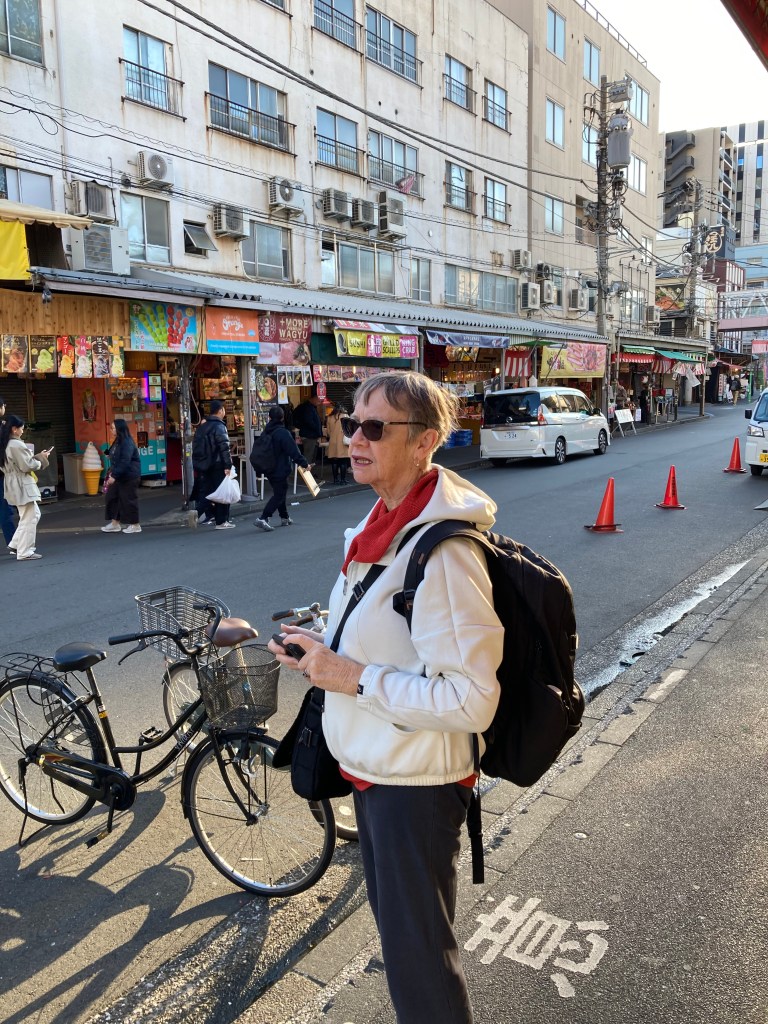
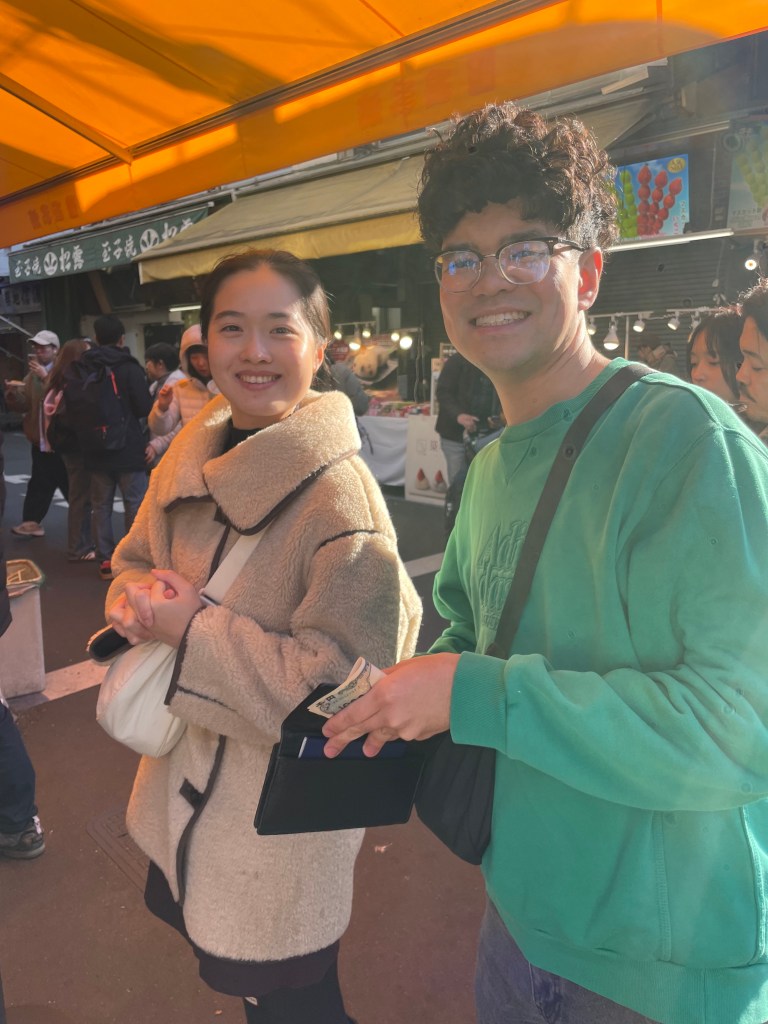
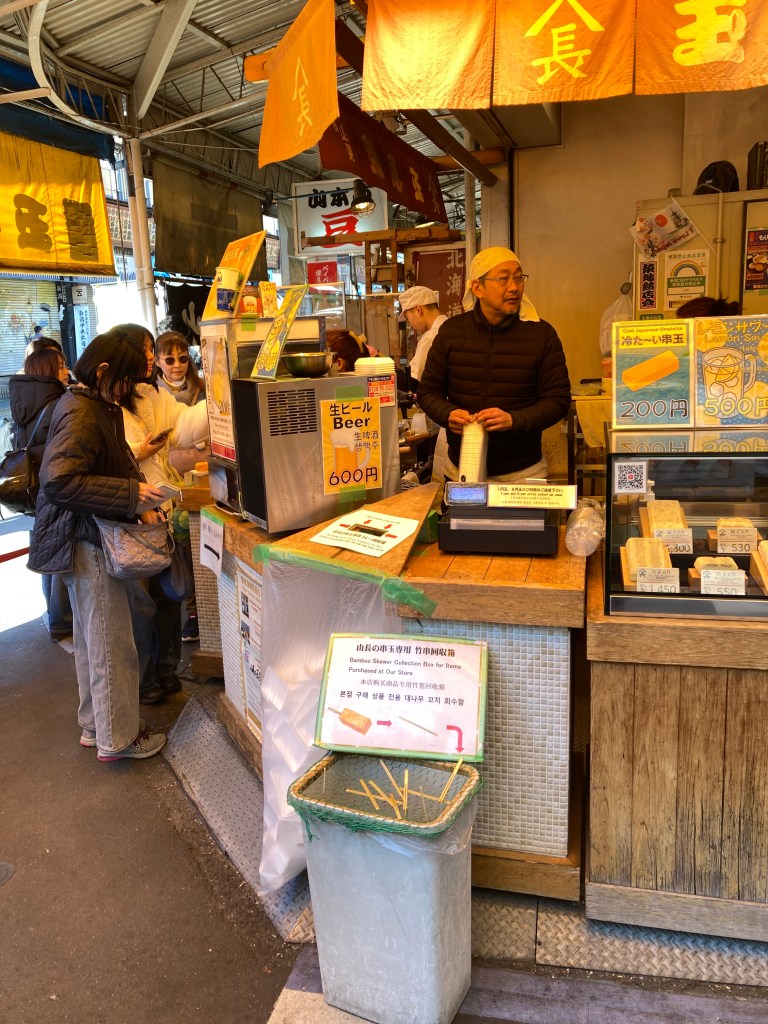
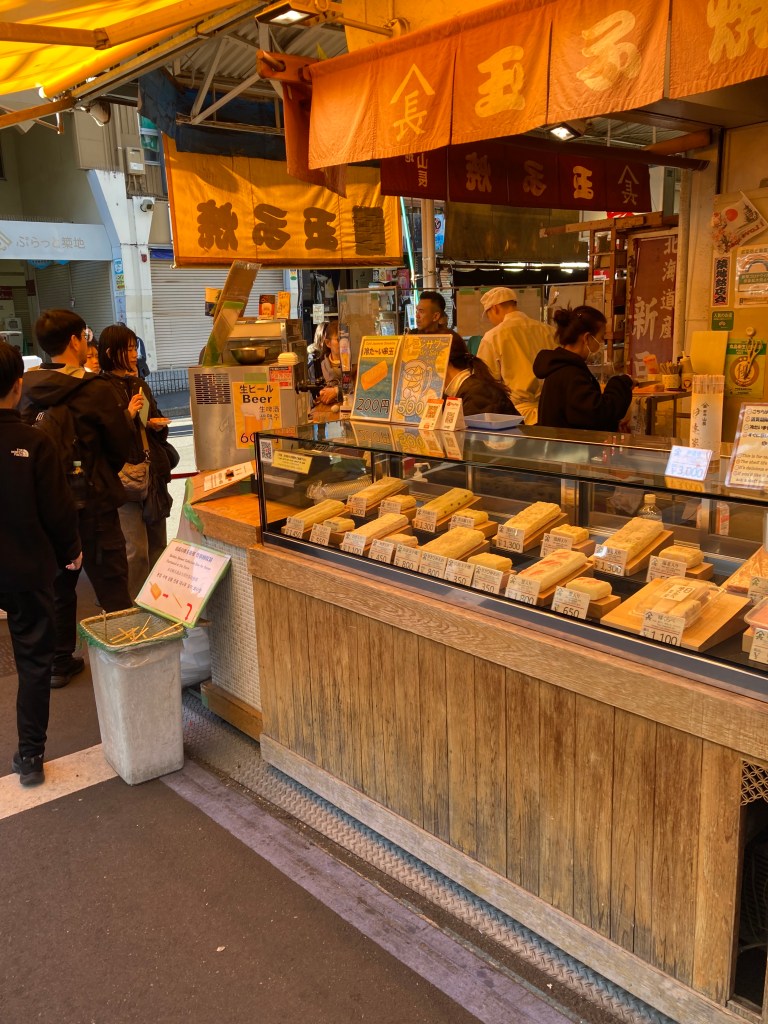
Below are some photos we captured while wandering through the market’s side streets, sampling delicious seafood along the way.
After browsing the market, we headed back to the hotel for a quick shower before going out again for dinner. We chose to take the monorail to Hamamatsucho, planning to stroll around until we found a cosy spot serving proper Japanese food. Plenty of restaurants cater to European tastes, but we prefer to stick with local cuisine — it’s part of the joy of travelling, and Japanese food never disappoints.
Eventually, our wandering led us to a small place called Ramen Bar Nanami. The menu was full of intriguing options, and the atmosphere was warm and inviting. We ordered a selection of small dishes, and every one of them was delicious.
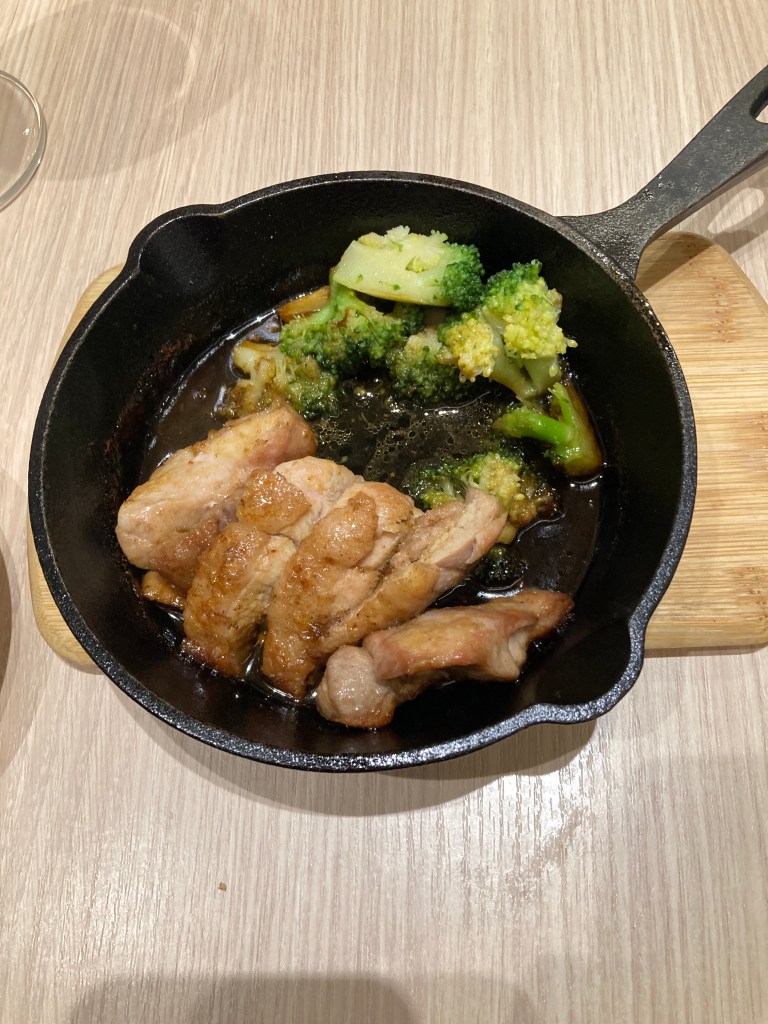
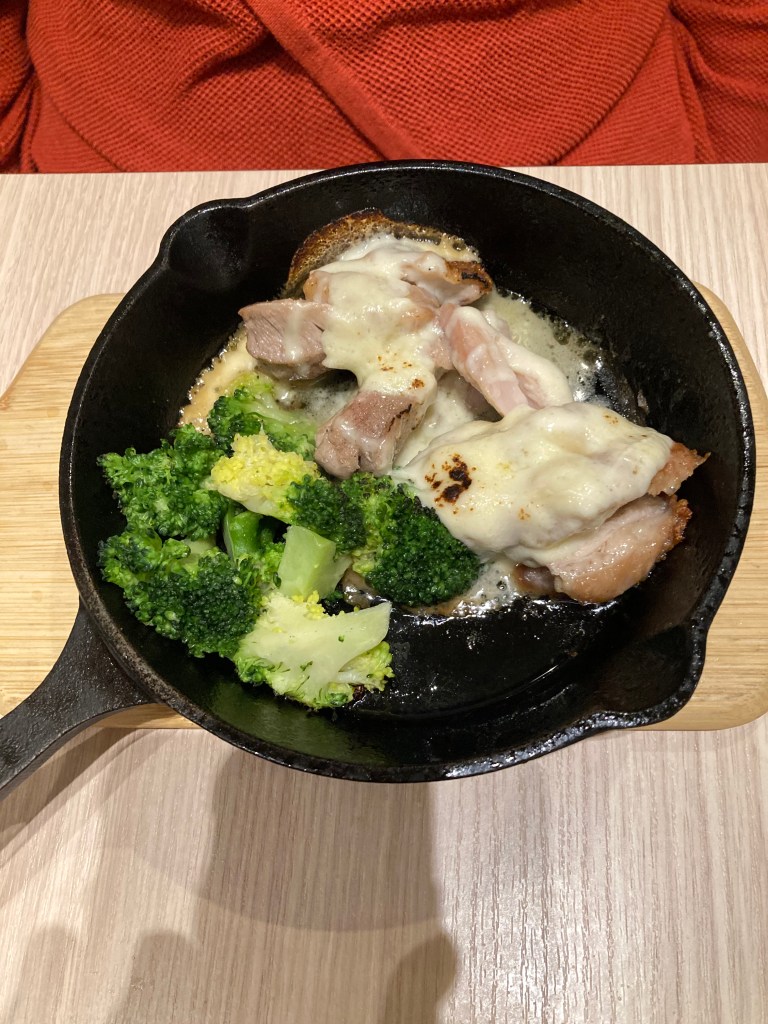
These were just two of the dishes we had. Very enjoyable. After a lovely evening we returned to the hotel and prepared for our journey to Sapporo tomorrow.
Thursday 11 December 2025.
I woke at 06:00 to the familiar TripIt notification tone on my phone. We rely on TripIt for all our travel, and after upgrading to the pro version this year, it’s already proving its worth. The alert informed me that our 09:00 flight to Sapporo had been cancelled due to heavy snow in the region. Not long after, ANA sent their own message confirming the cancellation and offering rebooking options.
Since my son had organised the flights, he called to talk through the alternatives. We chose the 12:00 departure—giving ourselves a buffer in case that one was cancelled too, and still leaving room for other options to get to Sapporo today.
By 06:15 everything was sorted: new bookings confirmed and boarding passes issued. With checkout not until 11:00 and our room conveniently located in Haneda Terminal 3, we were able to crawl back into bed for a bit of extra rest. Our flight would depart from Terminal 2, just a short monorail ride away.
A quick check of our Apple AirTags showed an amusing update: Maree’s suitcase had already made it to Sapporo, while mine was still en route. Hers must have been flown ahead, but mine appears to be travelling by train—likely a workaround due to the snow disruptions. The last ping showed it in Kitakami, roughly 675 km from Sapporo. With the recent earthquake and the weather challenges, a delay of only a day or so isn’t bad at all. I’m expecting it to reach the hotel tonight or tomorrow morning.
When we arrived at Haneda Terminal 2, we learned our flight was delayed, with boarding pushed to 12:40. Staff warned that due to the heavy snowfall at New Chitose Airport, there was a chance the flight might have to return to Tokyo.
We eventually boarded, only to sit on the tarmac for about 20 minutes before pushback. After that came a slow taxi and another 10‑minute wait before takeoff.
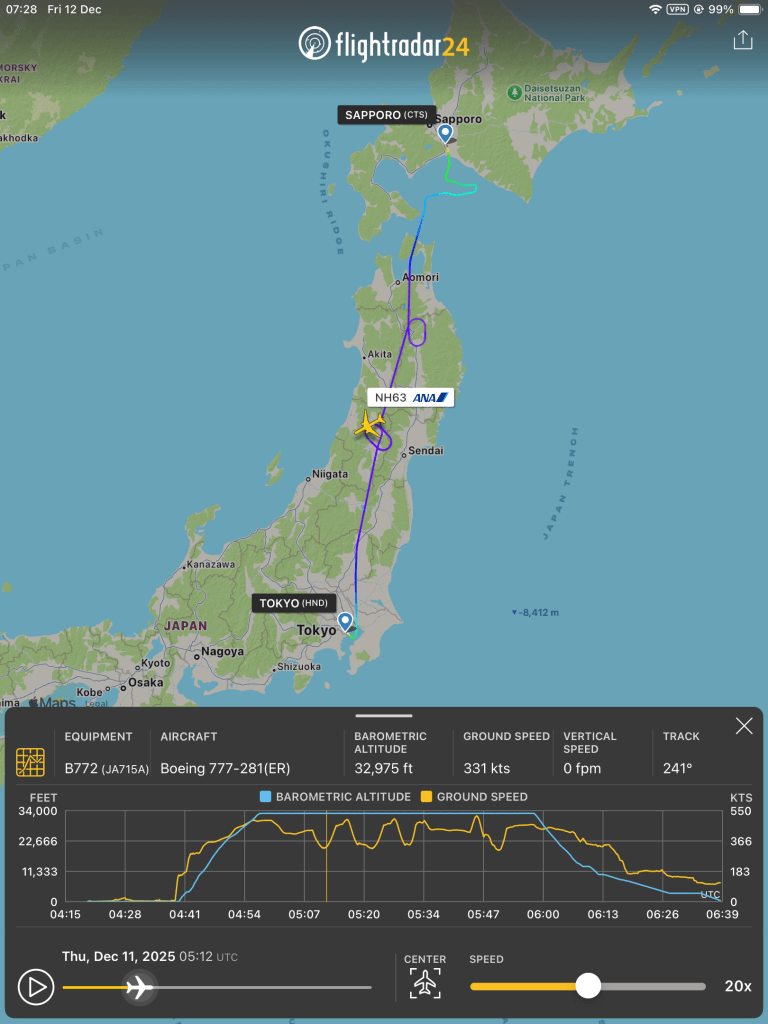
The flight itself was smooth, but the conditions in Sapporo meant we had to fly at a reduced speed. We also had to orbit twice, waiting for our turn to enter the airport control zone while other aircraft circled ahead of us. Every 20 minutes or so, the runway was closed so snow‑clearing equipment could sweep through. What should have been a 1 hour 10 minute flight stretched to a full two hours.
The image below shows our flight path, the holding patterns, and our speed throughout the journey.
We landed at New Chitose Airport at 15:40, two hours after departing Tokyo. From there, we boarded the Rapid train to Sapporo Station, then grabbed a taxi to our hotel—the snow was still falling, and the roads and footpaths were extremely icy.
We’re staying at the Lamp Lights Book Hotel. Set among shops and restaurants, this relaxed, book‑themed hotel sits about two kilometres from Sapporo Station—a pleasant walk, or so we’re told, when it isn’t snowing. The rooms are simple but comfortable, equipped with TVs, Wi‑Fi, mini fridges, and a kettle with cups for tea and coffee. Each room has an en suite bathroom with a rainfall shower. They’re compact, but thoughtfully designed. The hotel also features a 24‑hour bookstore and a café, with breakfast available. You simply choose a book and settle in to read—an intriguing concept, and part of a small chain found across Japan.
Later in the evening, we ventured out to a popular ramen restaurant Alex had discovered. It turned out to be quite a trek, and navigating the icy footpaths and slippery road crossings made the walk less than enjoyable.
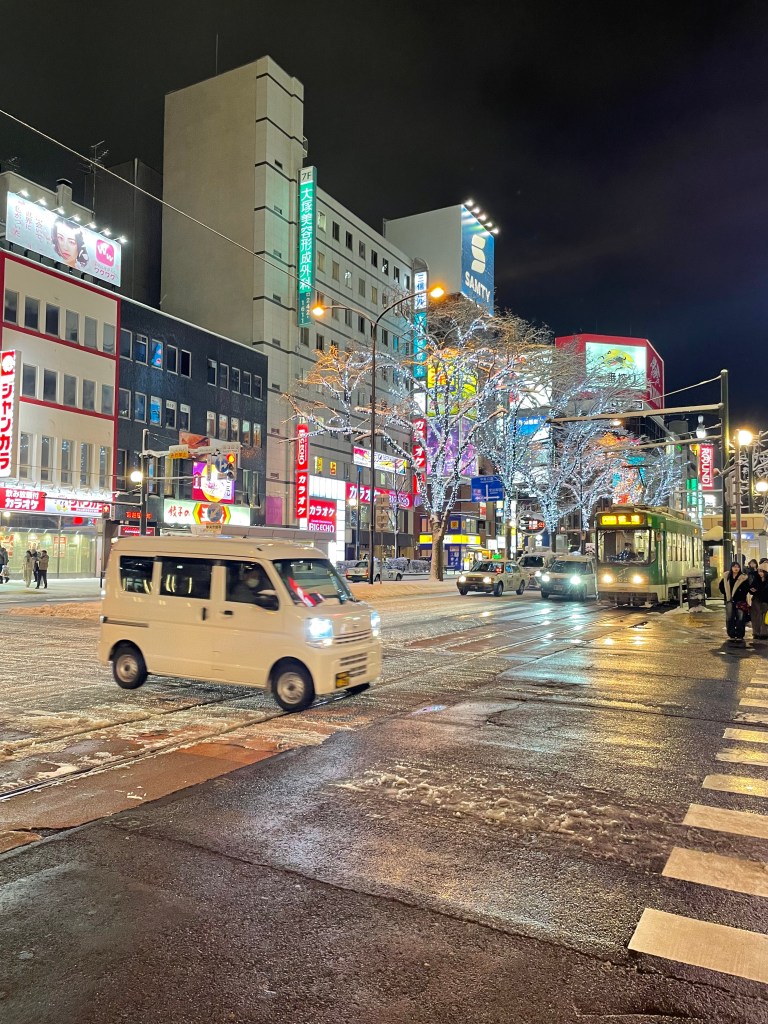
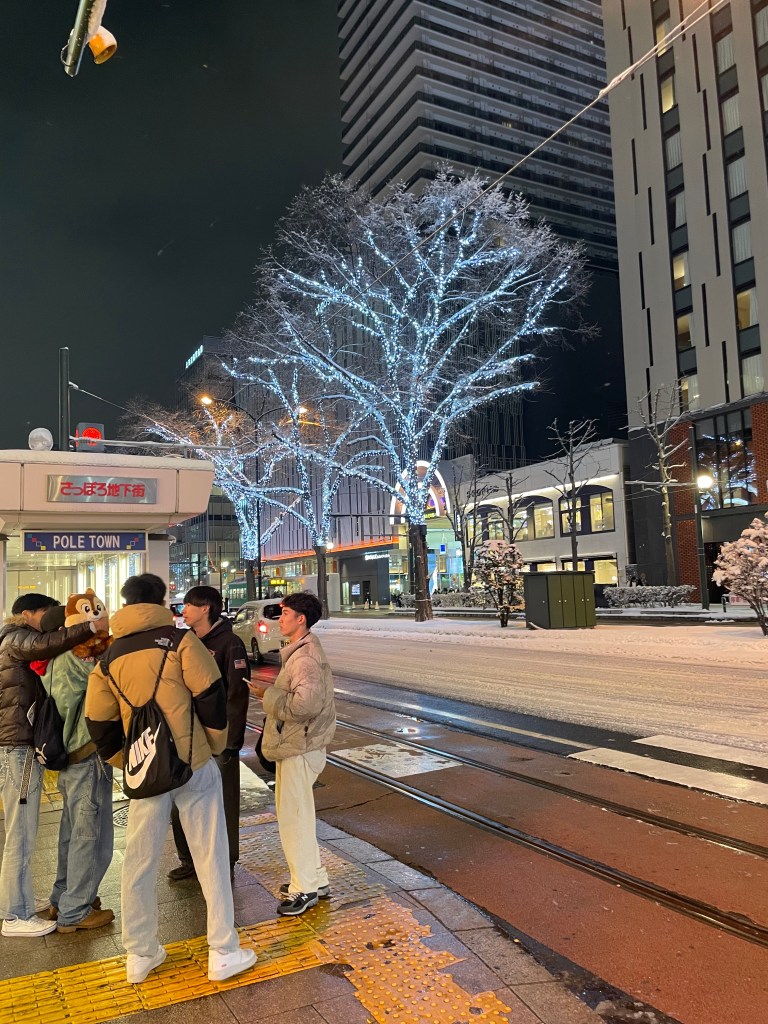
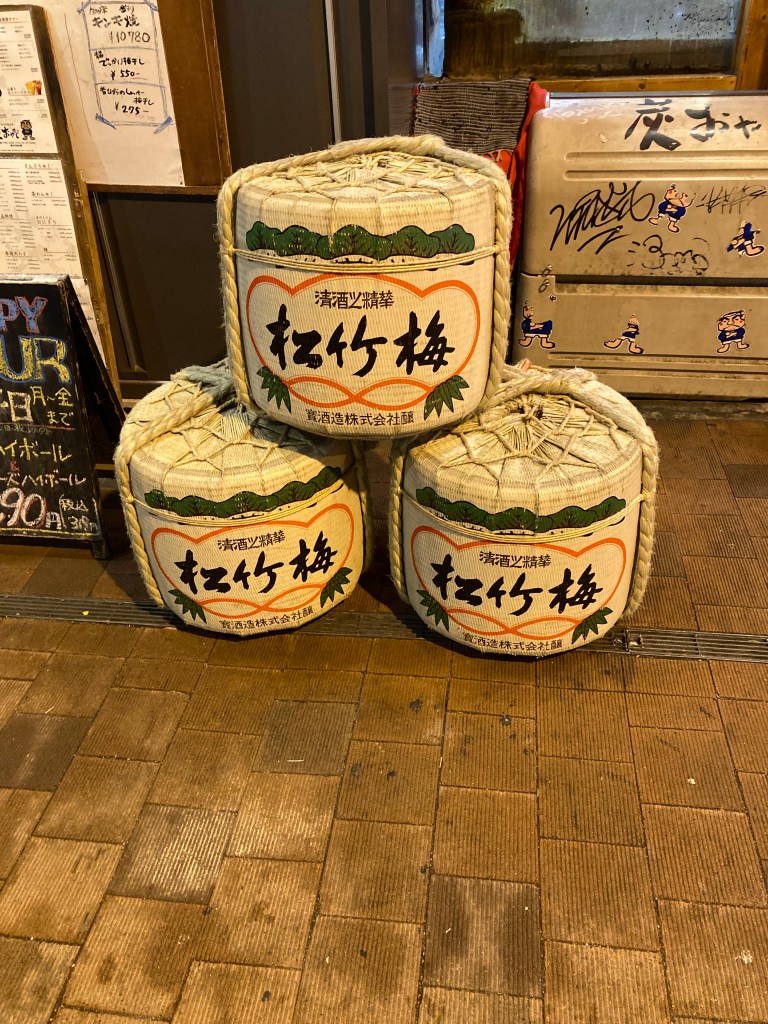
As we wandered through the arcade, we stumbled upon a display of sake barrels—known as komodaru. These ornate wooden casks, typically wrapped in straw, are used in ceremonies and stand as symbols of celebration and good fortune. In the traditional Kagami Bairiki ritual, the lid of the barrel is broken open to share the sake, marking hopes for luck and prosperity. Although the classic barrels are large and wooden, smaller and modern versions are now common as gifts or decorative pieces.
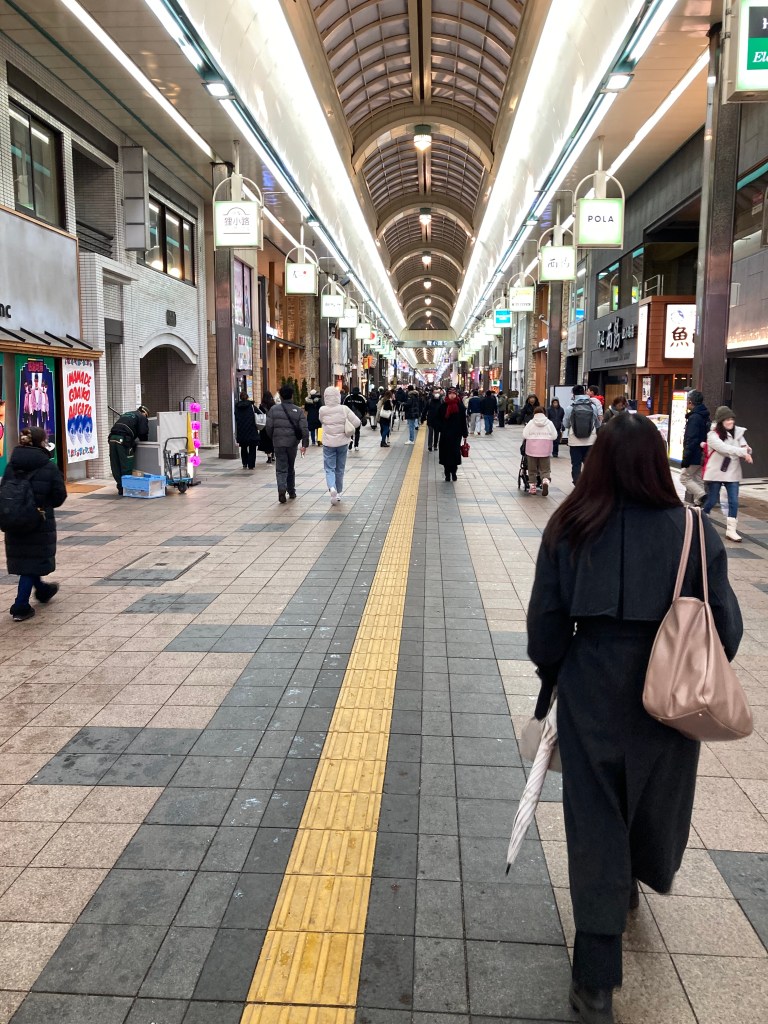
The arcade we walked through and people were well rugged up to keep warm. The temperature was minus three degrees C.
When we reached the ramen restaurant, we joined the queue outside and waited for a table to free up. The place only seated about eight people, and there were already seven ahead of us, with every spot inside taken by diners enjoying their bowls of ramen. The owner made his way along the line handing out little crystalline hand warmers—you simply break up the crystals inside and they heat up, perfect for keeping your hands warm while standing around in sub-zero temperatures.
After about half an hour, I told Alex I couldn’t stand much longer and that we’d need to head back to the hotel. He understood immediately, so we hailed a taxi and returned to the Lamp Lights Book Hotel. If I stay in one spot for more than 15 or 20 minutes my back starts to ache, and with no seating outside, it was becoming too uncomfortable. As it turned out, once our group dropped from four to two, Alex and Laorita were able to get into the restaurant much faster, so everything worked out in the end.
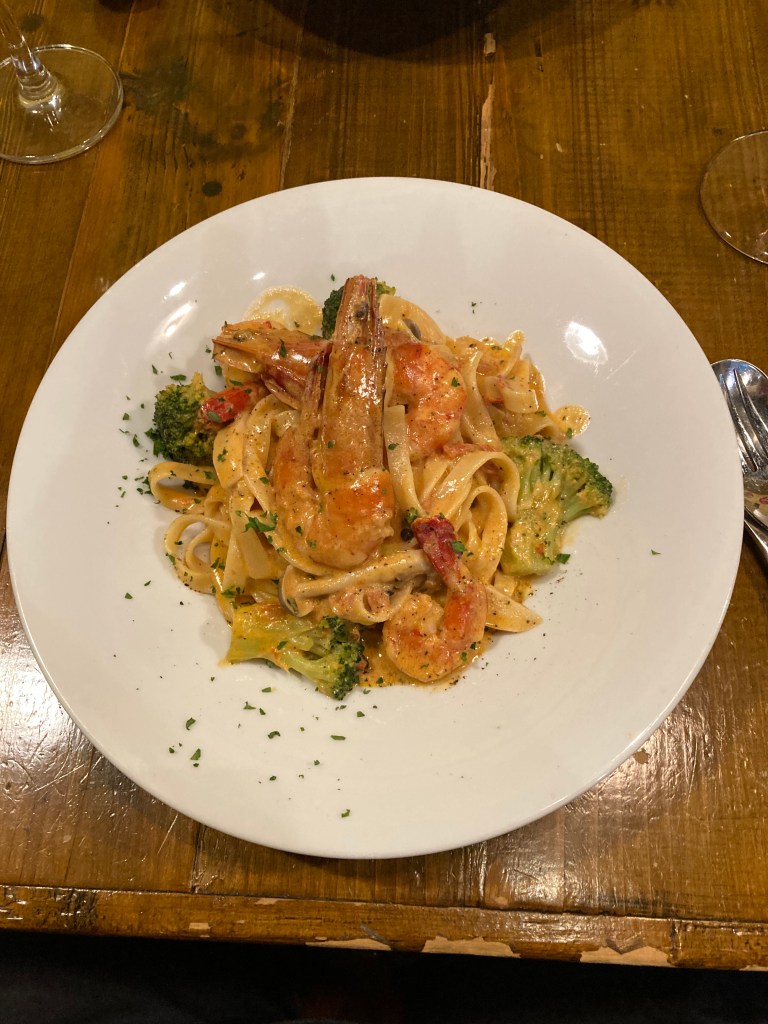
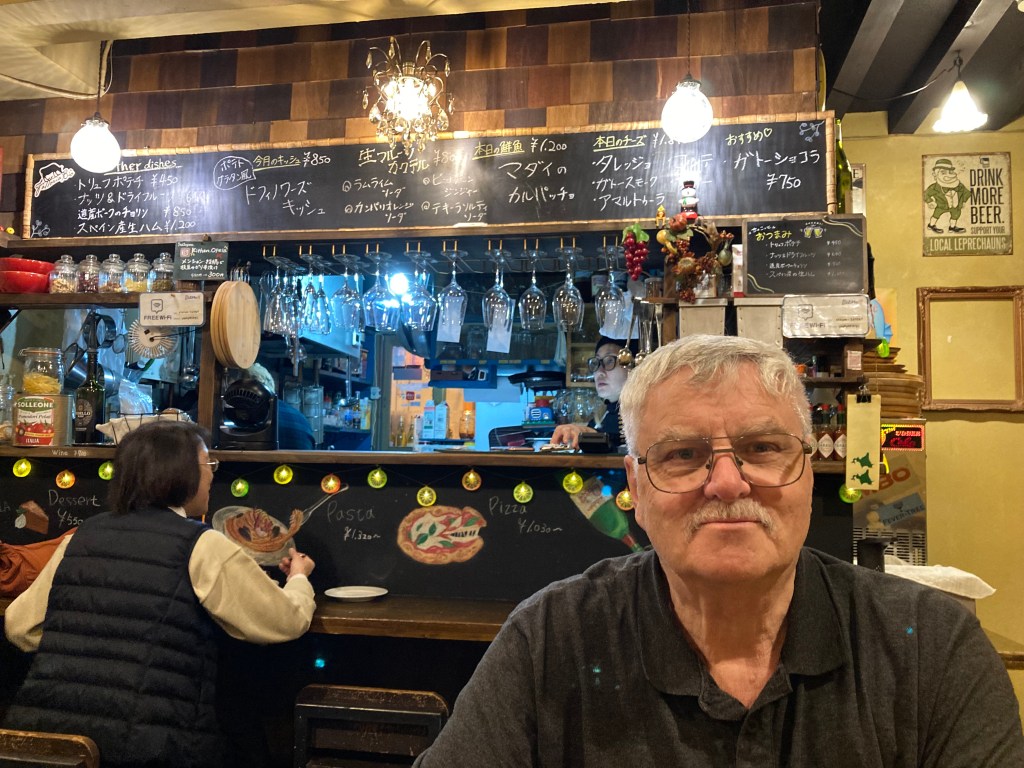
Maree and I were still hungry, so we wandered across the icy road to a small Japanese restaurant near the hotel. For a change, we both opted for pasta, accompanied by our usual glasses of red and white wine. A simple, pleasant end to a very tiring day.
An eventful day today and not sure what we are doing tomorrow.
Friday 12 December 2025
We began the morning with a hearty, satisfying Japanese breakfast at our hotel.
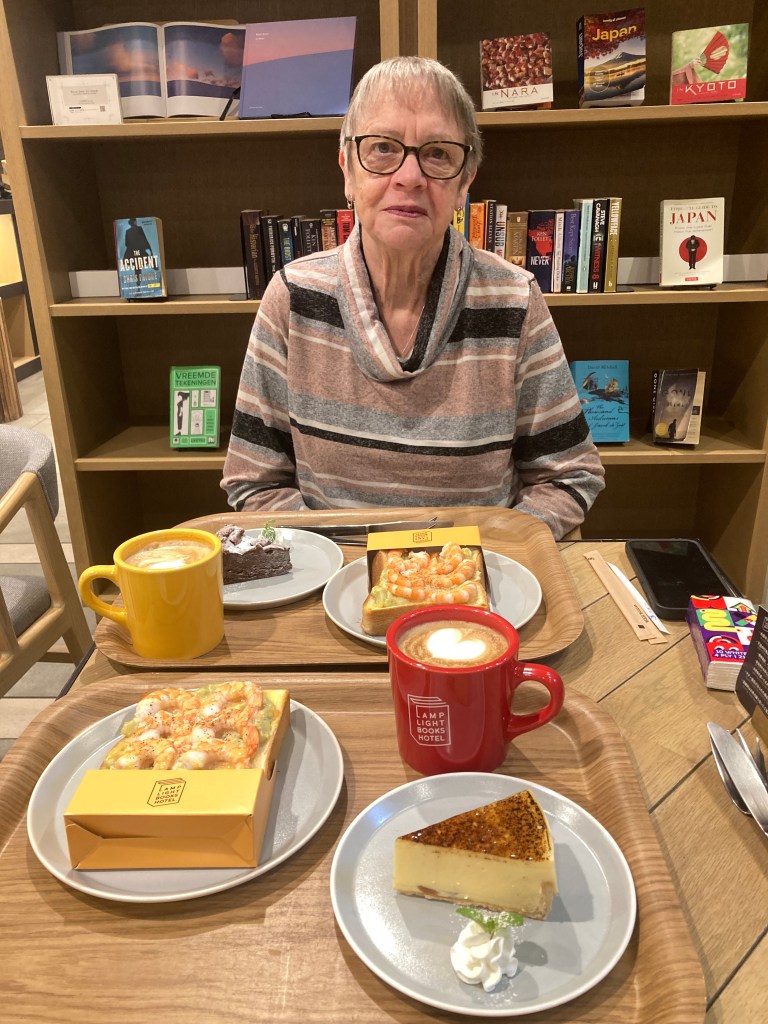
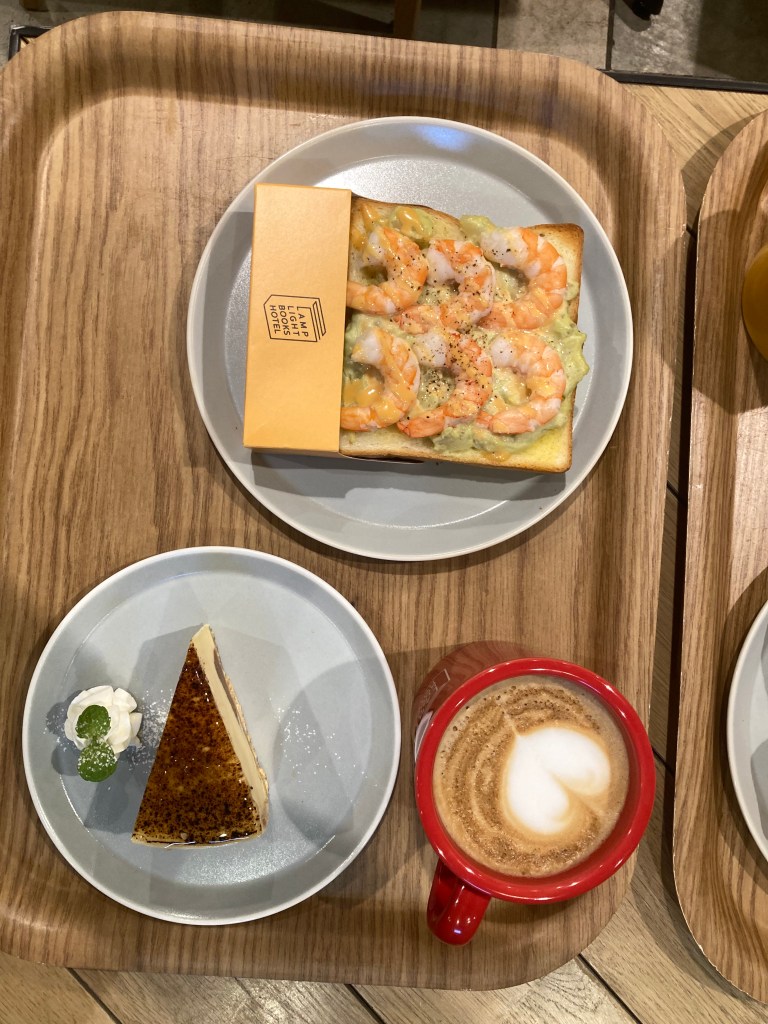
From there we made our way to a department store to buy snow boots. I’d been struggling to stay upright on the ice, so it was clearly time to find something with proper grip. I ended up choosing a pair with deep tread cutouts and a small spike in the heel that could be pulled out when needed. At JPY 7,200, they felt like a very sensible investment.
I had barely finished paying when every mobile phone in the store suddenly erupted with the same alert tone. It was an emergency broadcast warning of a major quake expected in the area and advising everyone to take cover. The shop staff immediately began guiding people out, understandably concerned given the towering shelves stacked to the ceiling.
We stepped outside into the covered arcade, which had a convex roof and nothing overhead that could fall, so it was a safe place to wait along with many others. After about ten minutes, our phones showed that the quake had struck in much the same location as the one earlier in the week. The image below shows the details.
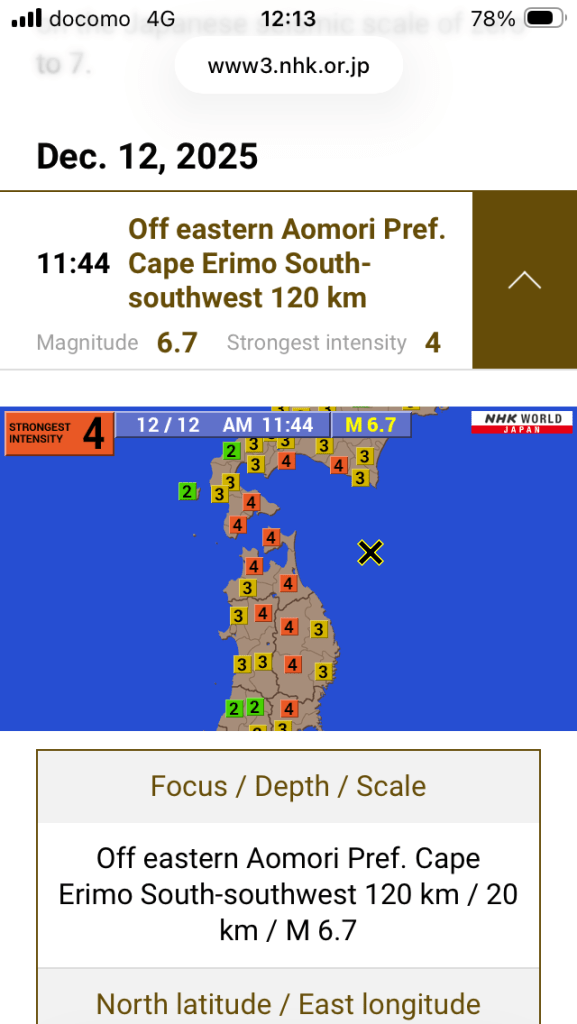
We were fortunate not to feel any tremors in Sapporo, even though a level 4 had been expected on the Japanese scale.
With everyone around us calmly returning to their routines, we slipped back into the shop and finished our purchases. Then it was back to the hotel to pack a few things, as we’d decided to spend the rest of the afternoon in Otaru.
Otaru, a port city on Hokkaido’s Ishikari Bay northwest of Sapporo, is known for its glassworks, music boxes, and sake distilleries. Nishin Goten—the “herring mansion”—a former fish processing plant built in 1897, offers a glimpse into the industry that once shaped the city. The Otaru Canal, once a working waterway, is now lined with cafés and shops housed in beautifully converted old warehouses.
Our first step was simply getting to Sapporo Station, so we hopped into a taxi as the snow continued to fall.
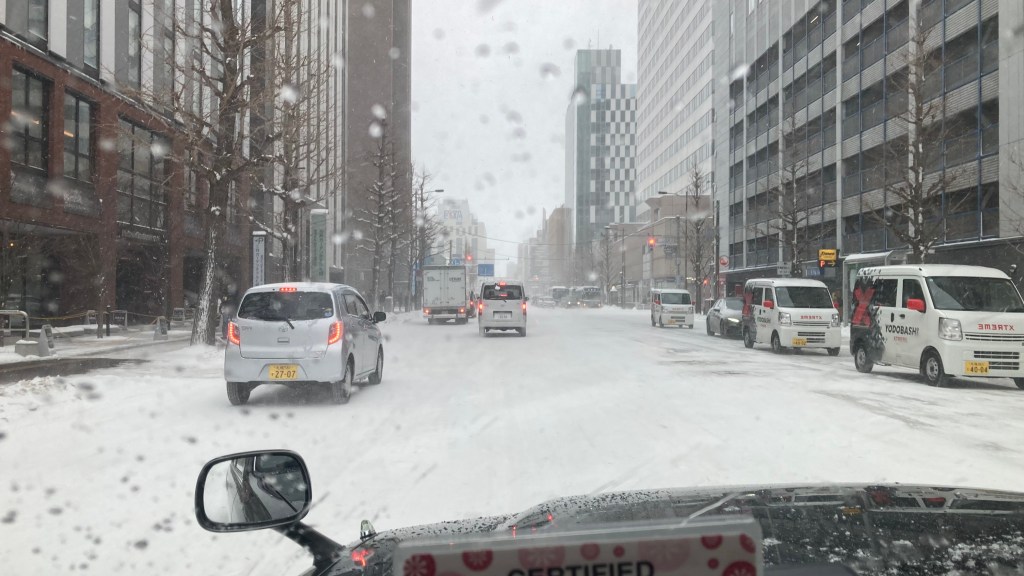
On reaching Otaru, we made our way to a lunch spot recommended by one of Alex’s friends. As we walked, the snowfall suddenly intensified, turning the streets into a soft white blur. While we waited to cross the road to the restaurant, I snapped a few photos of the snow‑covered streets.
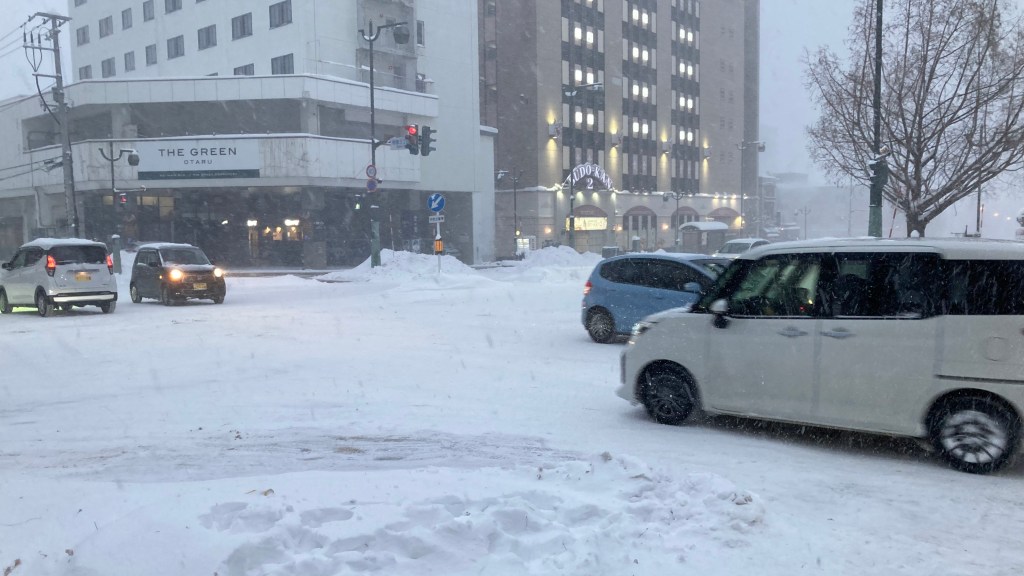
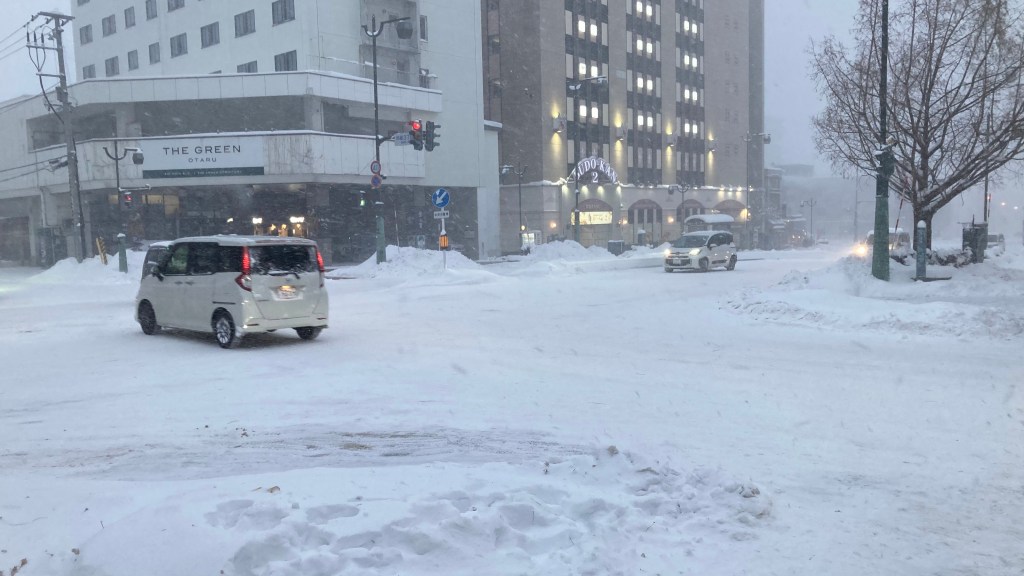
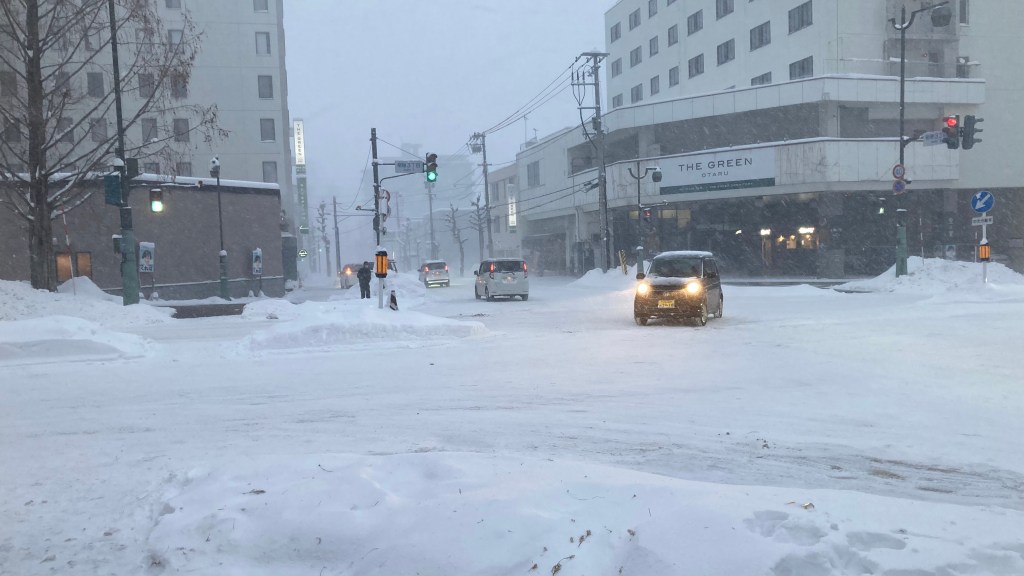
LeTAO is one of those places in Otaru that feels almost impossible to walk past. Best known for its iconic Double Fromage cheesecake—a silky, cloud‑light creation that has earned near‑legend status across Japan—the brand has become a beloved institution in Hokkaido.
The flagship store sits right at Marchen Intersection, the storybook‑like heart of Otaru’s tourist district. Housed in a charming, European‑inspired building with a clock tower and warm brick façade, it draws visitors in with the aroma of butter, cream, and caramel drifting out onto the street. Inside, the atmosphere is part café, part confectionery wonderland, with displays of beautifully packaged sweets and seasonal creations you won’t find anywhere else.
LeTAO prides itself on using premium Hokkaido ingredients—especially its fresh cream, which is exceptionally smooth and carries that unmistakable rich, clean milk flavour the region is famous for. Beyond the Double Fromage, the shop offers an array of pastries, chocolates, and soft‑serve ice cream, each crafted with the same meticulous attention to texture and balance.
Naturally, we couldn’t resist staying for dessert. Everything we tried was superb: delicate, indulgent, and unmistakably Hokkaido in character. It’s the kind of place that turns a simple afternoon stop into a highlight of the trip.
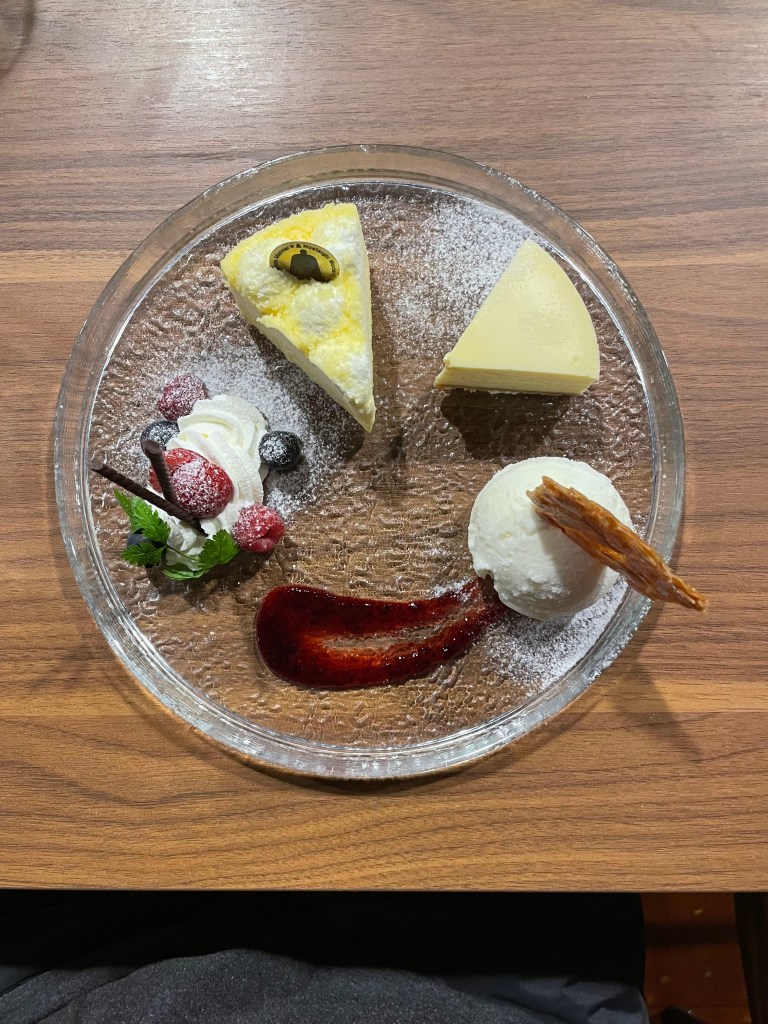
After finishing our desserts, we stepped back out into the thick curtain of snow and flagged down a taxi to take us to the shops along Otaru’s old canal. One of the places Alex’s partner was keen to visit was the Miffy store in Port Town. The Miffy Patisserie there—Japan’s first Western‑style pastry shop dedicated to the character—offers an irresistible range of sweets, beautifully packaged and clearly designed with gifting in mind. Even if you’re not a Miffy devotee, it’s hard not to be charmed by the displays: pastel‑coloured biscuits, character‑shaped cakes, and shelves of merchandise arranged with the kind of precision only Japan seems able to achieve.
If, like us, you’ve never known much about Miffy, she’s a fictional rabbit created by Dutch artist Dick Bruna, the star of a long‑running series of minimalist picture books. Her simple lines and gentle expression have made her wildly popular in Japan—so much so that many people assume she’s a homegrown character. That popularity has blossomed into a whole ecosystem of Miffy Style shops, themed cafés, and even the world’s first Miffy‑themed park, Miffy Wonder Square, at Huis Ten Bosch. There you can find Japan‑exclusive items such as kimono‑clad Miffy plush toys alongside the classic Dutch designs. Alex and Laorita will be staying at this theme park later in the trip; we, sensibly, will leave them to it and will head back to Tokyo for those two days.
From the canal district we began walking back toward the railway station for our return to Sapporo. The snow was still falling heavily—thick, quiet, and relentless—so the moment a taxi appeared we waved it down. In the photo below you can spot Alex in the foreground, with Laorita just behind him. She didn’t hear us calling out that we’d stopped to take a picture, completely absorbed in the snowy scene around her.
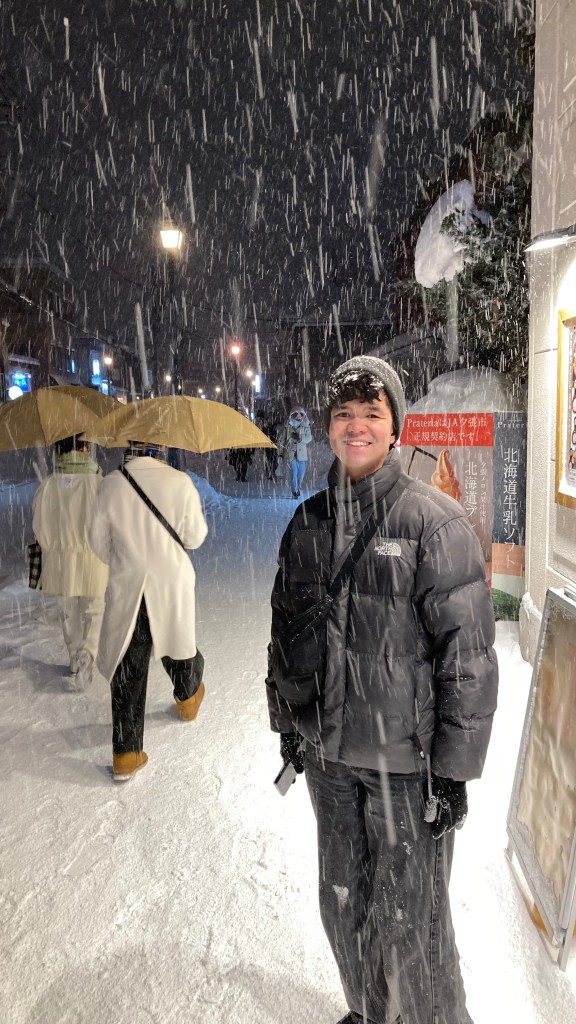
We took a taxi to the station and then boarded the train back to Sapporo, a quick 40‑minute ride. At Sapporo Station there was a long queue for taxis, but it moved steadily and we were on our way within about 20 minutes
I took a photo of the lighted area near Sapporo station while we waited for the taxi.
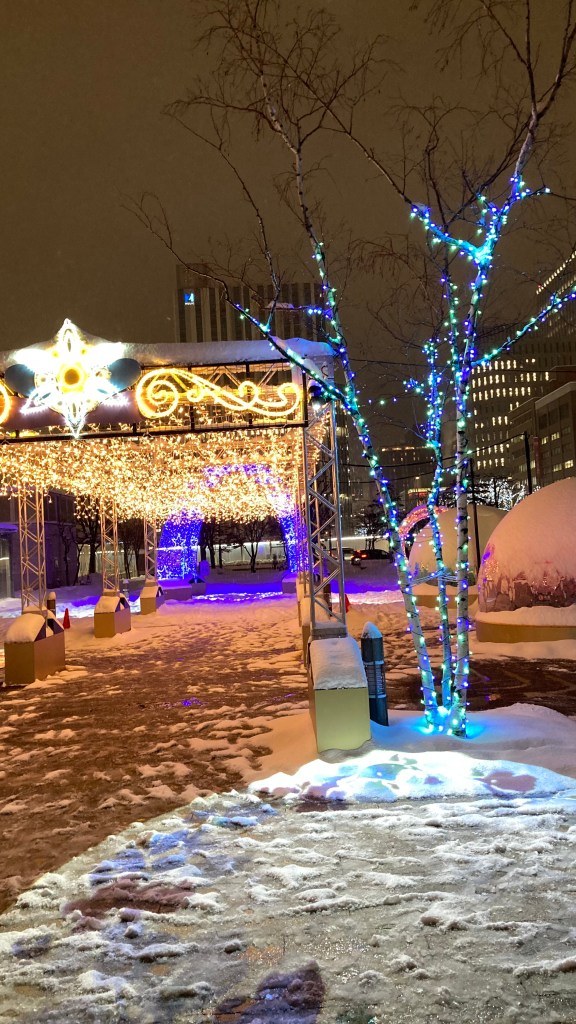
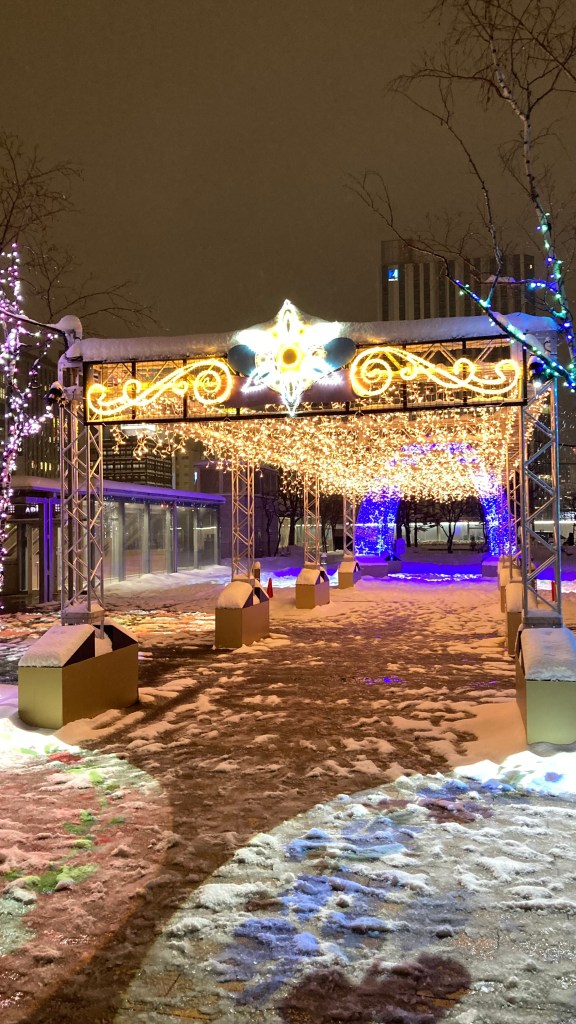
It was then back to the hotel, a stop for a bite to eat for dinner and then bed as we were quite tired from the days travels.
Saturday 13 December 2025
Maree and I decided to take things slowly today. We had a relaxed breakfast, put a load of washing on, and once that was done we planned to wander the streets and browse the shops. No snowfall this morning—just clear blue skies. There’s still plenty of snow underfoot, but it made for a very pleasant day.
As it turned out, we never made it to the shops after all. That’s now on tomorrow’s agenda, along with my attempt to collect the train tickets I booked for our trip to Lake Toya on Thursday. I’ve got the QR code, so it’s just a matter of persuading one of the automatic ticket machines to produce the eight tickets. If that fails, the staff at the ticket office are always wonderfully helpful.
Dinner tonight was at a Japanese BBQ restaurant, but unfortunately both the food and the service were disappointing—quite out of character for Japan. Tomorrow night should be a different story. We’ve booked a table at a teppanyaki restaurant that we checked out earlier, and it looks excellent. I suspect it will be on the pricey side, but I’m more than happy to pay for genuinely good food.
Sunday 14 December 2025
We spent most of the day wandering through the shops, with a particular focus on exploring Pole Town. This underground walkway stretches from Odori Park to the nightlife hub of Susukino, and today it was buzzing with people. It’s easy to see why it becomes so popular in winter—its sheltered passages let you escape the snow and cold while walking all the way from Susukino to Sapporo Station, a distance of just under two kilometres. Along the way, Pole Town offers around eighty boutiques, cafés, restaurants, bakeries, and assorted stores.
We strolled through the network of walkways, browsing here and there, but our main goal was to reach Sapporo Station to collect the train tickets I’d booked back in Australia.
On Wednesday we’re heading to Lake Toya for a one‑night stay. The lake is known for its clear, ice‑free waters throughout the year, its surrounding mountains—including the active Mount Usu—Nakajima Island, and the soothing Toyako Onsen hot springs. It seemed like the perfect place to visit before flying from Sapporo to Osaka the following day.
Collecting our tickets from the machines turned out to be far easier than I expected. A station attendant was guiding people to machines as they became available. I checked with him to make sure we were in the correct queue, and when he saw that I had a QR code, he directed us straight to the right machine.
All we had to do was select English and follow the prompts. Three minutes later, we were holding all our tickets. Simple.
I’ve also been eyeing the menu for tonight’s dinner at the Mitsui Teppanyaki Restaurant. It looks absolutely mouth‑watering, so we’re very much looking forward to the experience.
For anyone unfamiliar, teppanyaki is a post–World War II style of Japanese cuisine where food is cooked on an iron plate. The word comes from teppan (鉄板), meaning iron plate, and yaki (焼き), meaning grilled, broiled, or pan‑fried.
In Japan, teppan‑cooked dishes include steak, prawns, okonomiyaki, yakisoba, and monjayaki. The flat metal plates are usually propane‑heated and allow chefs to cook directly in front of guests. They’re often mistaken for hibachi grills—known in Japan as shichirin—which use charcoal or gas and have an open grate. Because teppan plates are solid, they’re ideal for cooking rice, eggs, and finely chopped vegetables.
One important distinction: in Japan, chefs do not throw food at diners, as is sometimes done in Australian teppanyaki restaurants. That theatrical style isn’t part of the Japanese tradition. Here, the emphasis is on the quality of the ingredients and the chef’s skill, rather than performance. The showmanship is largely an international invention.
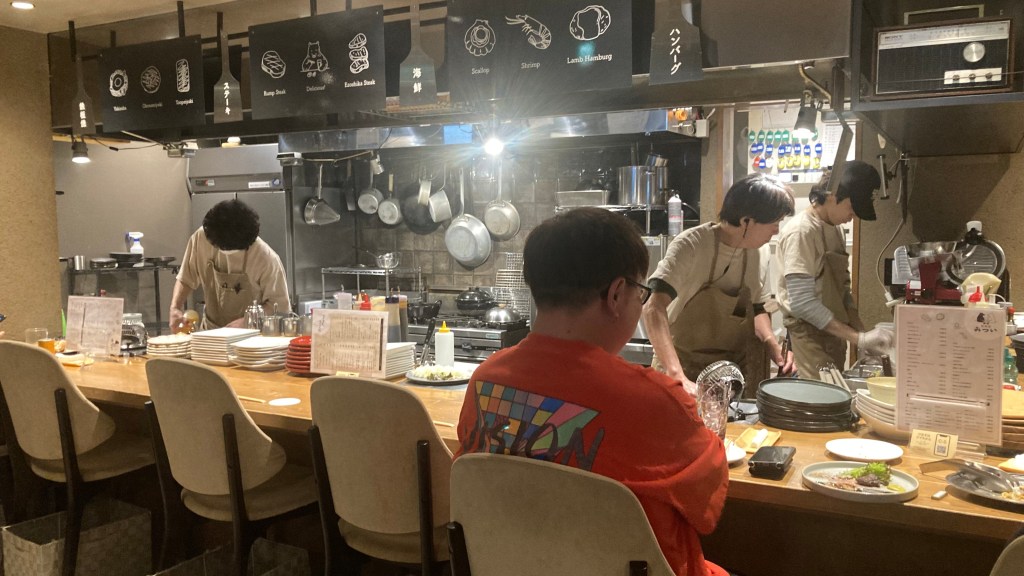
Dinner was excellent—both the food and the service. I enjoyed it so much that I forgot to take photos of each course… except one.
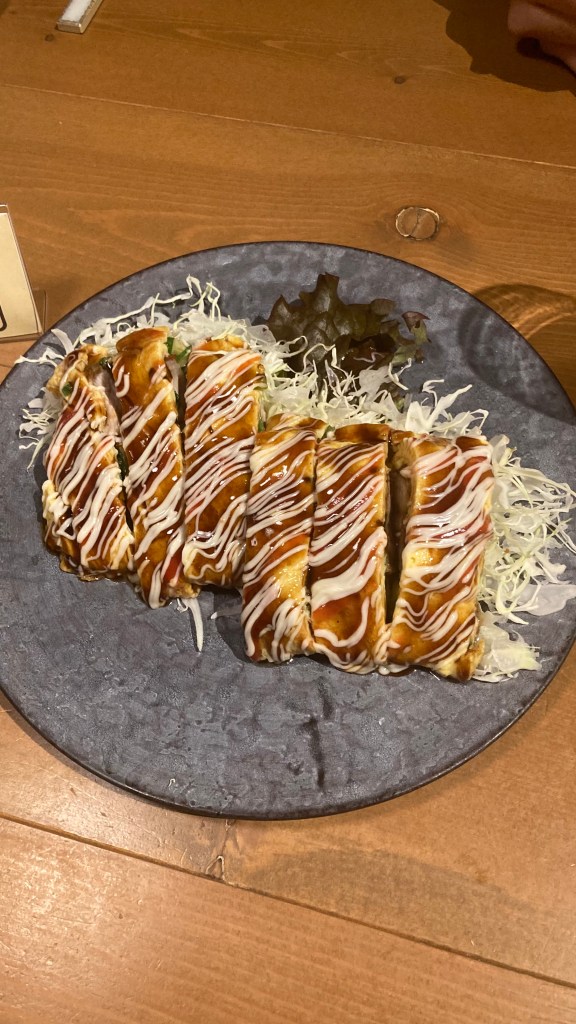
Below the chef’s cooking our food.
Monday 15 December 2025
Today we checked out of our hotel and moved to another place near Sapporo Station. The only reason for the change was that we’d originally booked just four nights, planning to head to Biei for a local “Illumination Tour”. When I looked more closely at the tour Alex had booked, we realised it actually started in Sapporo and returned here the same day.
With that discovery, there was no need to travel to Biei at all, so we cancelled the accommodation there and decided to stay on in Sapporo for two more nights—trying a different hotel while we were at it.
We’d really enjoyed our time at the Lamp Lights Books Hotel, and part of us wished we’d simply extended our stay. Its location was ideal, especially for wandering through the network of covered arcades that begins right outside the hotel.
Our new hotel, the Tokyu Stay Odori, is very good too—larger rooms, and to our surprise, a washing/dryer machine right in the room, plus a microwave and an electric hot plate. Perfect for putting together small meals. That’s clearly the concept here: you can either explore the local eateries or cook something simple yourself.
After dropping our small packs in the room, we headed straight to Komeda Coffee. An excellent choice, as the food will attest.
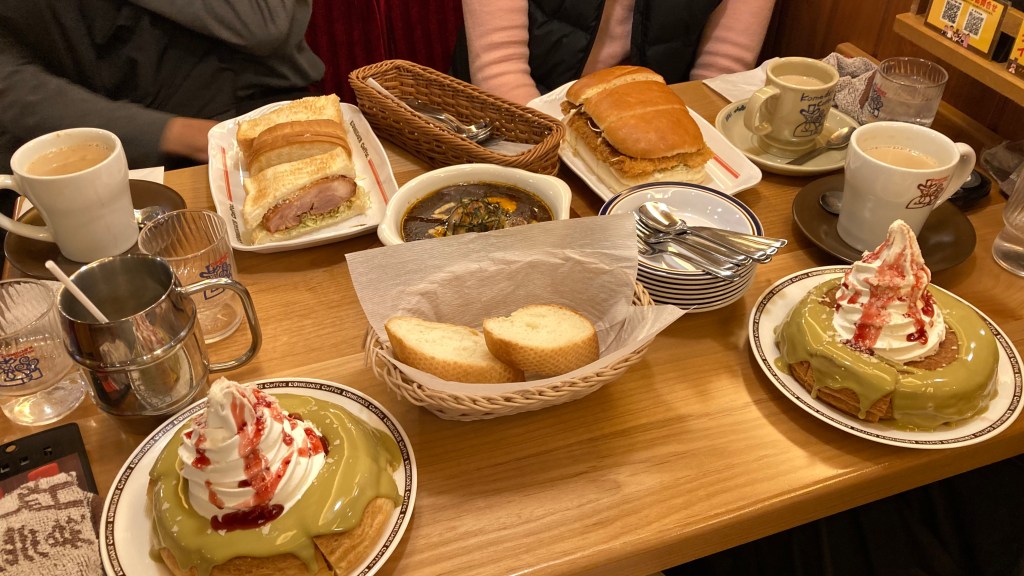
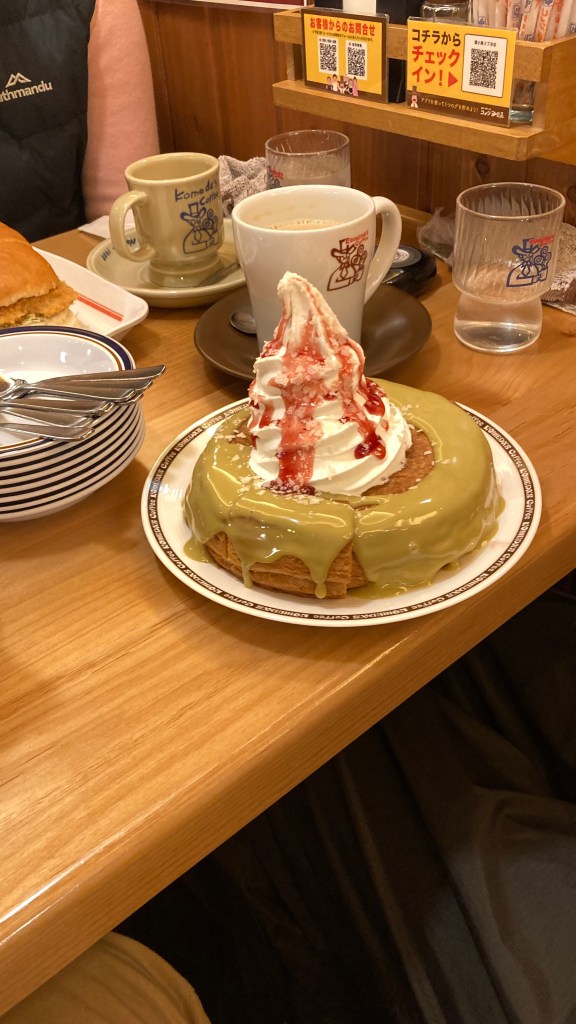
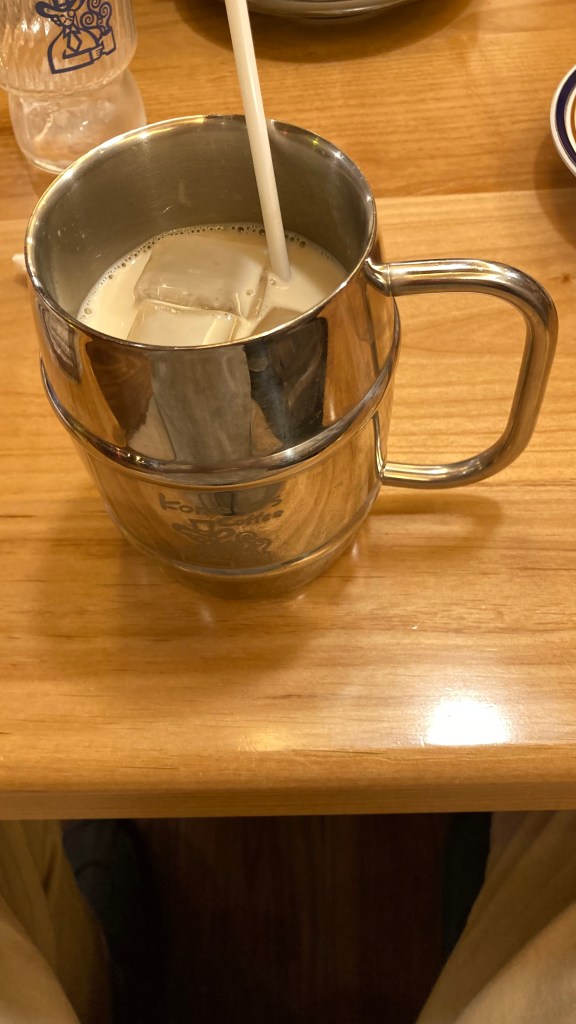
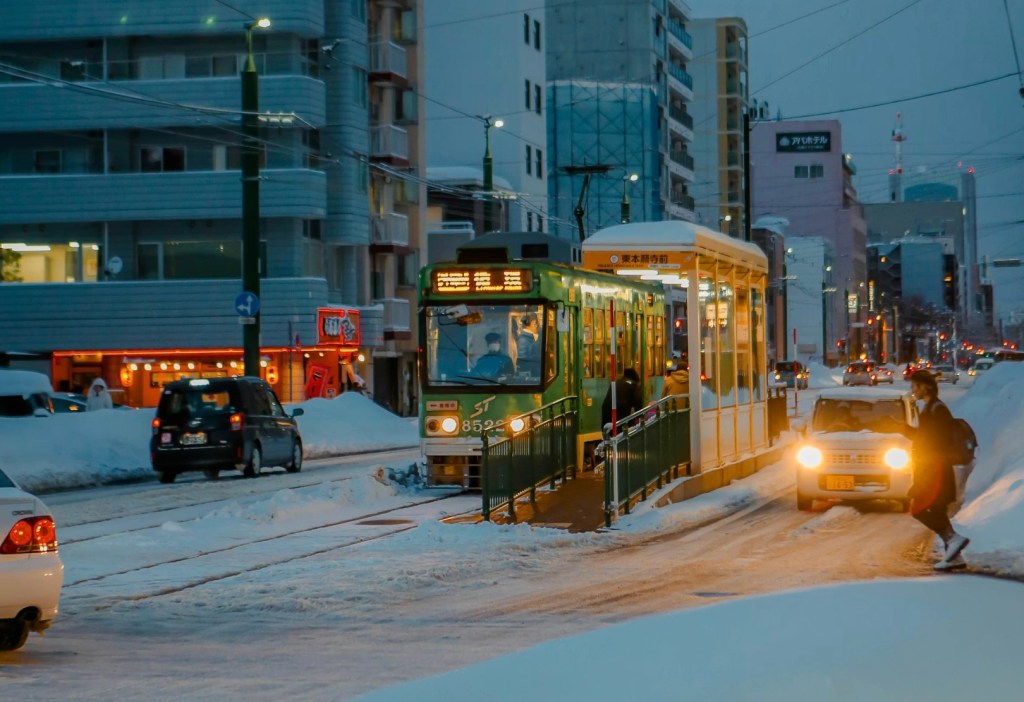
From here, Alex and Laorita headed off to do some shopping, while Maree and I drifted through the nearby streets, browsing at our own pace. With check‑in at the new hotel not available until 15:00, we had a perfect window to explore a little more. We hopped aboard the local circular loop tram and let it carry us around the area.
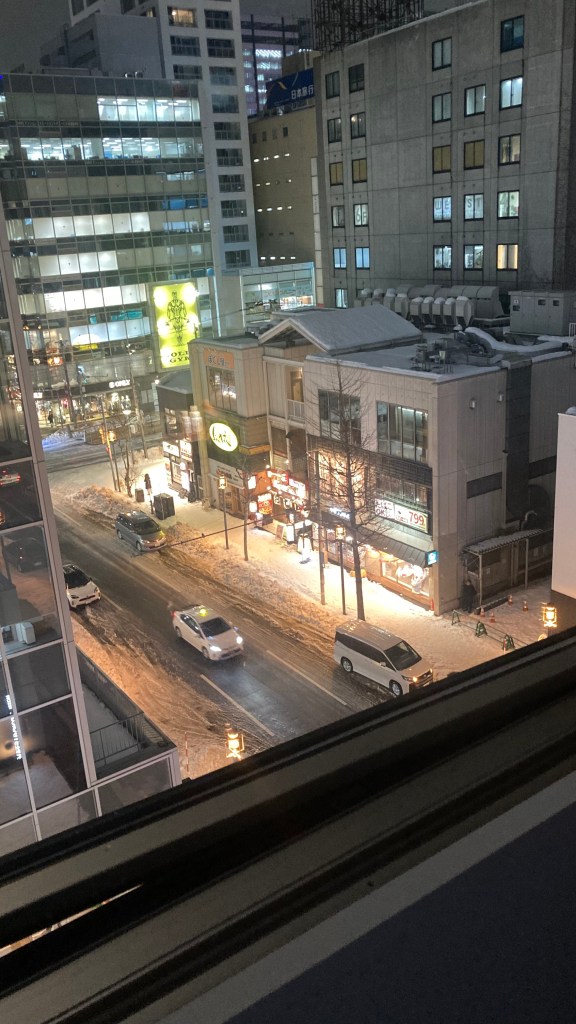
The photo shows a neighbourhood restaurant framed by the view from our hotel room. One small blessing of Sapporo hotels is that the windows actually open—only about four inches, but just enough to let in that wonderfully crisp air. I crack it open long enough to bring the room down from a stifling 25 degrees to a far more civilised 22. Anything warmer and sleep becomes a lost cause for me.
Tuesday 16 December 2025
In winter, the drive from Biei to Furano transforms into the Illumination Trail. These sights are open year‑round, but they take on a particularly magical quality when illuminated during the colder months.
Today, Maree, Alex and Laorita spent the day exploring the region on a full‑day tour. Below is a little background on the area, along with some of the photos Maree captured along the way.
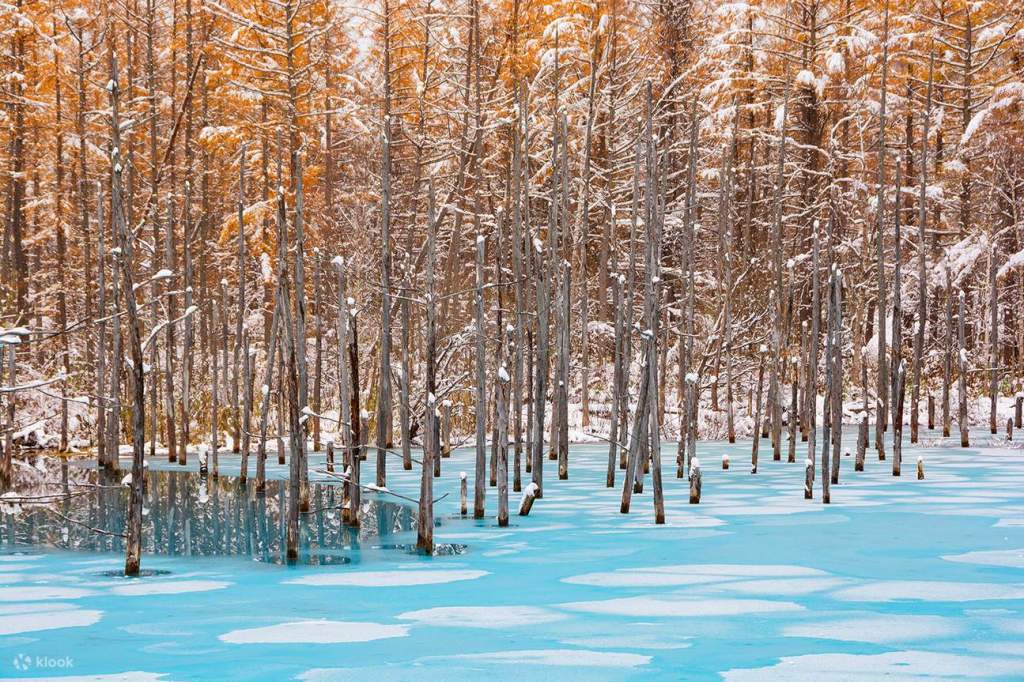
Shirogane Blue Pond in Biei, Hokkaido, is an artificial lake created as part of post‑eruption engineering works on the Biei River following Mount Tokachi’s 1988 eruption, designed to shield the town from volcanic mudflows. Its striking blue hue is believed to come from naturally occurring colloidal aluminium hydroxide suspended in the water. After Typhoon Mindulle swept through in August 2016, the pond’s water level fell and its colour temporarily shifted to a muddy brown as sediment from the Biei River washed in.
Ningle Terrace, tucked deep within Furano’s forest, feels like a tiny storybook village brought to life. Around fifteen small cabins sit quietly among the trees, linked by a wooden boardwalk scented with fresh pine. Each little hut showcases its own craft: the Forest Candle Shop offers wooden candles carved from local Furano timber; Furano Silver Craft & Snow Crystals displays delicate pure‑silver snowflake charms; and the Forest Leather Workshop sells charming Ningle‑sized leather boots. They’re the sort of creations you won’t find anywhere else.
Shirohige Falls, located in the Shirogane Onsen area of Biei, is a striking waterfall where groundwater seeps through layers of rock and drops roughly 30 metres into the Biei River. From the viewing platform, the scene unfolds in two layers—the vivid blue river below and the cascading water above. Dozens of narrow streams spill through the rock face like strands of a white beard, giving the falls their name, Shirohige, meaning “white beard.”
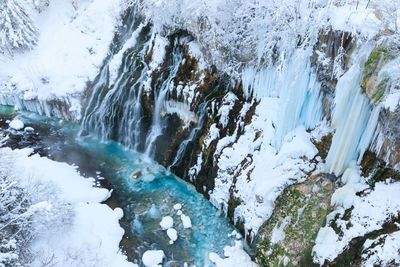
The Biei River is often called the Blue River, its surface glowing with a striking, transparent blue that feels almost otherworldly. The roar of its waterfalls rolls through the valley, while cold spray lifts on the wind and settles like a whisper on the surrounding cliffs.
In winter, the scene sharpens into something even more dramatic. White threads of falling water, deep snow, and dark rock faces form a stark, frozen tapestry. After sunset, frost‑laden trees catch the light, their ice crystals shining white against the night. From the darkness, the waterfall’s pale lines emerge like brushstrokes on a black canvas.
A single river, shifting its expression with every season—quietly reminding you how endlessly inventive nature can be.
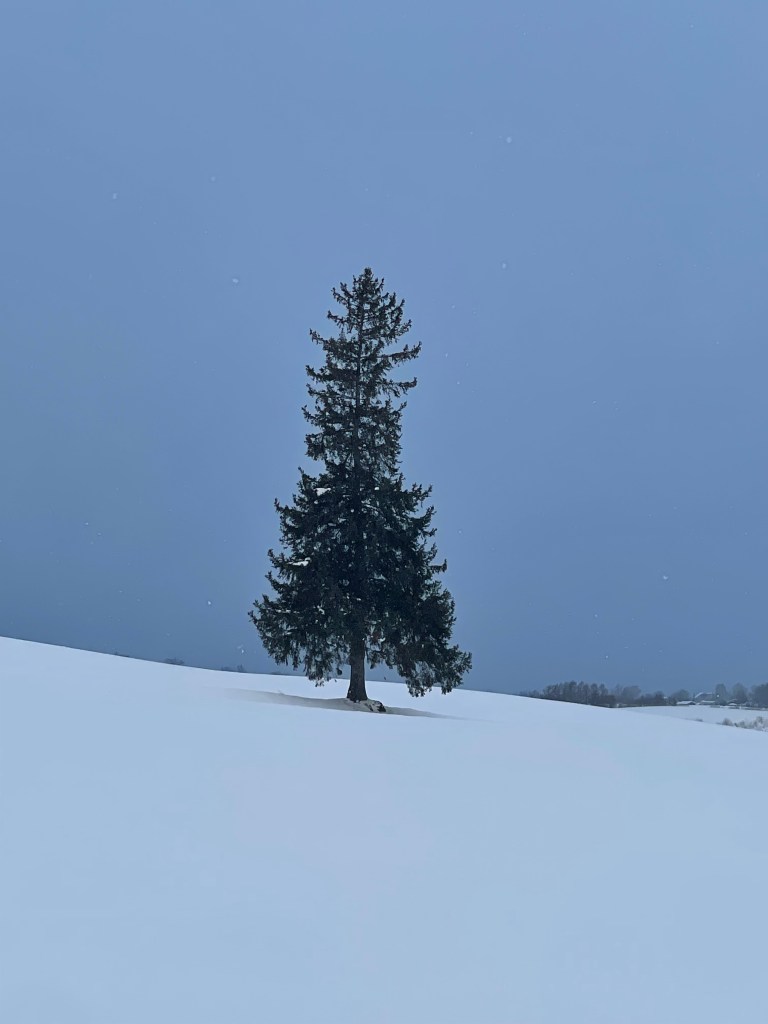
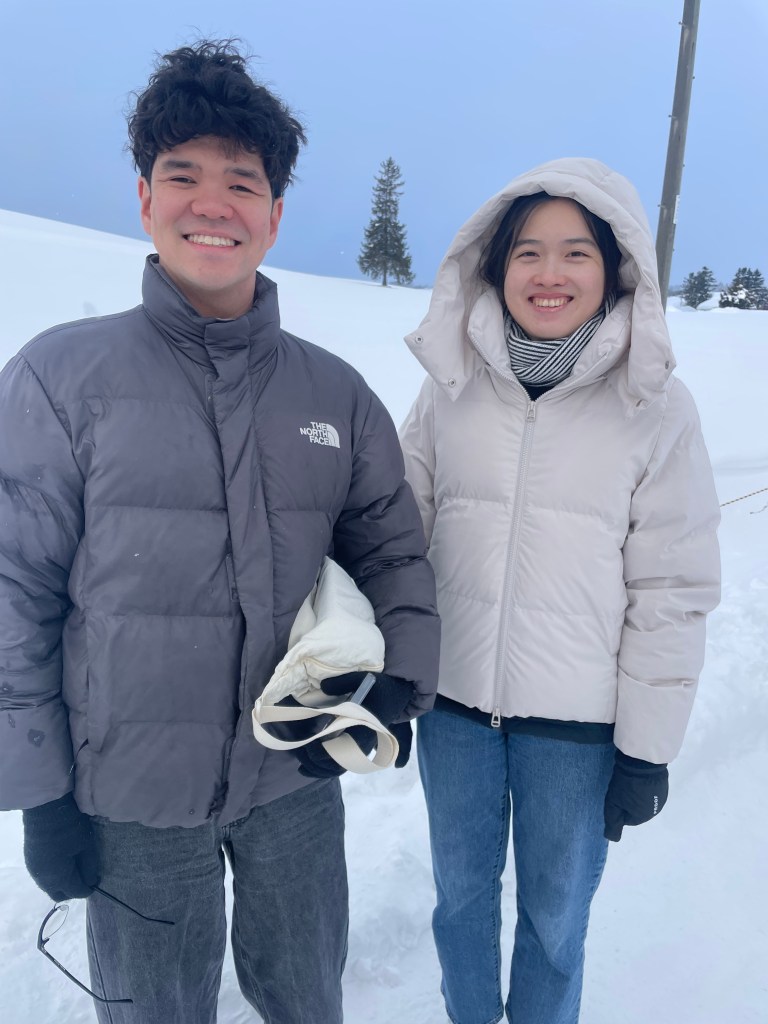
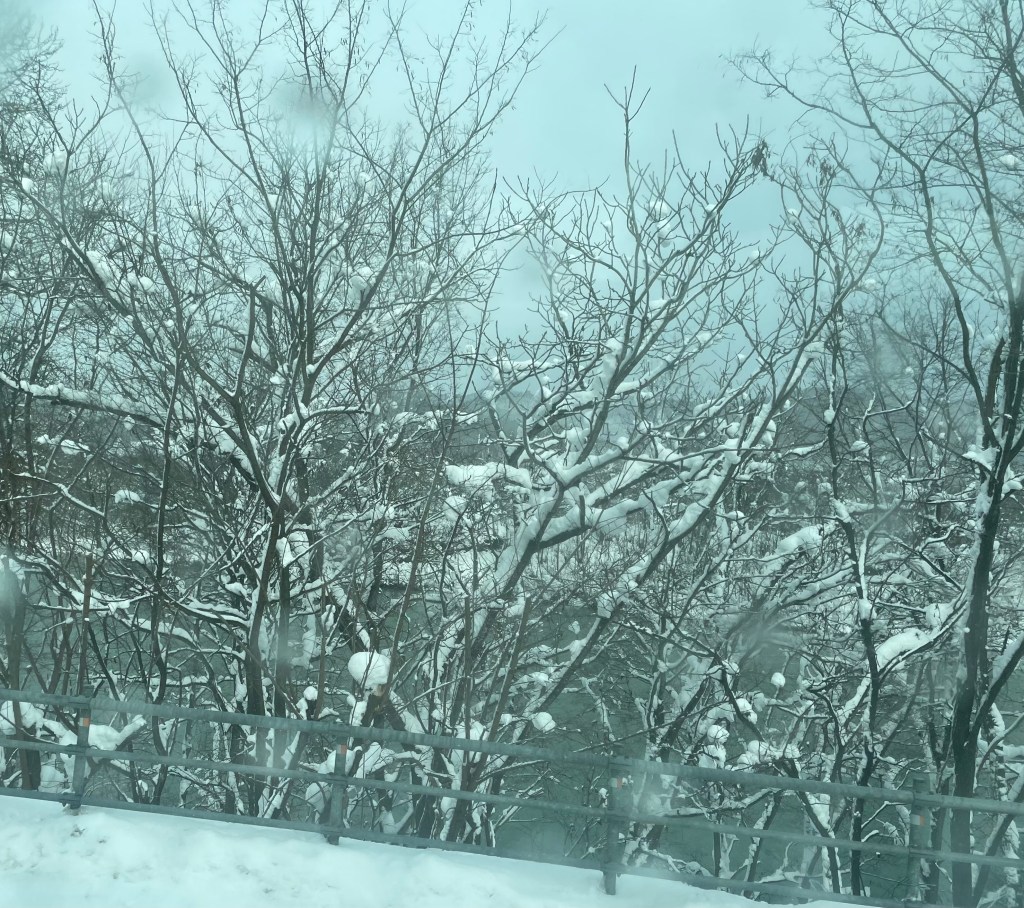
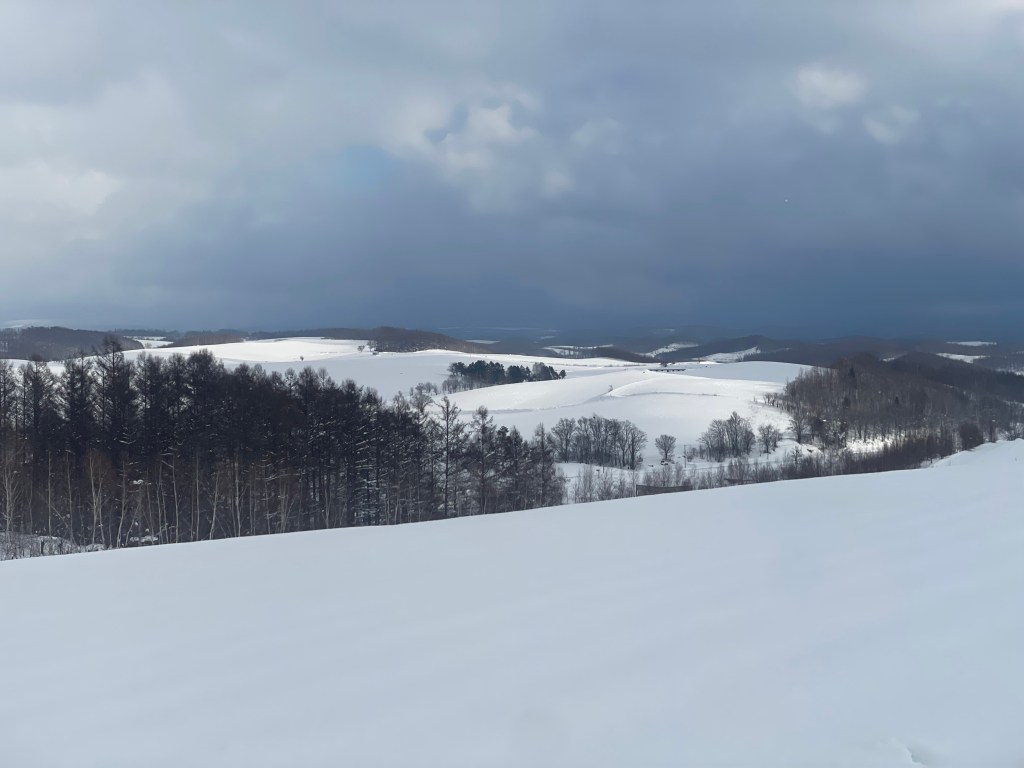
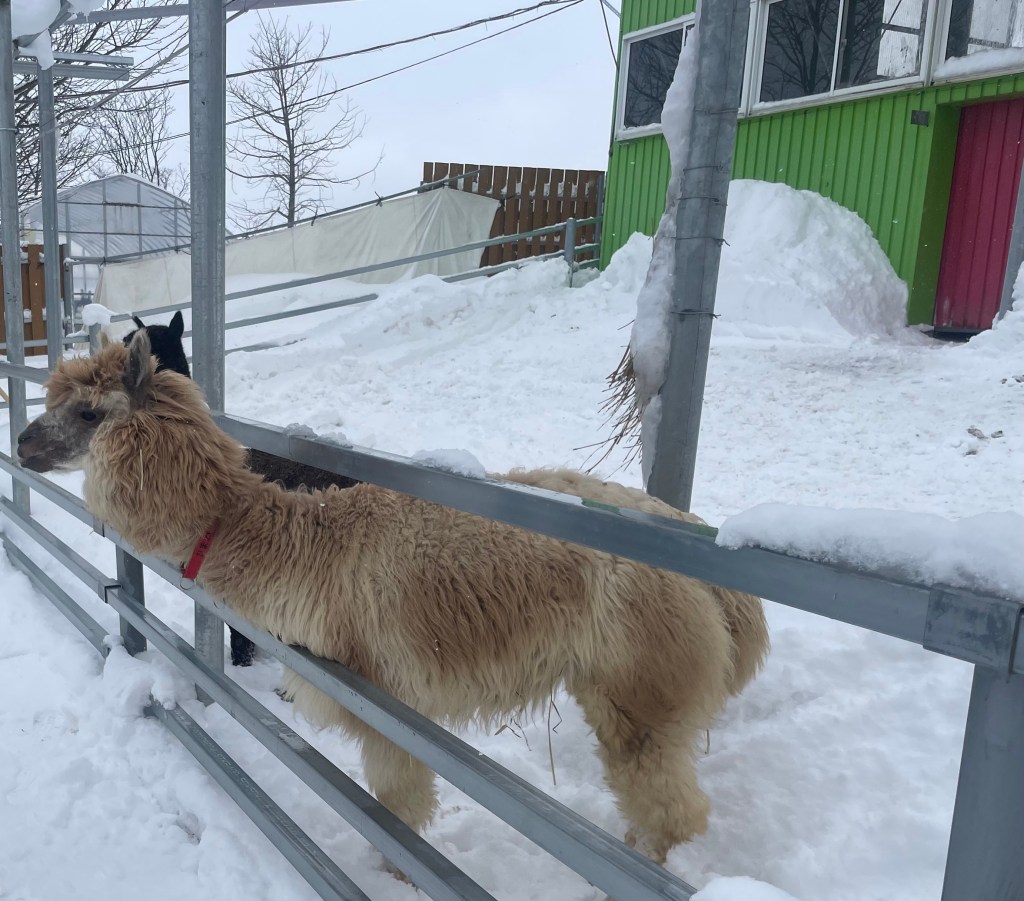
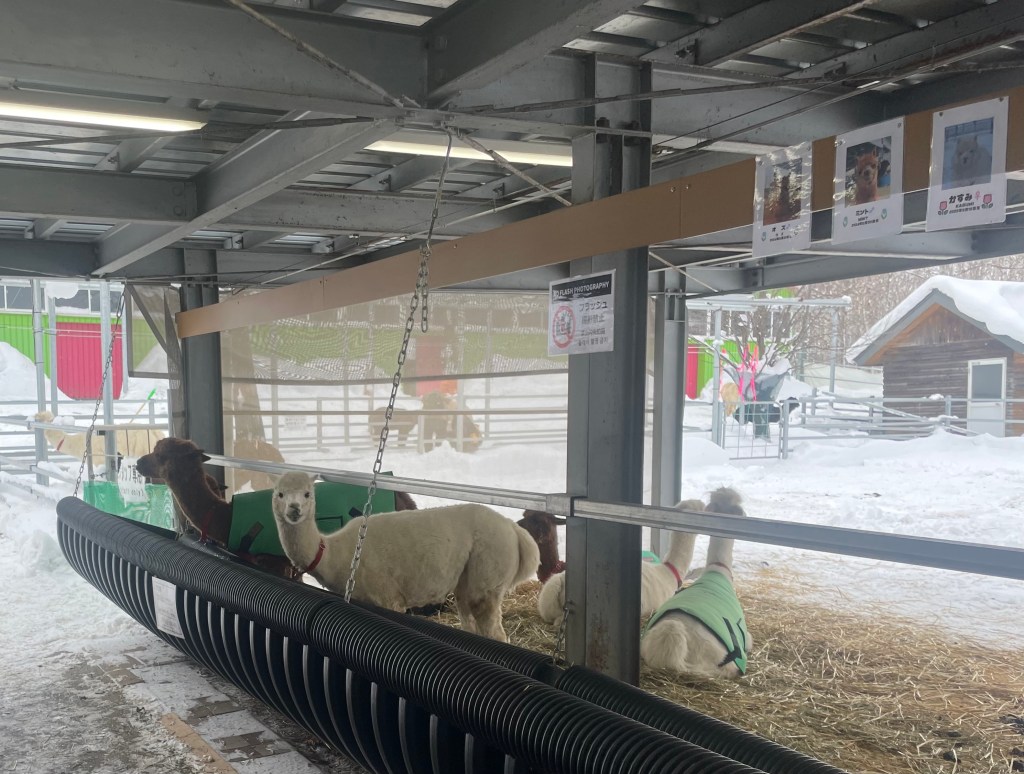
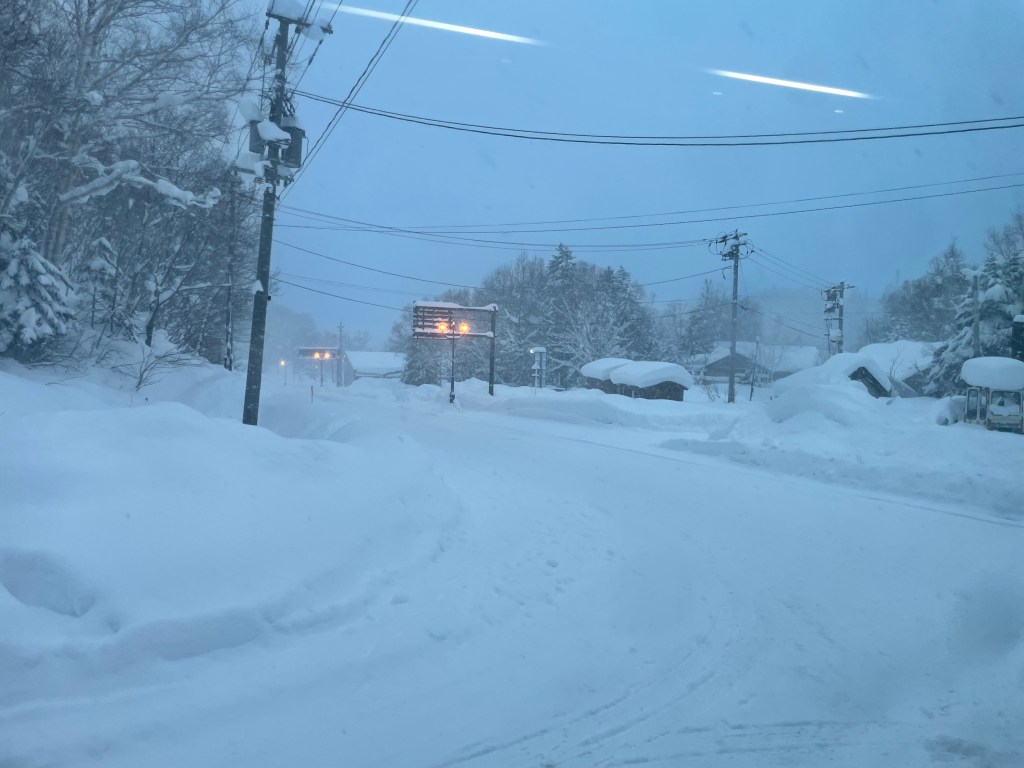
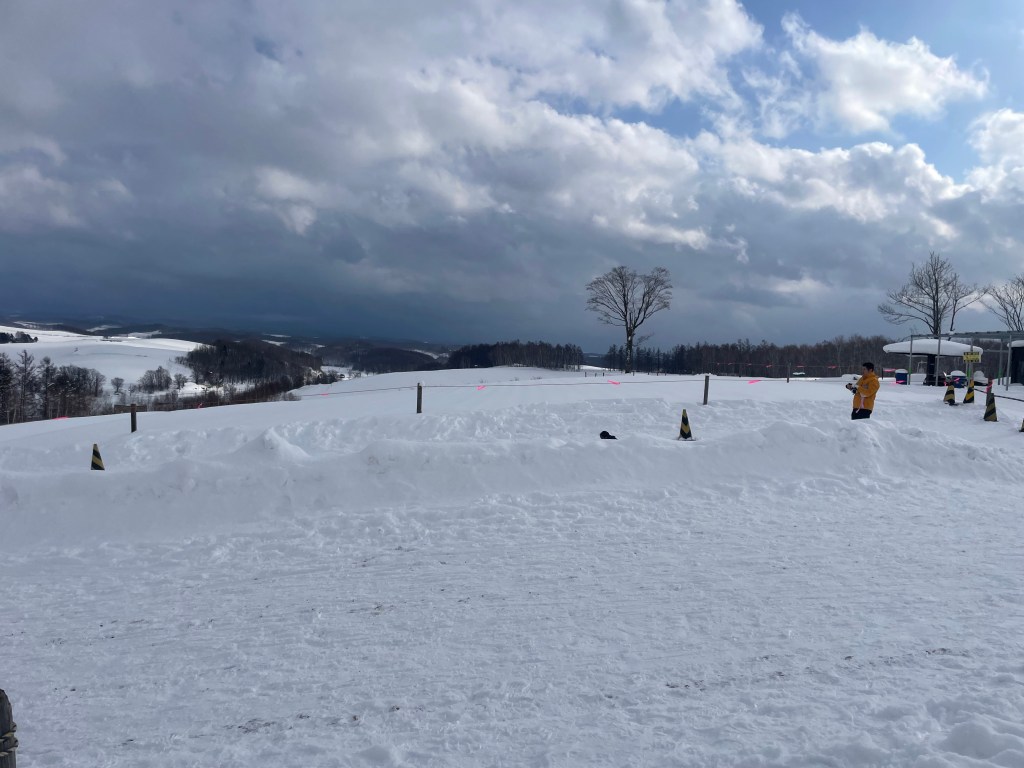
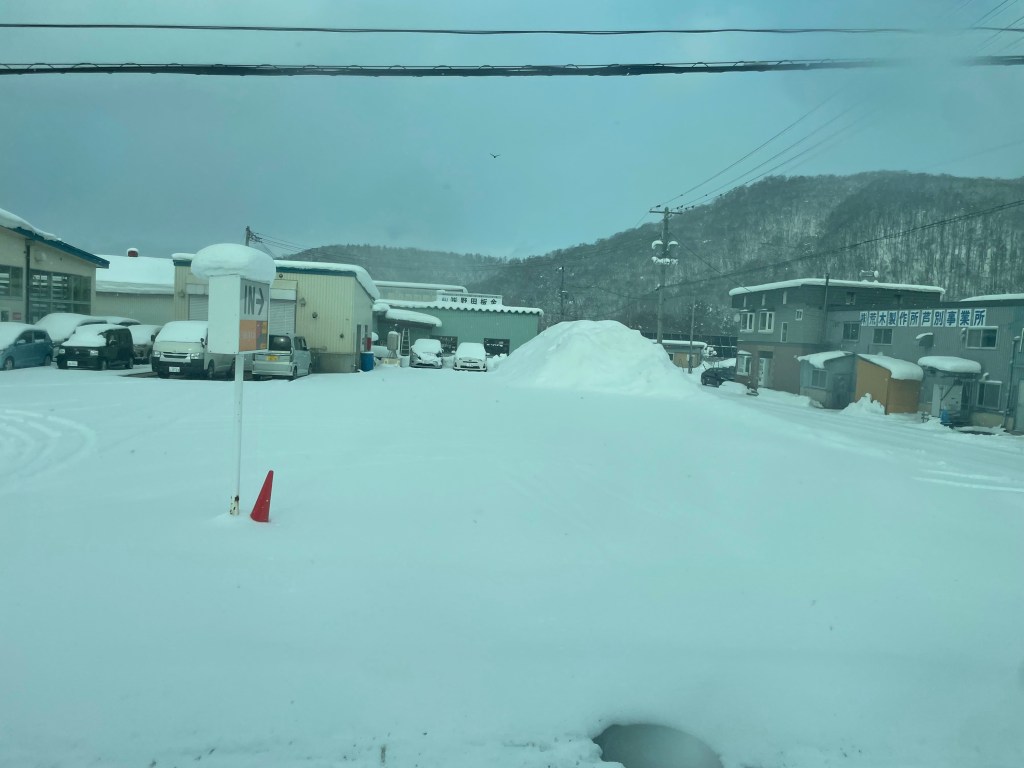
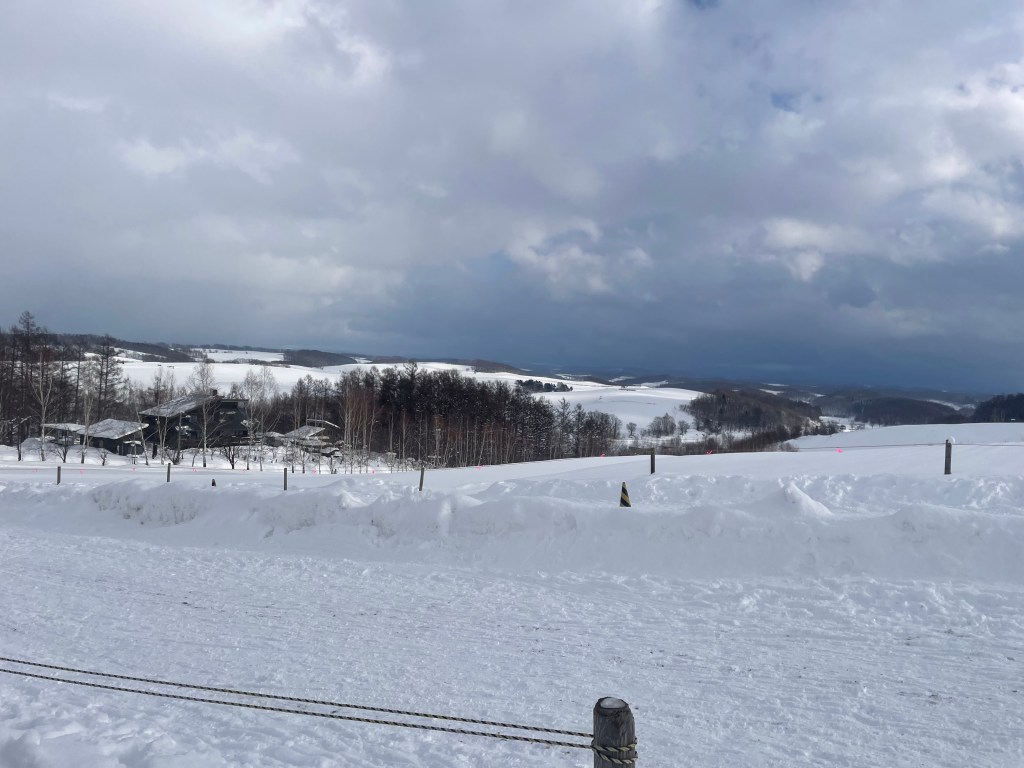
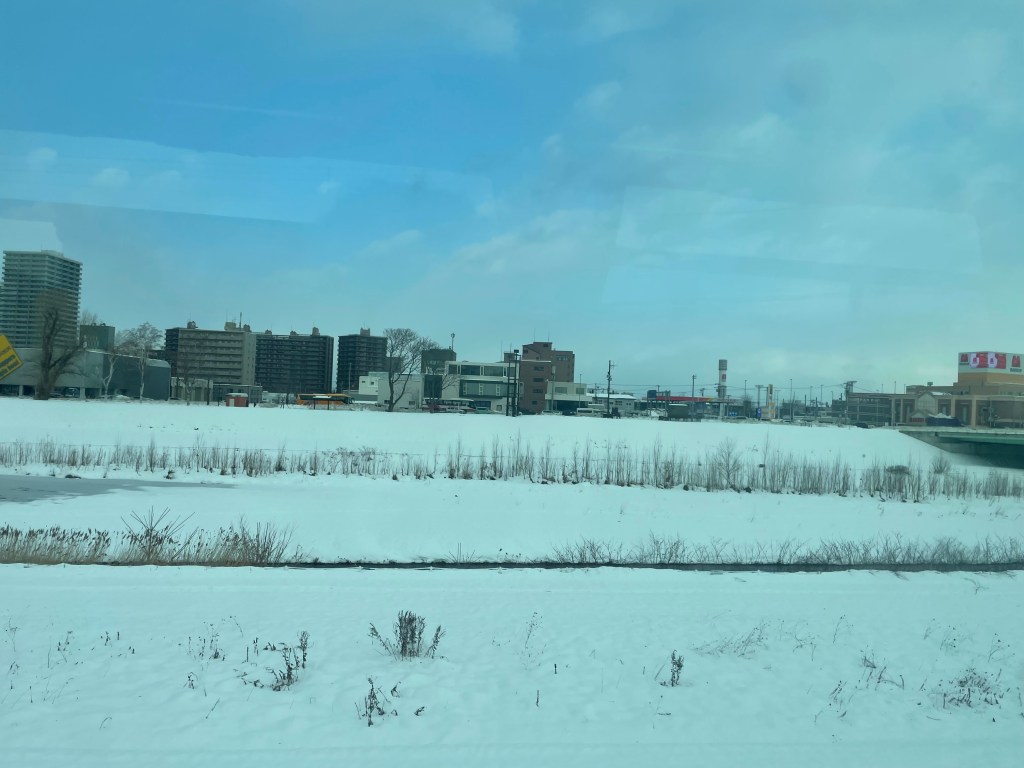
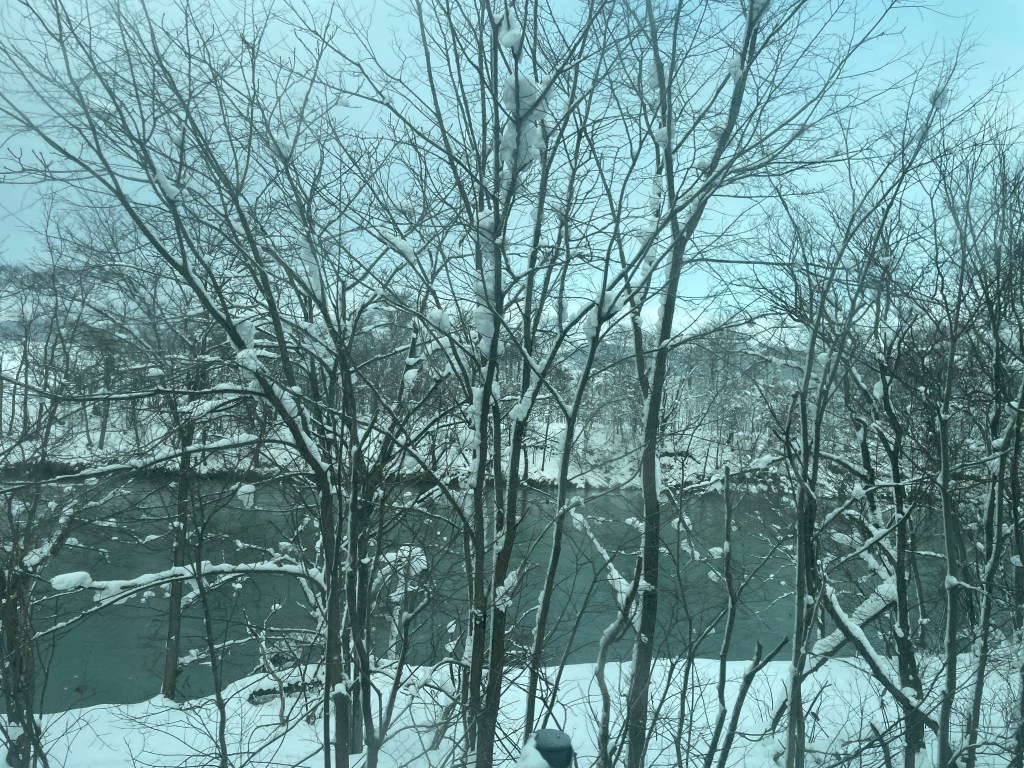
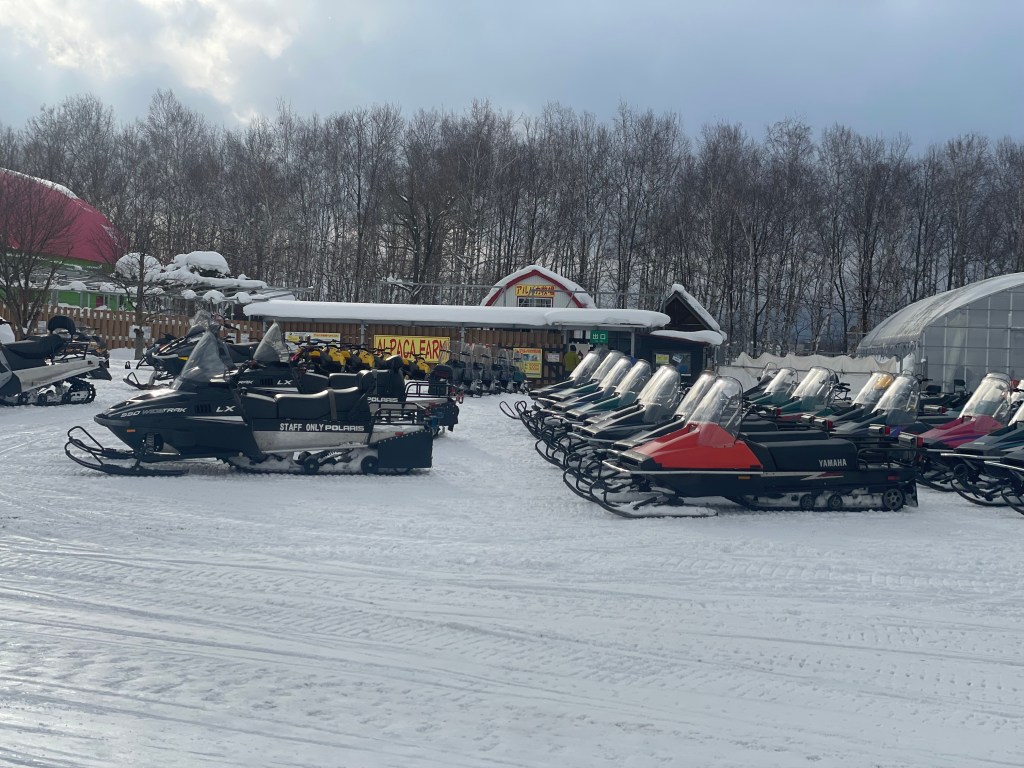
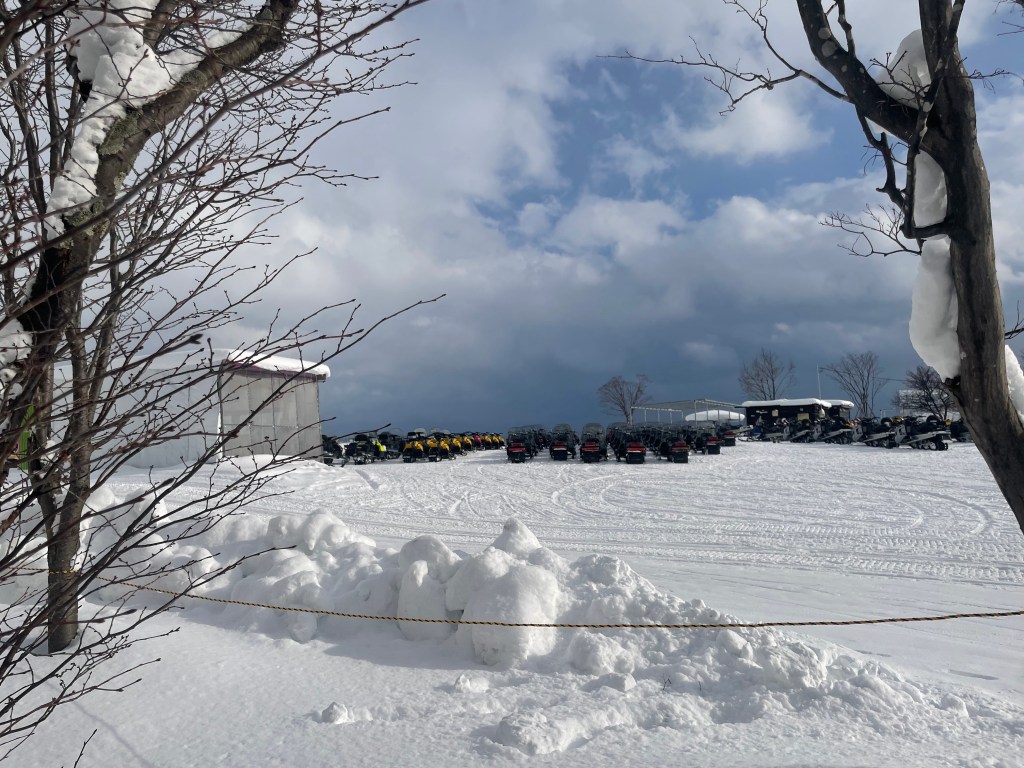
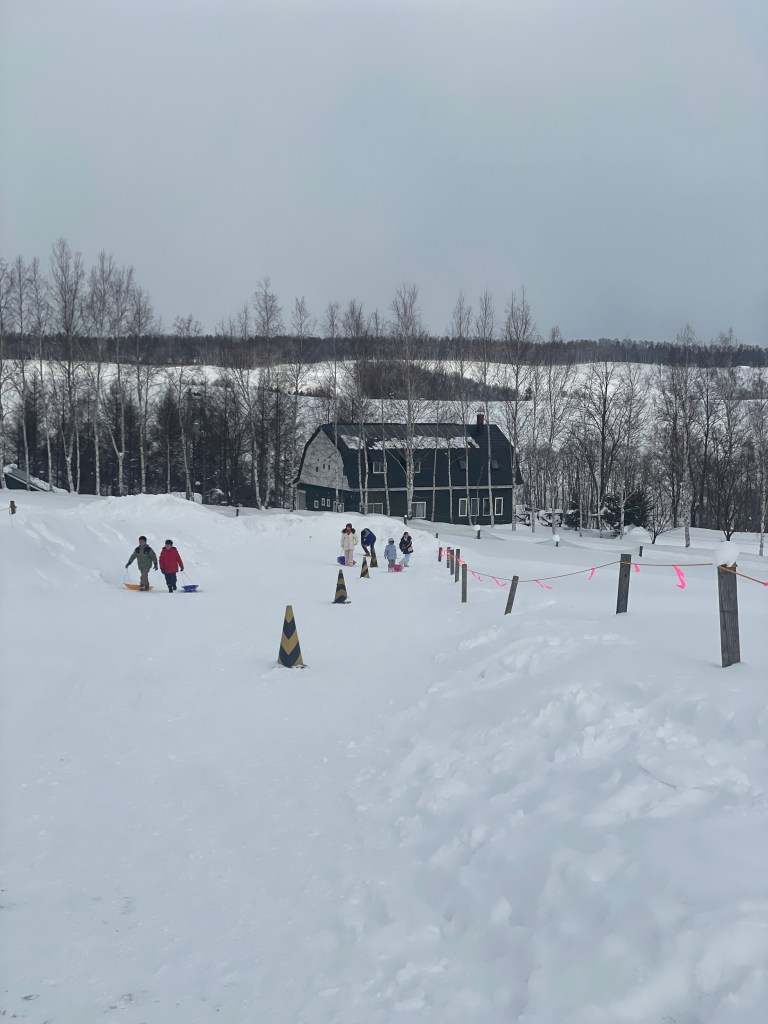
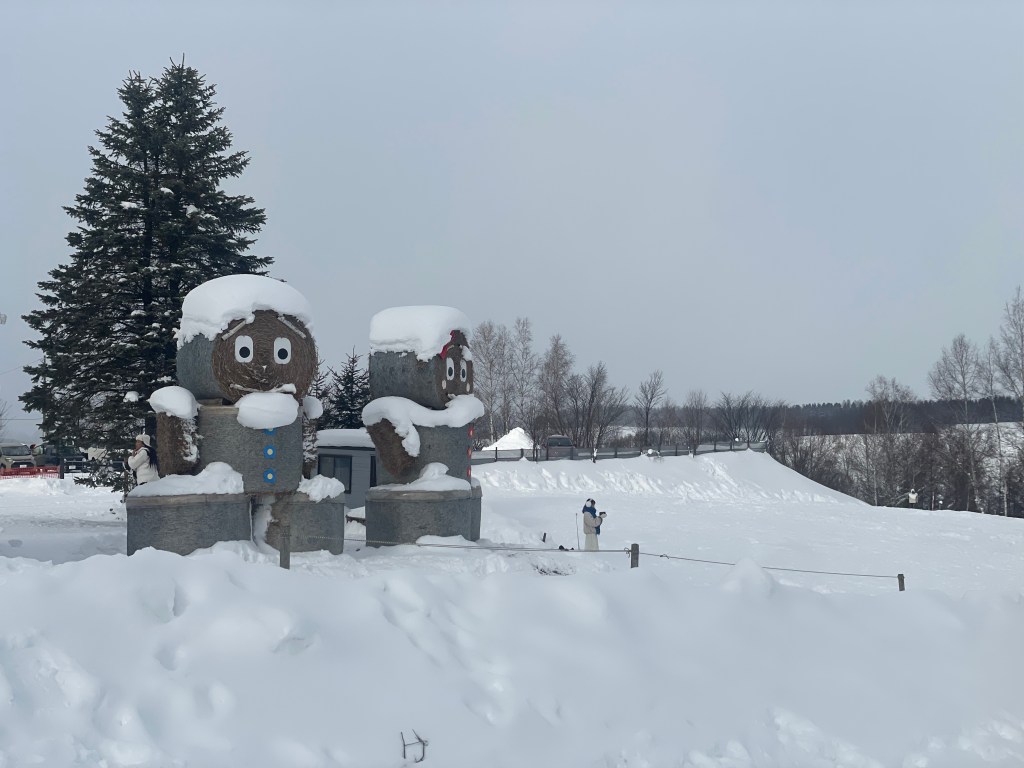
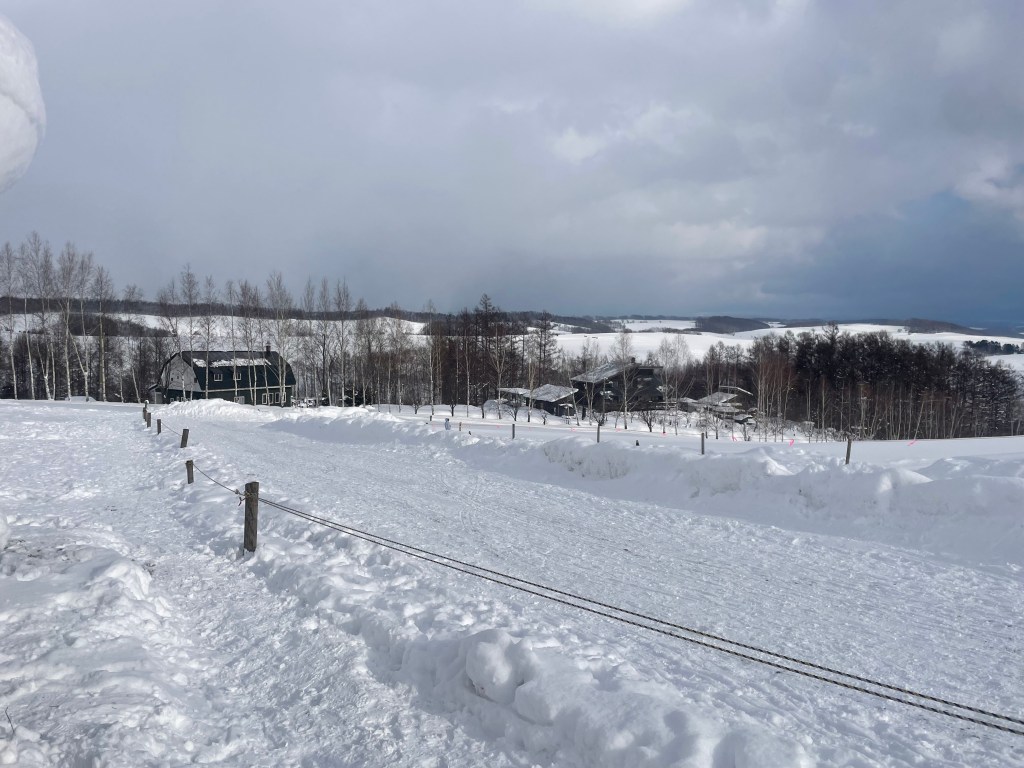
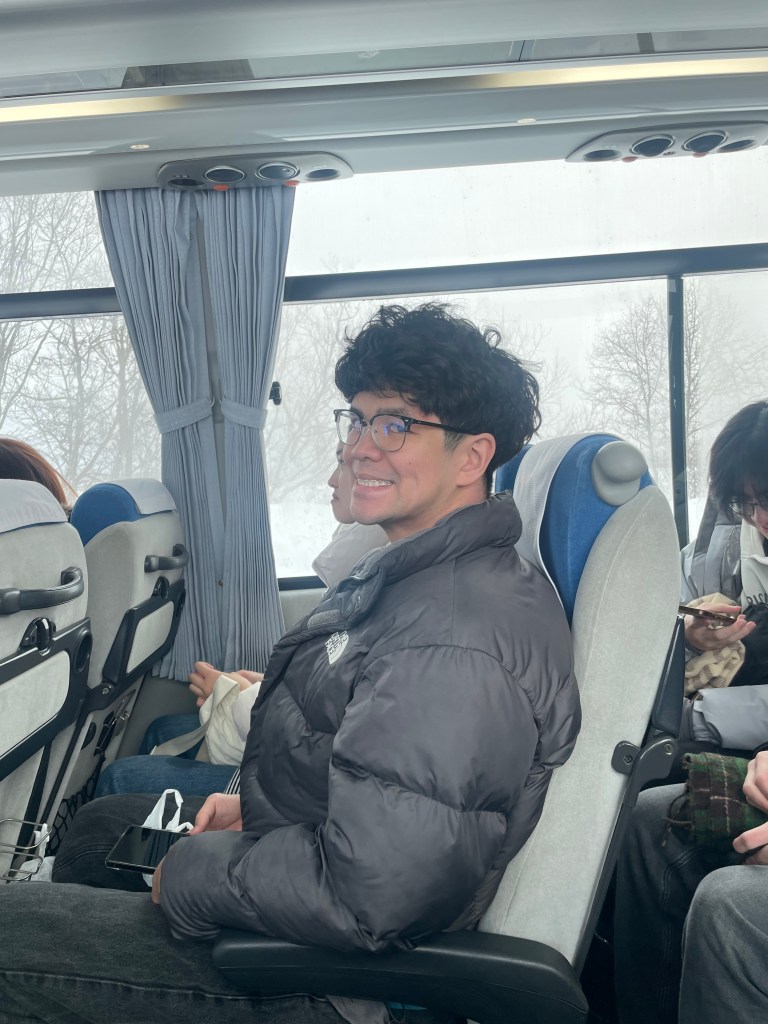
Their return journey turned out to be quite an adventure.
Maree explained that the bus dropped the group at the waterfall and then went to park, only to become bogged in the snow. That was at 16:00. By 17:25 everyone had transferred to a second bus. At 18:00 they reached the next sightseeing stop and swapped back to their original bus, which had finally been freed and returned to the road.
They set off for home at 18:13. They were originally due back by 19:30, but with the weather and road conditions it was always going to be at least a three‑hour drive. About thirty minutes later Maree texted to say the bus had begun sliding on the ice, slipped into a hole, and ploughed into a snowbank. Thankfully no one was hurt. At 19:00 they were told a replacement bus was on its way. By 20:00 they were on board the new bus and heading home—again. After a brief stop so everyone could use a bathroom, Maree finally walked through the hotel door at 23:45. She was utterly exhausted, and I can’t say I was surprised.
We didn’t even try to settle down until 12:45am, as Maree needed time to unwind before bed. With our train leaving at 08:43, meaning a 06:00 start to get ready and check out, we decided not to join Alex and Laorita on the trip to Lake Toya. Given the day she’d had, it was far better for Maree to rest properly. We’re both disappointed—we were really looking forward to Lake Toya, and Alex put so much effort into planning it—but sometimes circumstances change, and today’s travel chaos was impossible to foresee.
At least Alex and Laorita can enjoy Lake Toya without the oldies in tow, and the four of us still have plenty to look forward to when we head down to Kyoto on Thursday. Alex has some wonderful things lined up for the next ten days.
Wednesday 17 December 2025.
Today is another leisurely day for Maree and me. We’re staying put in Sapporo, while Alex and Laorita have headed down to Lake Tōya for a two‑day, one‑night visit. They’ve been sending through some lovely photos, so a little background on the area feels in order.
Lake Tōya is a volcanic caldera lake within Shikotsu–Toya National Park, in Hokkaido’s Abuta District. It forms part of the “Toya Caldera and Usu Volcano Global Geopark”. Mount Usu, a stratovolcano, rises along the southern rim of the caldera. The lake itself is almost perfectly round—about ten kilometres across from east to west, and nine kilometres from north to south. (A stratovolcano, or composite volcano, is the classic steep, conical type built from alternating layers of viscous lava, ash, pumice, and tephra, and is known for its dramatic, explosive eruptions.)
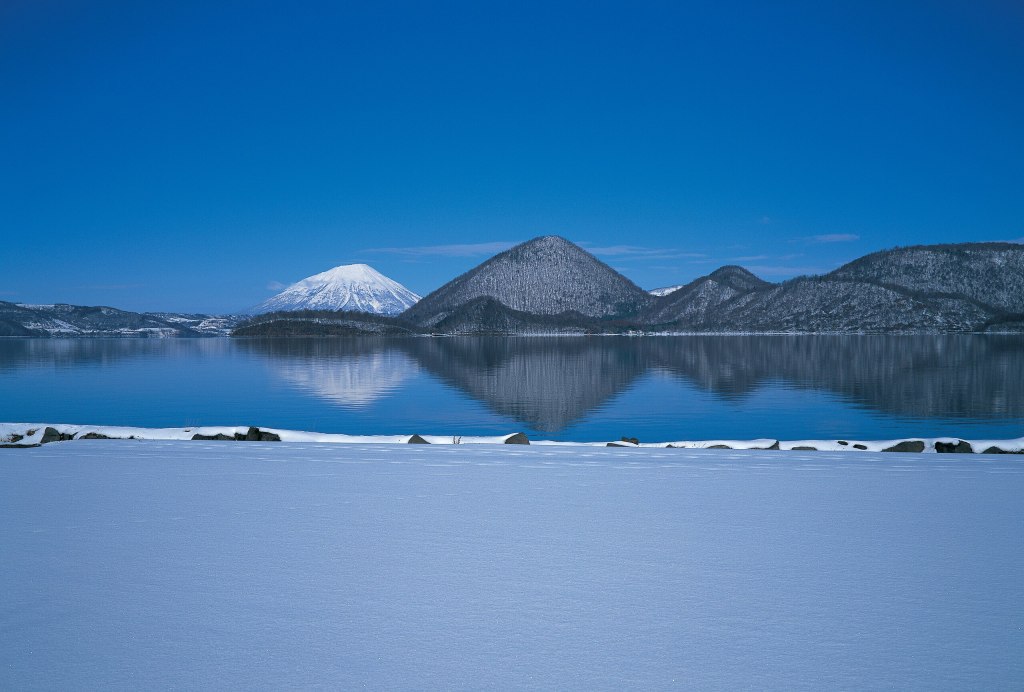
Encircling the lake are a number of parks and walking trails, including the Waterfront Forest Lane (Takarada Nature Observation Trail) and the Nishiyama Sanroku Crater Trail. Several town‑run onsen in Toyako look directly out over the water, and a scattering of hand and footbaths sit close by. In a charming local touch, large vending machines near the onsen dispense natural spring water that visitors can take home.
Alex and Laorita stayed at The Lake Suite Ko No Resort, where the rooms open onto expansive views of Lake Toya and the surrounding mountains.
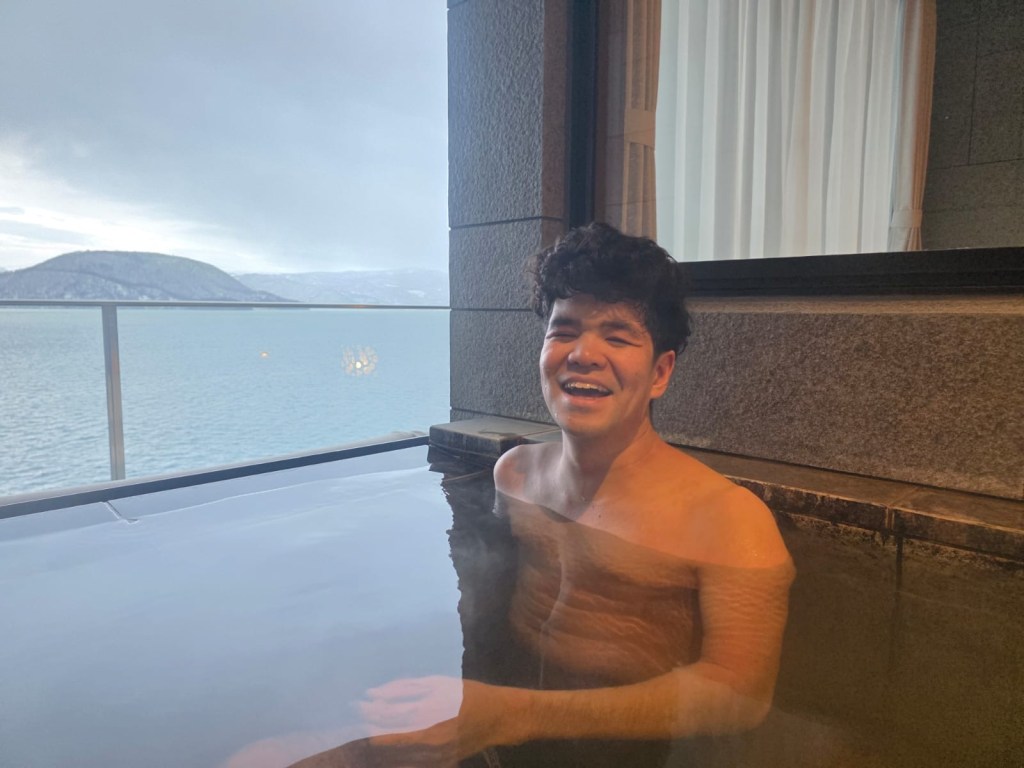
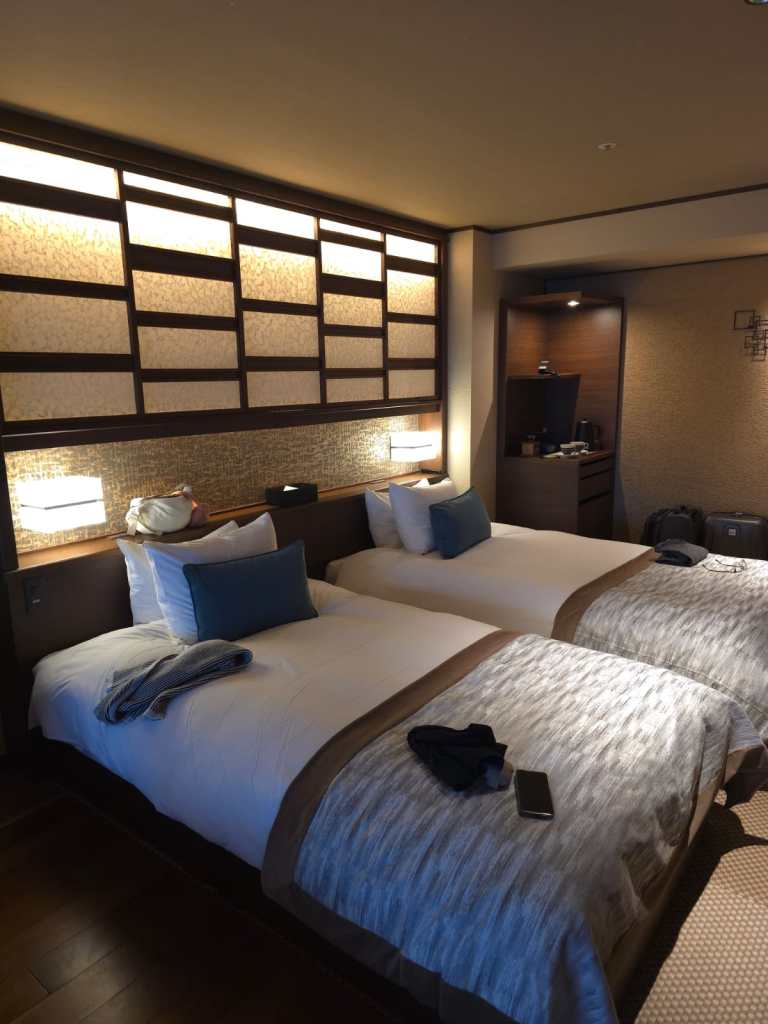
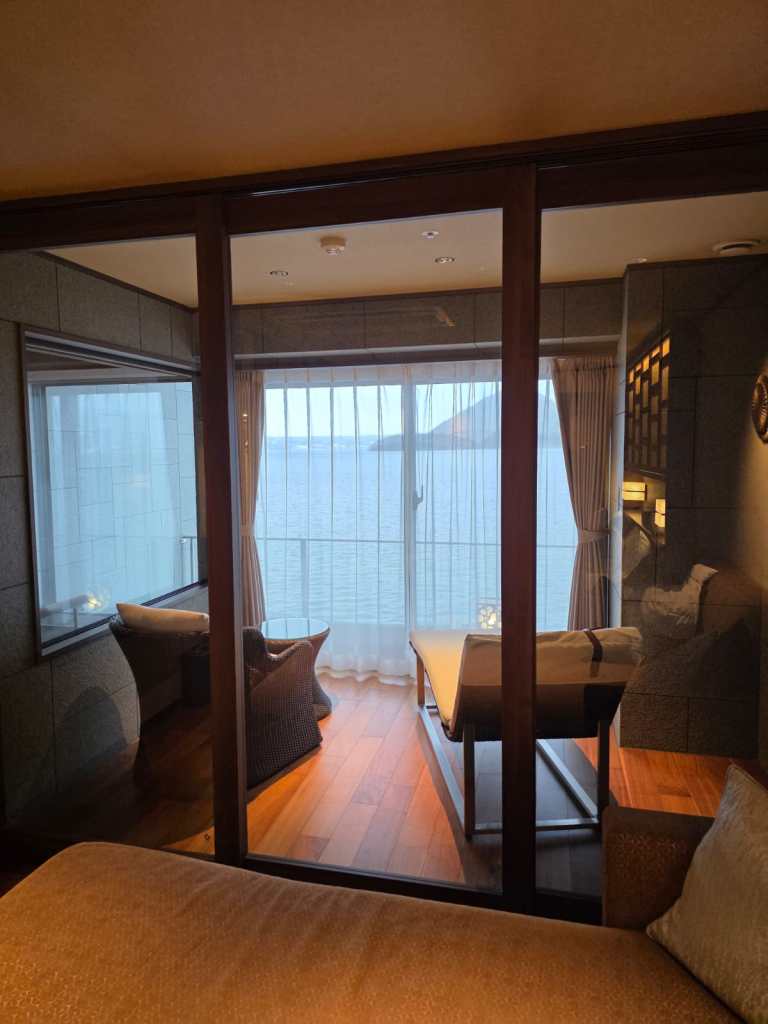
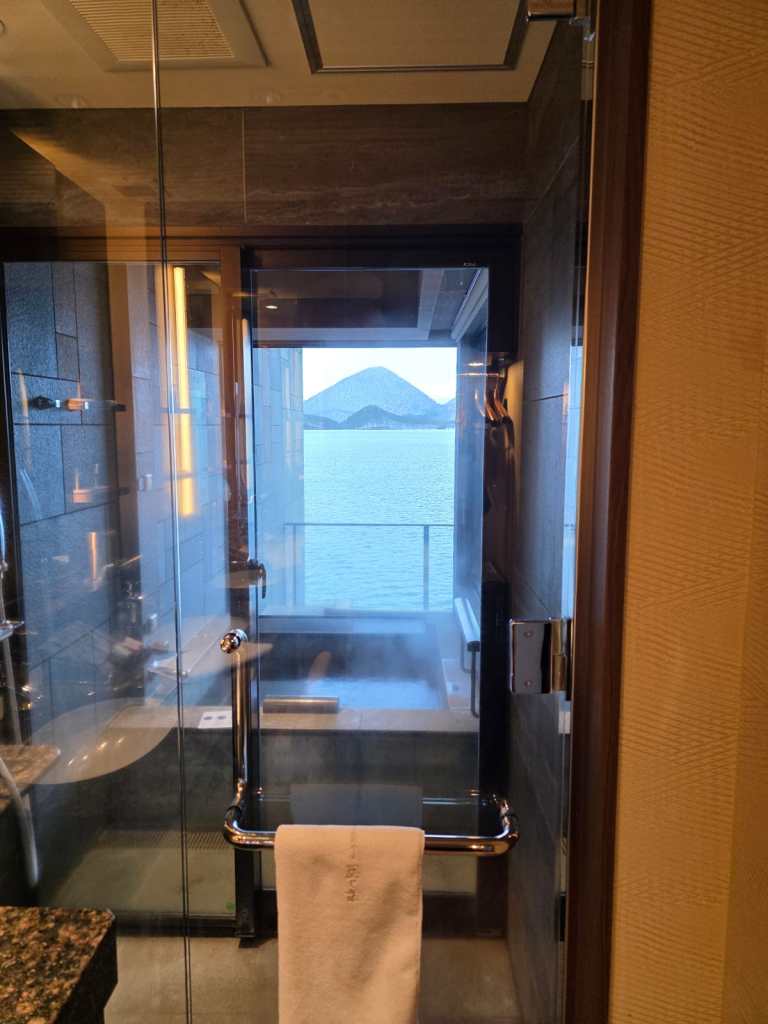
They had dinner and there were some very interesting specialties on the menu.
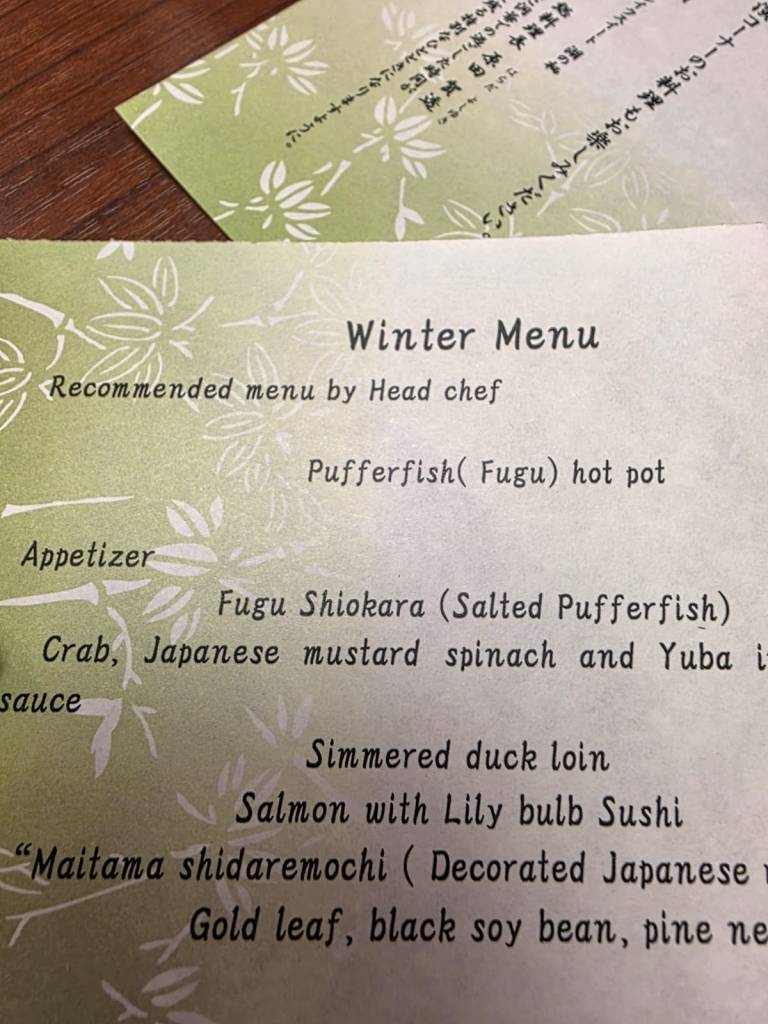
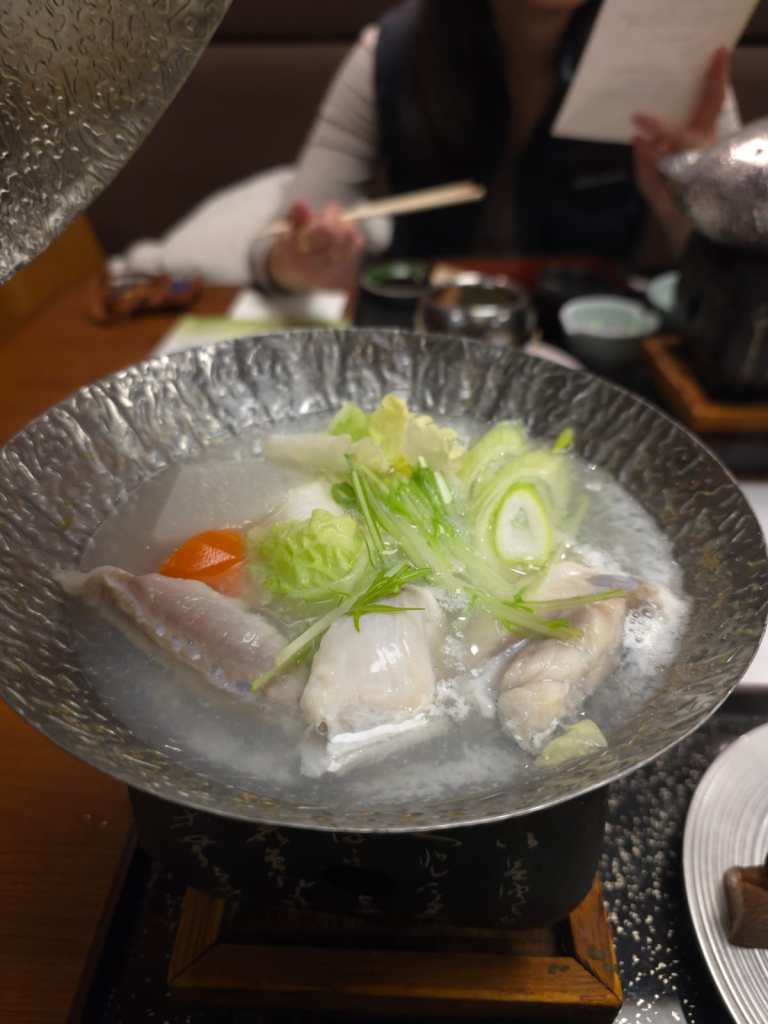
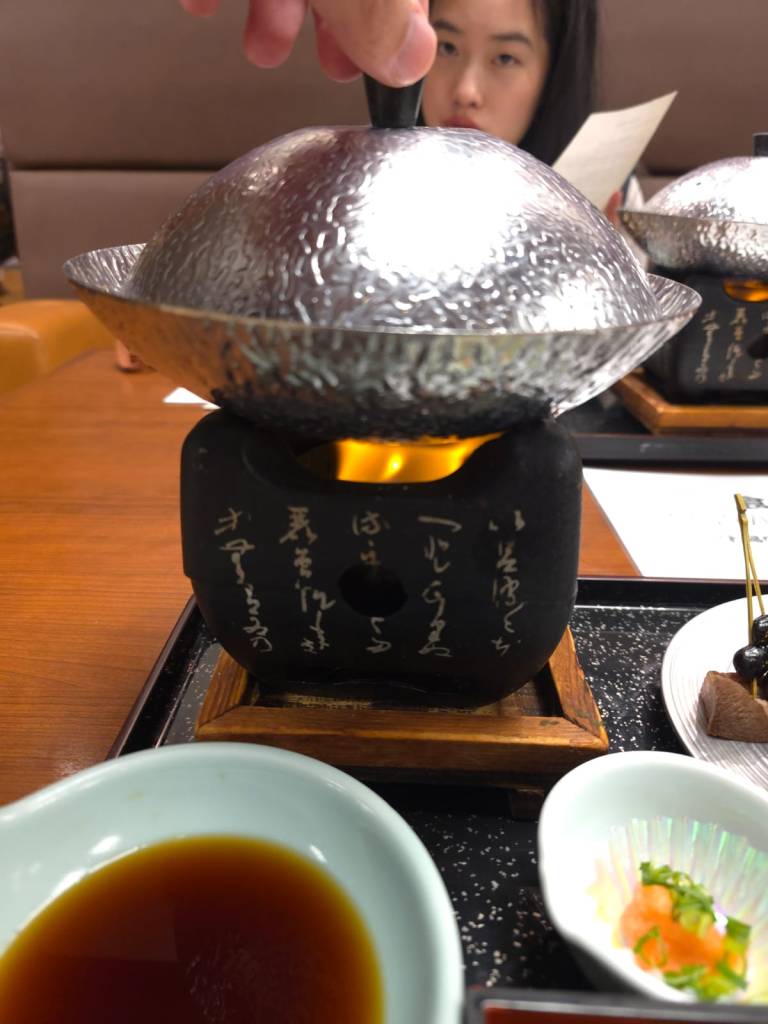
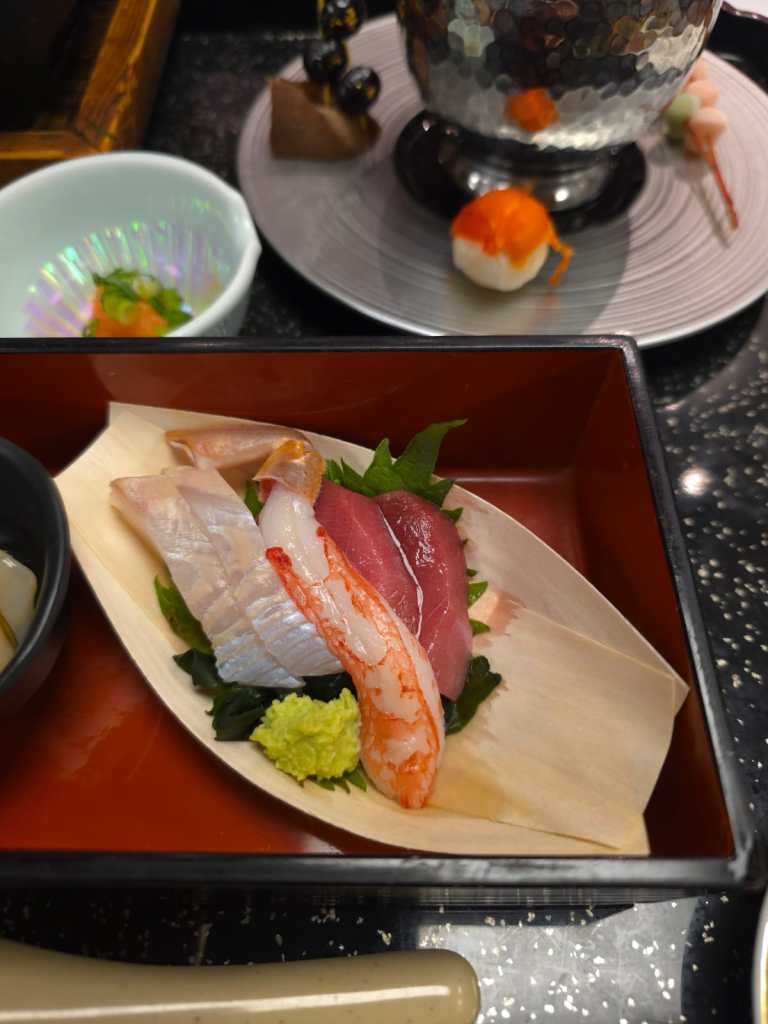
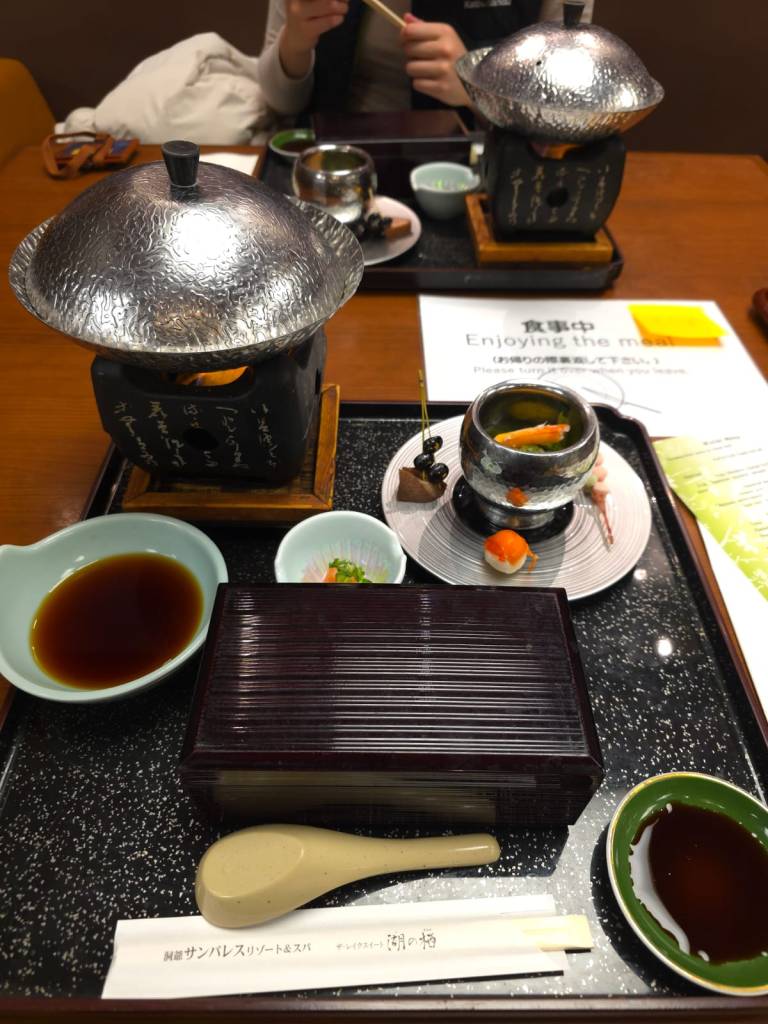
For anyone unfamiliar with the first two items on the menu, fugu is the famed Japanese puffer fish. It contains a potentially lethal toxin called tetrodotoxin, which means its preparation must be handled with extraordinary care. In Japan, the handling of fugu is tightly regulated, and only chefs who have completed at least three years of rigorous training are licensed to prepare it. Even so, attempts to prepare it at home occasionally result in accidental deaths.
Across Japan, fugu is commonly enjoyed as sashimi or in hotpot dishes. The liver—long considered the most flavourful part—was traditionally served as fugu-kimo, but because it is also the most poisonous organ, serving it in restaurants was banned in 1984.
Tetrodotoxin is concentrated in the fish’s organs, particularly the liver, ovaries, eyes, and skin. As a sodium channel blocker, it causes paralysis while the victim remains fully conscious; without the ability to breathe, death occurs through asphyxiation. There is no known antidote. Treatment focuses on supporting breathing and circulation until the toxin is naturally metabolised and eliminated.
I’m sure they had a wonderful evening, and it was a pity we couldn’t join them. We’ll see them again tomorrow afternoon at the airport before we fly down to Kyoto for four days.
As for us, Maree and I enjoyed a quiet day and ended it with a lovely teppanyaki dinner just around the corner from the hotel. True to form, we forgot to take any photos of the excellent food.
Thursday 18 December 2025
There isn’t much to report today as we’re packing up and getting ready to leave the hotel for New Chitose Airport and our afternoon flight to Osaka. From there, we’ve arranged a Blacklane chauffeur to take us straight to our hotel in Kyoto. We considered taking the train, but with multiple transfers and a travel time of more than an hour, the door‑to‑door drive felt like the easier option for the four of us—especially since we’ve used Blacklane many times before and it’s always been reliable.
We’re also travelling light today because we sent our luggage ahead from Sapporo to Kyoto using Yamato Transport’s Taq‑U‑Bin service. It worked flawlessly, and everything arrived yesterday afternoon.
Meanwhile, Alex and Laorita are making their own way to the airport by train from Lake Toya.
That’s all from us for now.
Friday 19 December 2025
Today our main focus is visiting the Nintendo Museum, with a trip to the town of Uji afterwards. Uji is famous for its matcha culture—its shops and cafés are filled with foods and gifts made from finely ground green tea powder produced from shade‑grown leaves.
The Nintendo Museum, located in Uji in Kyoto Prefecture, is owned by Nintendo and showcases an impressive range of products from across the company’s long history. Announced in 2021, the museum stands on the former site of the Ogura Plant, where Nintendo once produced trading cards and carried out repairs on toys and game consoles. The building now houses a gallery that highlights the many products Nintendo has released over the decades, sharing the company’s development philosophy and origins with the public. Construction was completed in May 2024.
Nintendo’s General Manager, Shinya Takahashi, noted that the museum would feature a broad selection of items from Nintendo’s past. On August 20, 2024, the company revealed that entry would be managed through a lottery system. Visitors apply for specific dates in advance, and those selected can then purchase their tickets.
To secure our visit, Alex first created a free Nintendo account and submitted an application months ahead, choosing up to three possible dates and times. Successful applicants receive a QR code used for entry. The lottery is the main way to obtain tickets, and any remaining tickets released later tend to sell out instantly.
Fortunately, Alex was lucky in the draw and managed to secure four tickets for today. Security at the museum is strict—passport checks, baggage screening, and walk‑through scanners—but you’re rewarded with a charming souvenir ID card. The experience was absolutely worth it. And fittingly, our visit coincides with the 40th anniversary celebrations of two major milestones: the Super Mario series and the launch of the NES in 2025.
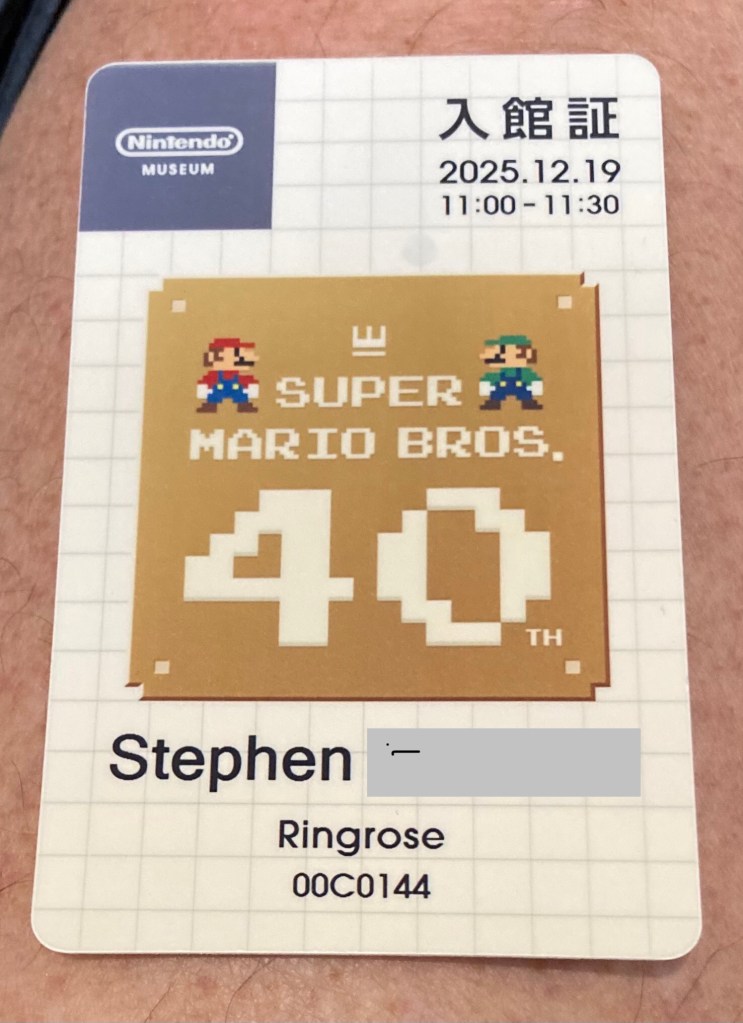
The museum’s main exhibit spans the entire second floor, but the Nintendo Museum goes well beyond traditional displays. Visitors can try hands‑on activities inspired by the company’s early toys—such as the Ultra Hand, Ultra Machine, Love Tester, Game & Watch, and the NES Zapper. There are also stations where guests can play classic console games up through the Nintendo 64, or tackle special in‑game challenges using oversized controllers designed for two people to operate together. For an additional fee, the museum hosts a workshop where participants can craft their own Hanafuda cards or learn how to play traditional games with them.
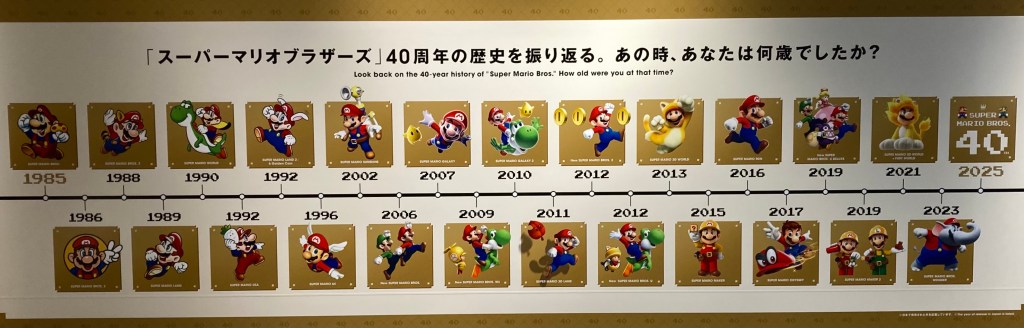
We spent around three hours in the Museum, and the experience was absolutely worth it. For Maree and me, the visit carried a lovely sense of nostalgia. Over the years we’d bought Alex so many versions of Nintendo consoles and games—starting with the early Game Boy and continuing through the Nintendo 64, GameCube, and beyond. Seeing those familiar designs again brought back a flood of memories.
Alex and Laorita gravitated straight to the interactive games. Each entry card comes loaded with 10 coins to use on the various stations, and since Maree and I weren’t playing, they inherited our 20 coins as well. Most games cost a single coin, with a few requiring more, so they had plenty to enjoy—and they certainly made the most of it.
We didn’t take many photos, as photography is prohibited on the second floor. It’s completely understandable: the museum displays historical Nintendo products, including delicate hardware prototypes, and they understandably want to protect their intellectual property and prevent any disruption or mishandling of the exhibits.
A visit is highly recommended—especially if you’re into gaming, but even if you’re not a dedicated Nintendo fan. We thoroughly enjoyed it.
From there, we continued on to Uji. Uji is renowned for producing some of the world’s finest matcha, celebrated for its vibrant colour, rich umami, and silky texture. Its exceptional quality comes from a unique combination of climate, fertile soil, and centuries-old cultivation and grinding traditions that have shaped Japanese tea culture. Before harvest, the tea plants are shaded to increase L‑theanine—a naturally occurring amino acid known for promoting calm focus and mental clarity—as well as chlorophyll, which deepens the colour and enhances the flavour. The result is matcha that truly embodies the heart of Japanese tea ceremony.
We found a local restaurant for a very late lunch and sampled several dishes made with matcha. The flavours were surprisingly rich and delicious, even with the distinct green tea base.
That wrapped up our day. Tomorrow we head off to a Japanese Tea Ceremony, complete with traditional clothing, so it promises to be an interesting experience.
Saturday, 20 December 2025
We set out early this morning for our 9:30 booking at the Japanese Tea Ceremony. All of us had been looking forward to it—especially the chance to dress in formal Japanese attire and take part in such a meaningful tradition. Unfortunately, Maree wasn’t feeling well and couldn’t join us, which was disappointing for her. We made sure to take plenty of photos, and Alex even arranged for a professional photographer who captured everything beautifully.
Before I go on, a little background on why this ceremony holds such significance.
The Japanese tea ceremony, or Chadō/Sadō (“The Way of Tea”), is a deeply ritualised cultural practice centred on preparing and serving powdered green tea (matcha). It embodies mindfulness, harmony, respect, purity, and tranquility—values rooted in Zen Buddhism. Through precise movements (temae), carefully chosen utensils, a serene tea room, seasonal sweets (wagashi), and an appreciation for the uniqueness of each moment, the ceremony transforms a simple act into an art form that honours presence, connection, and quiet beauty.
When we arrived, the three of us were guided to the changing rooms to choose our traditional outfits. Laorita was taken to a separate area from the guys, naturally.
The photo below shows us in our new attire as we walked through the Japanese garden.
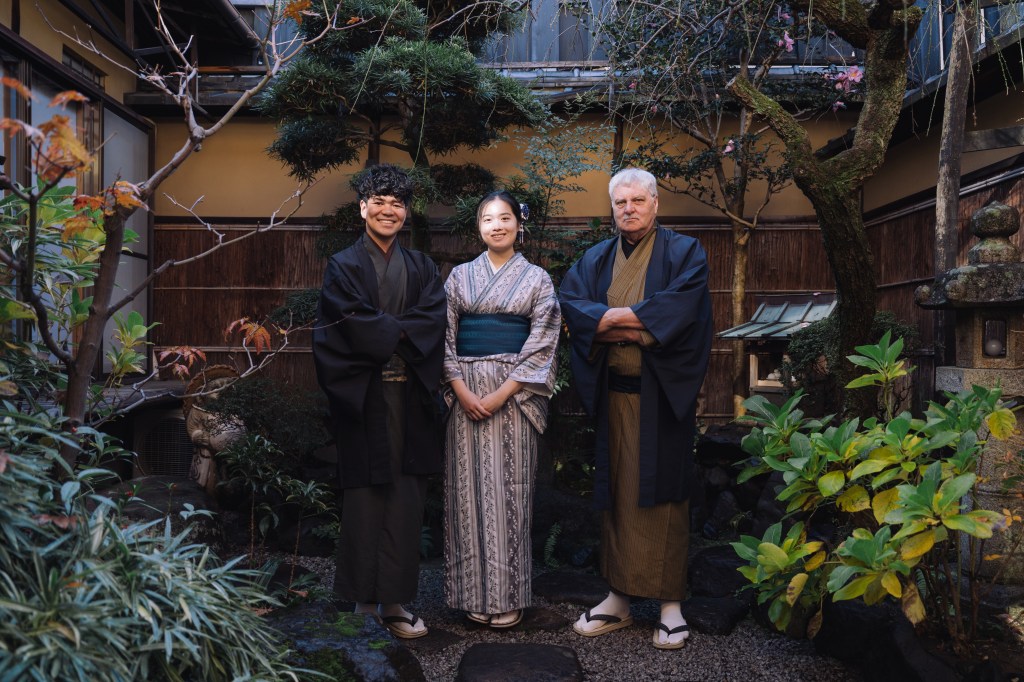
We were then guided into a tatami‑floored room for the Tea Ceremony, a serene space that immediately shifted the mood. Alex had arranged a private session as well, which deepened the experience and made it feel especially personal.
The following photos were taken during the Tea Ceremony.
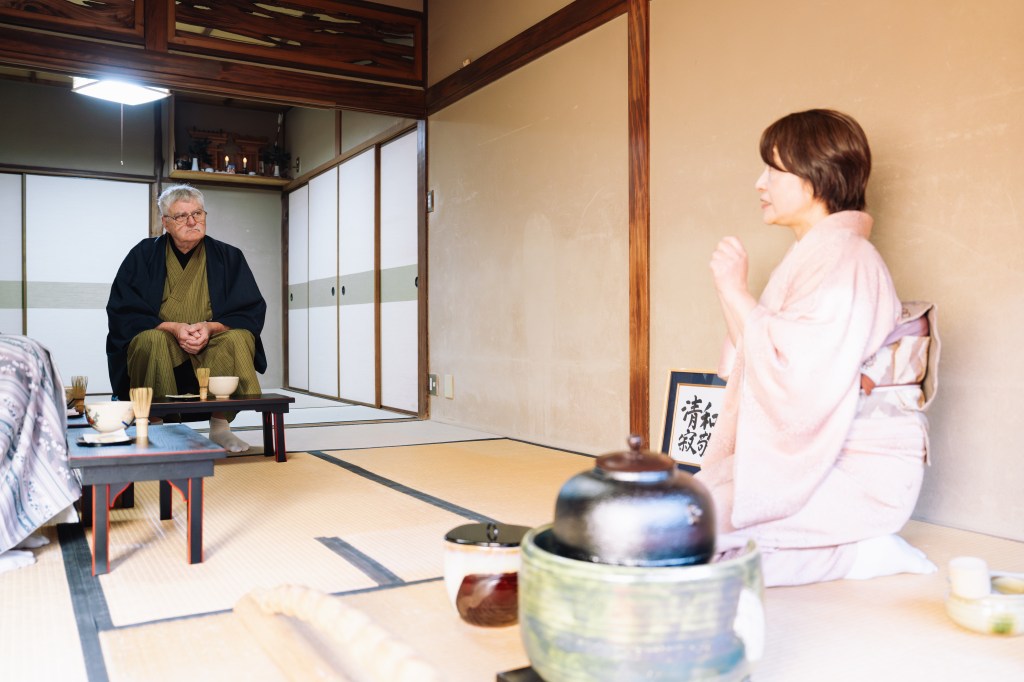
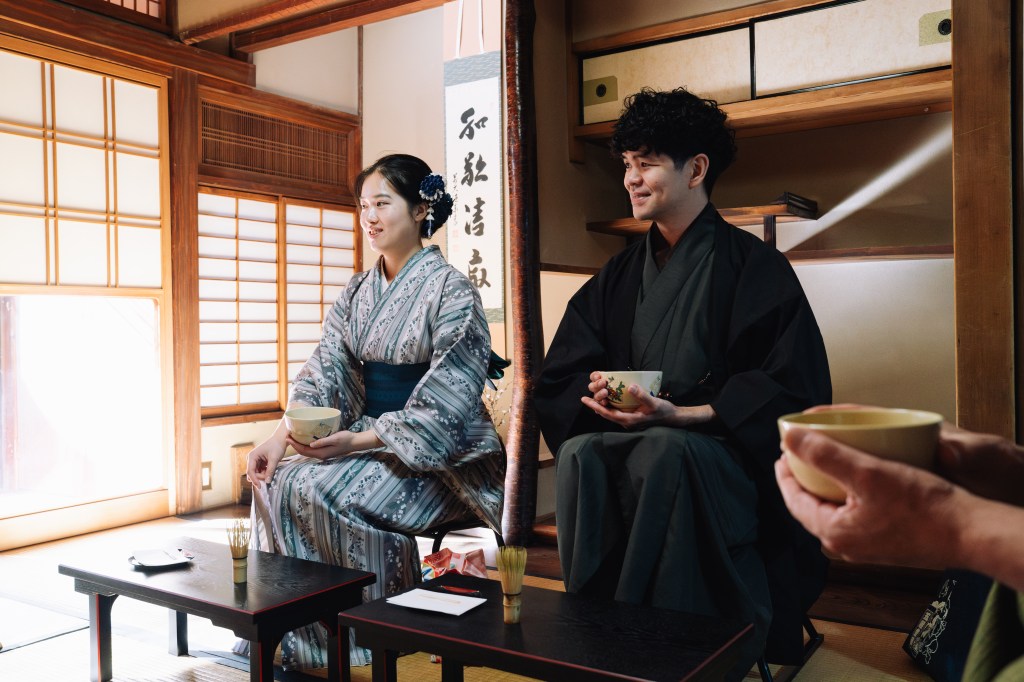
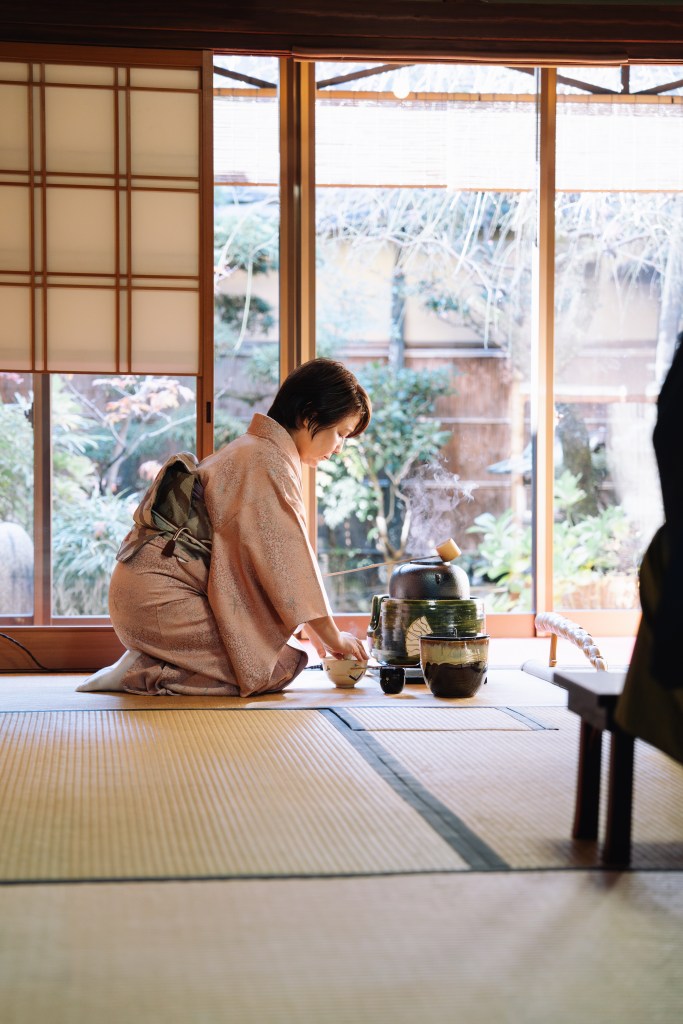
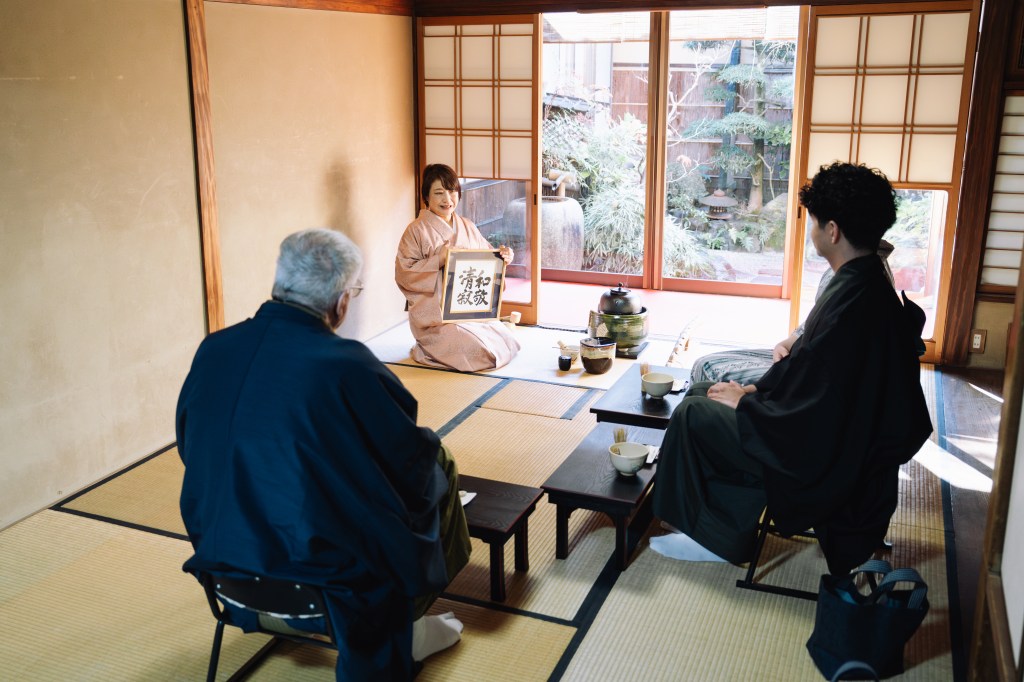
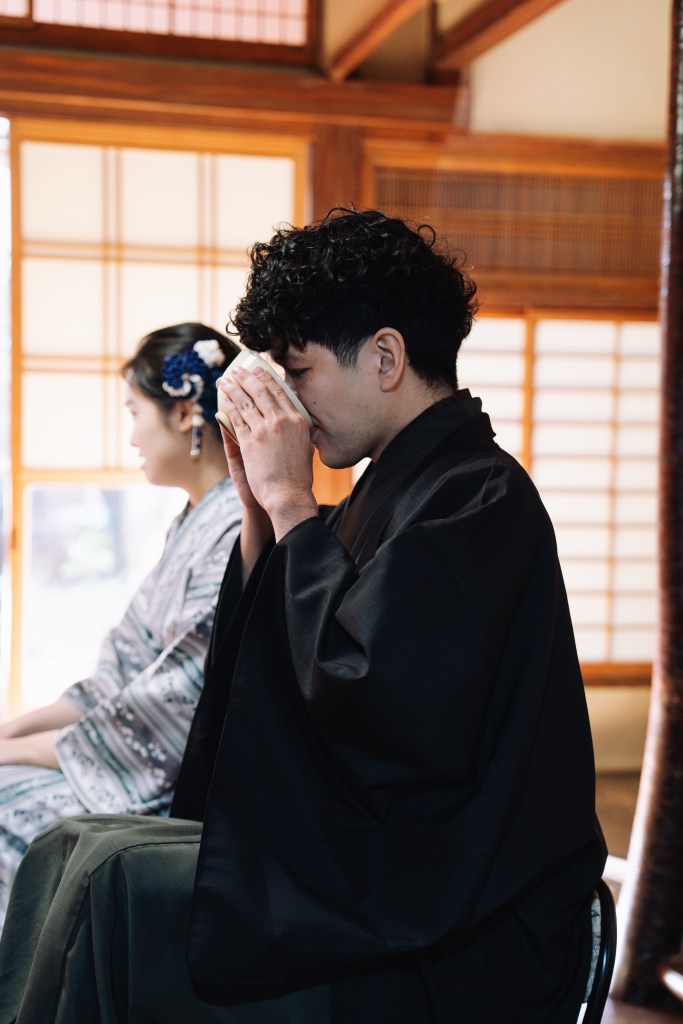
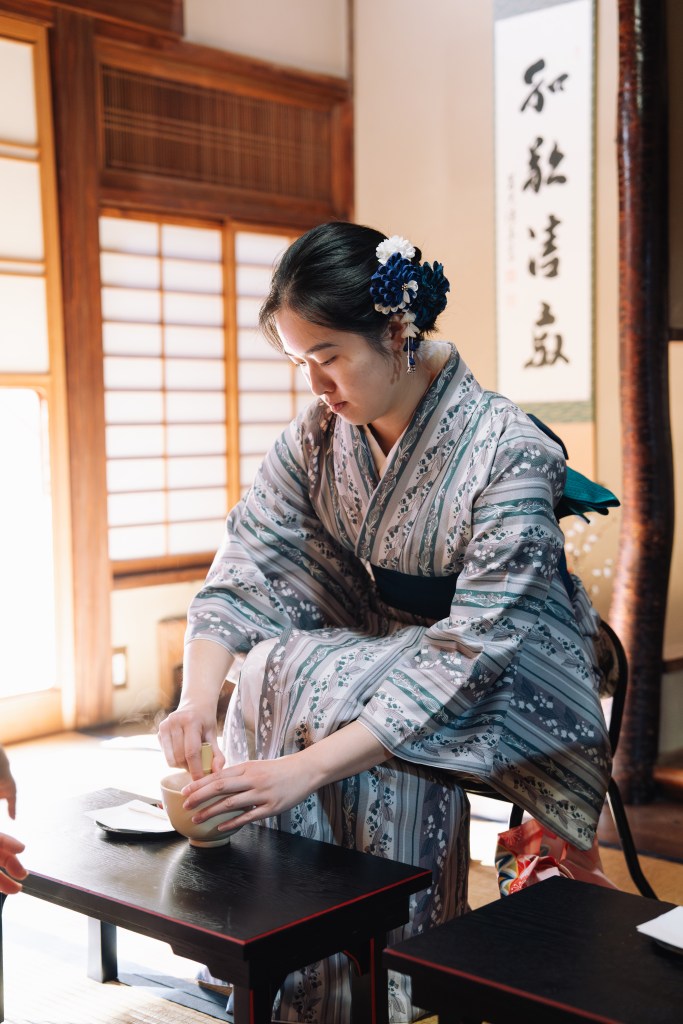
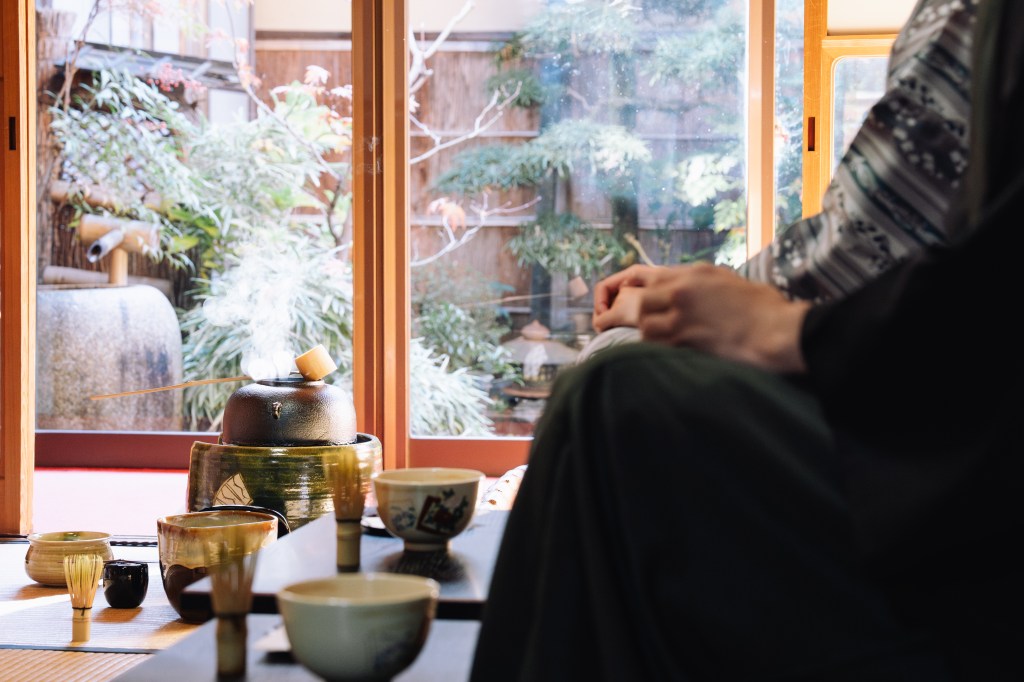
After the ceremony, which lasted about 45 minutes, we were told we were welcome to remain in our traditional dress and wander wherever we liked—the gardens, the nearby streets, even anywhere in Kyoto, including restaurants and public transport. The only requirement was to be back by 18:00. Naturally, we made the most of it and began by taking a few more photos in the garden.
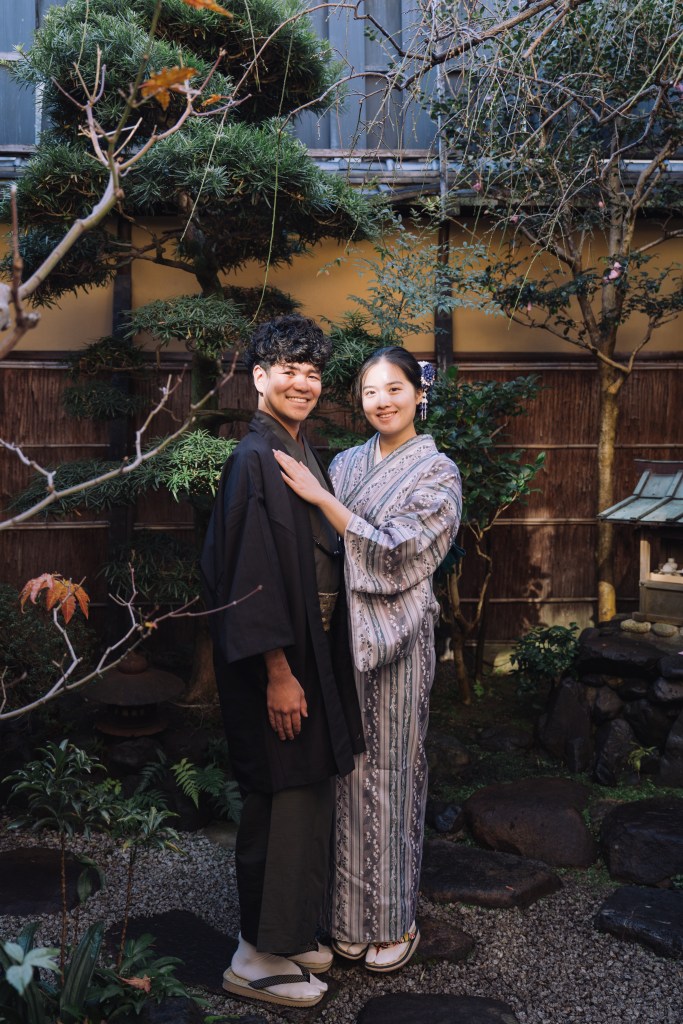
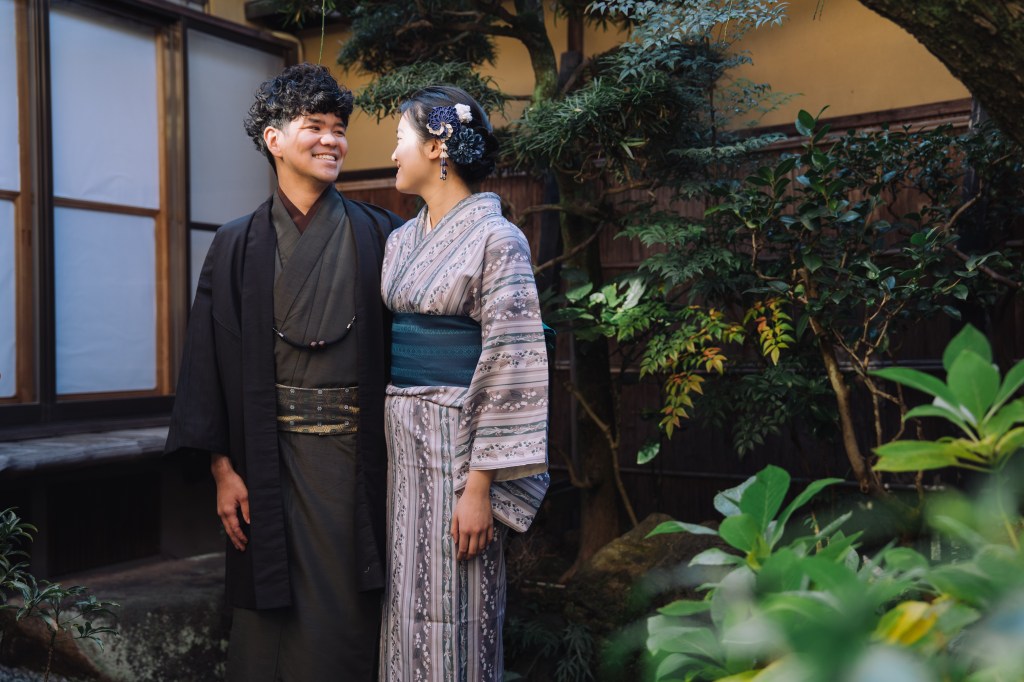
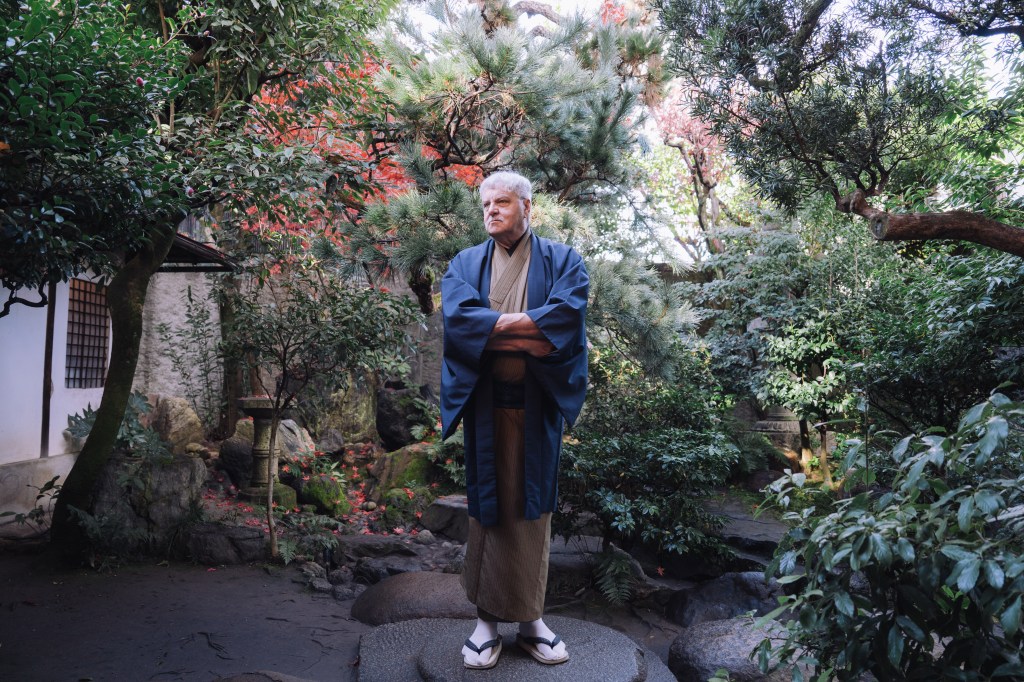
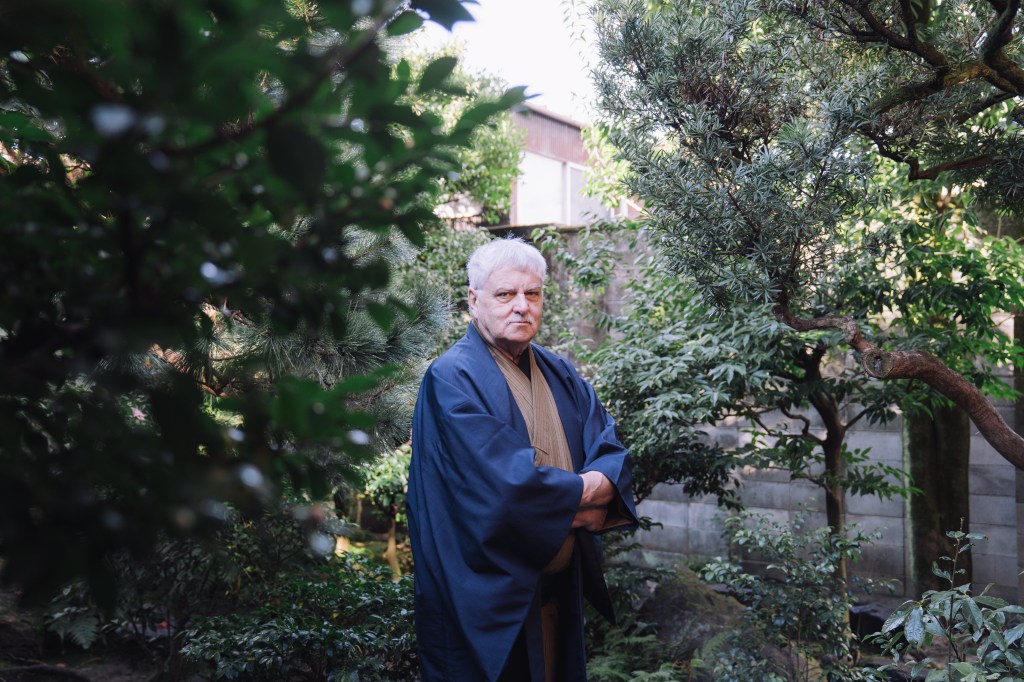
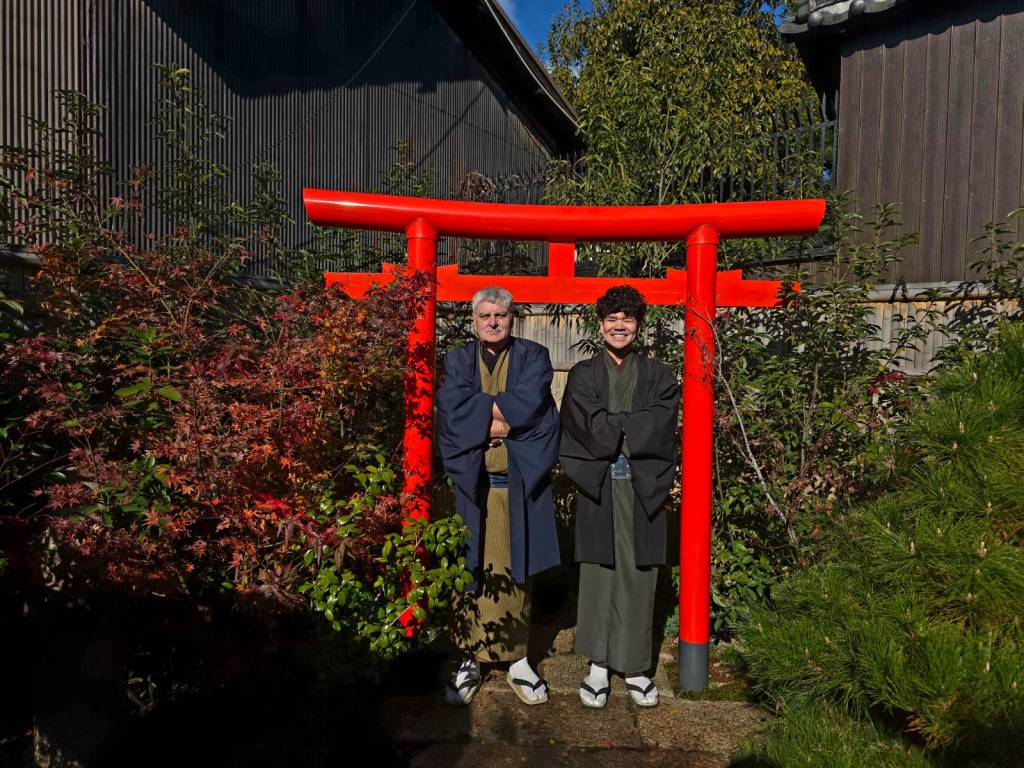
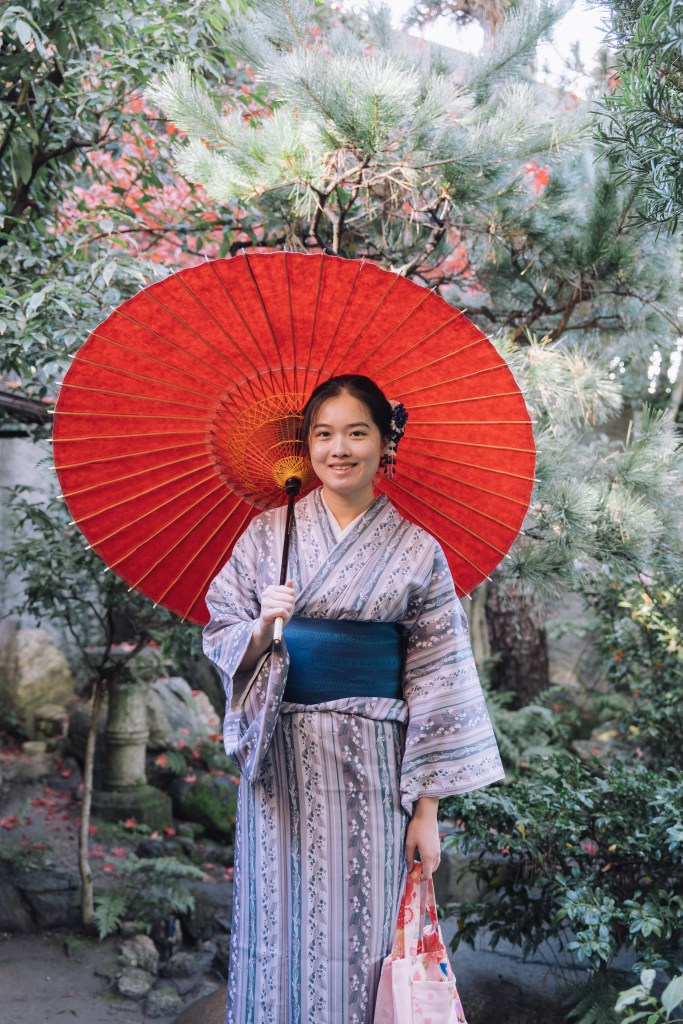
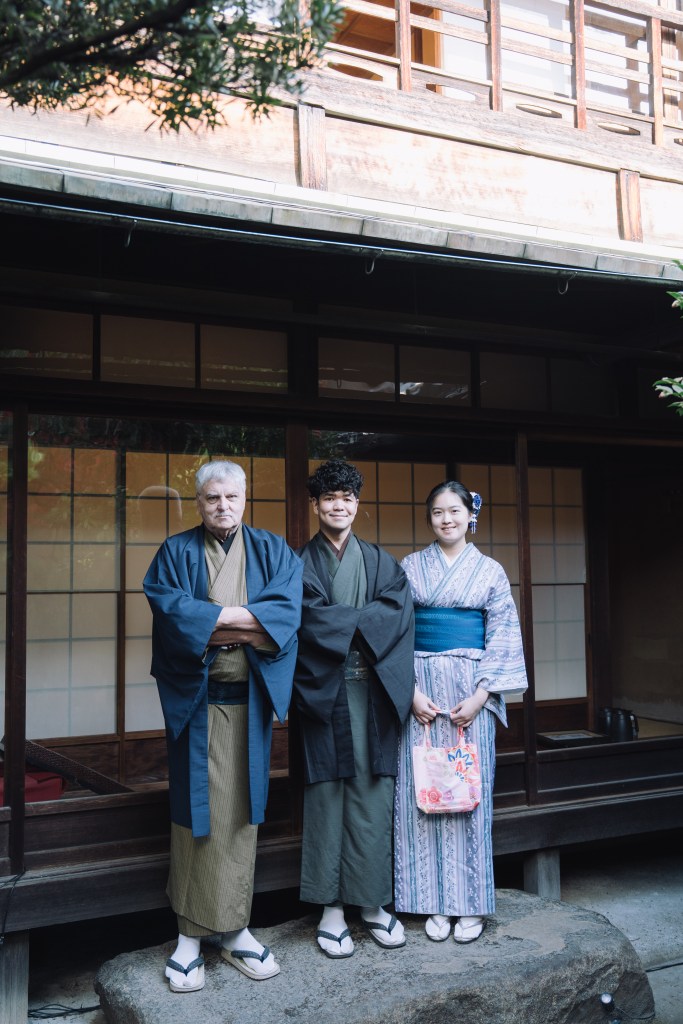
These are some of the photos we captured while wandering around town.
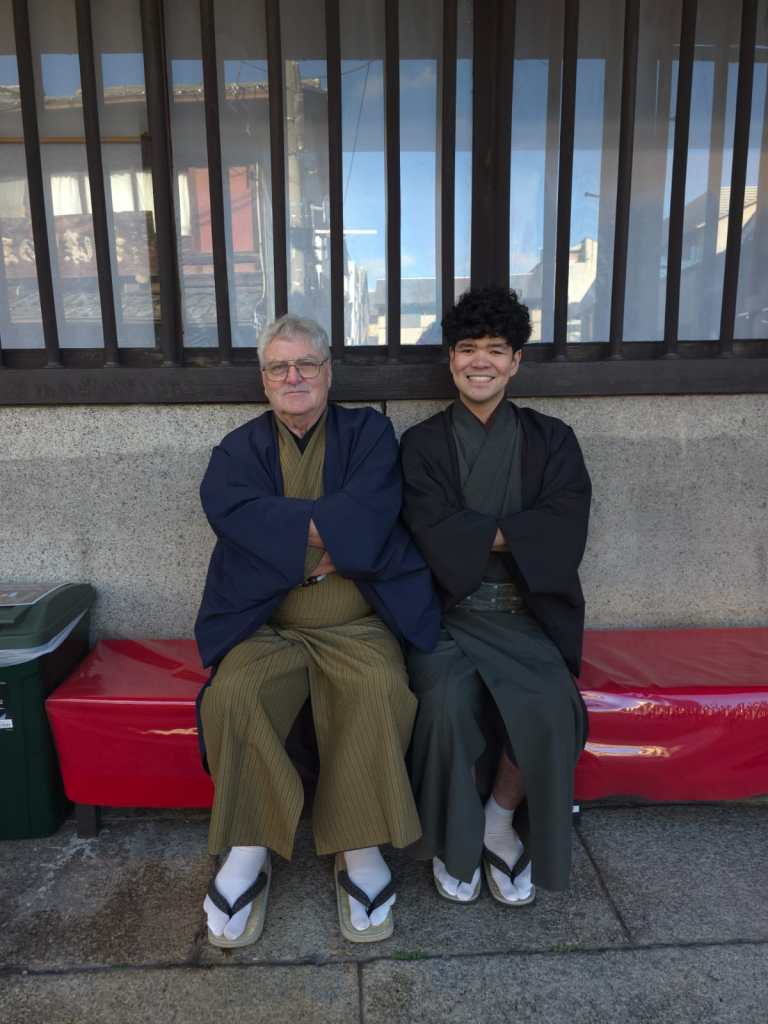
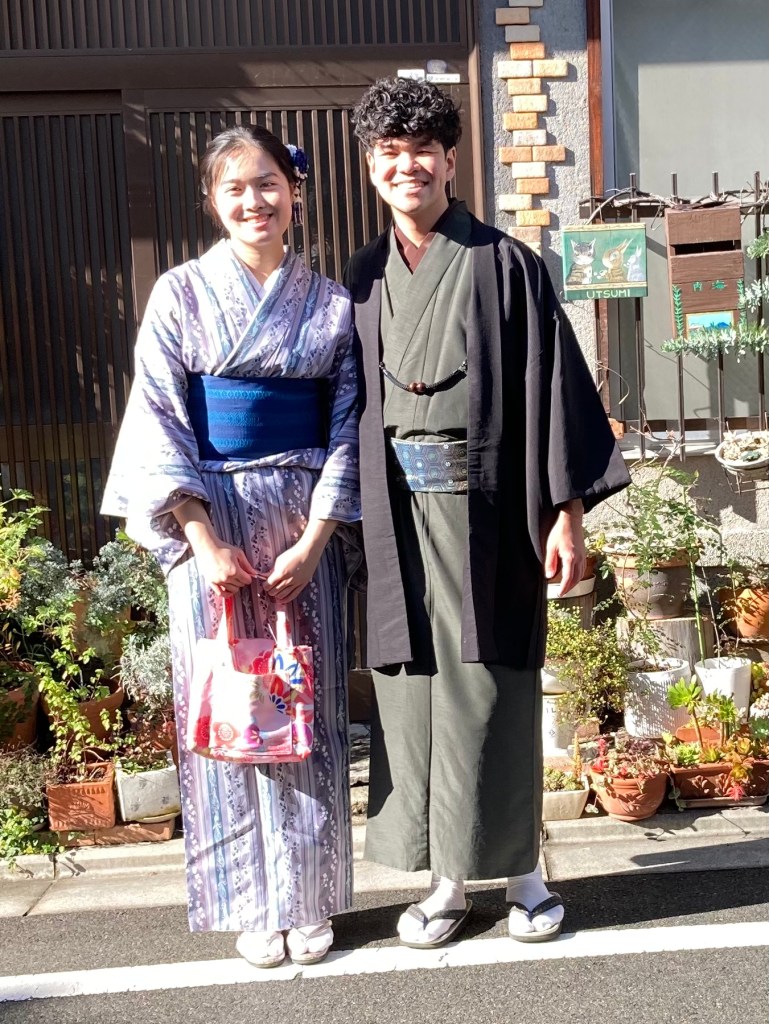
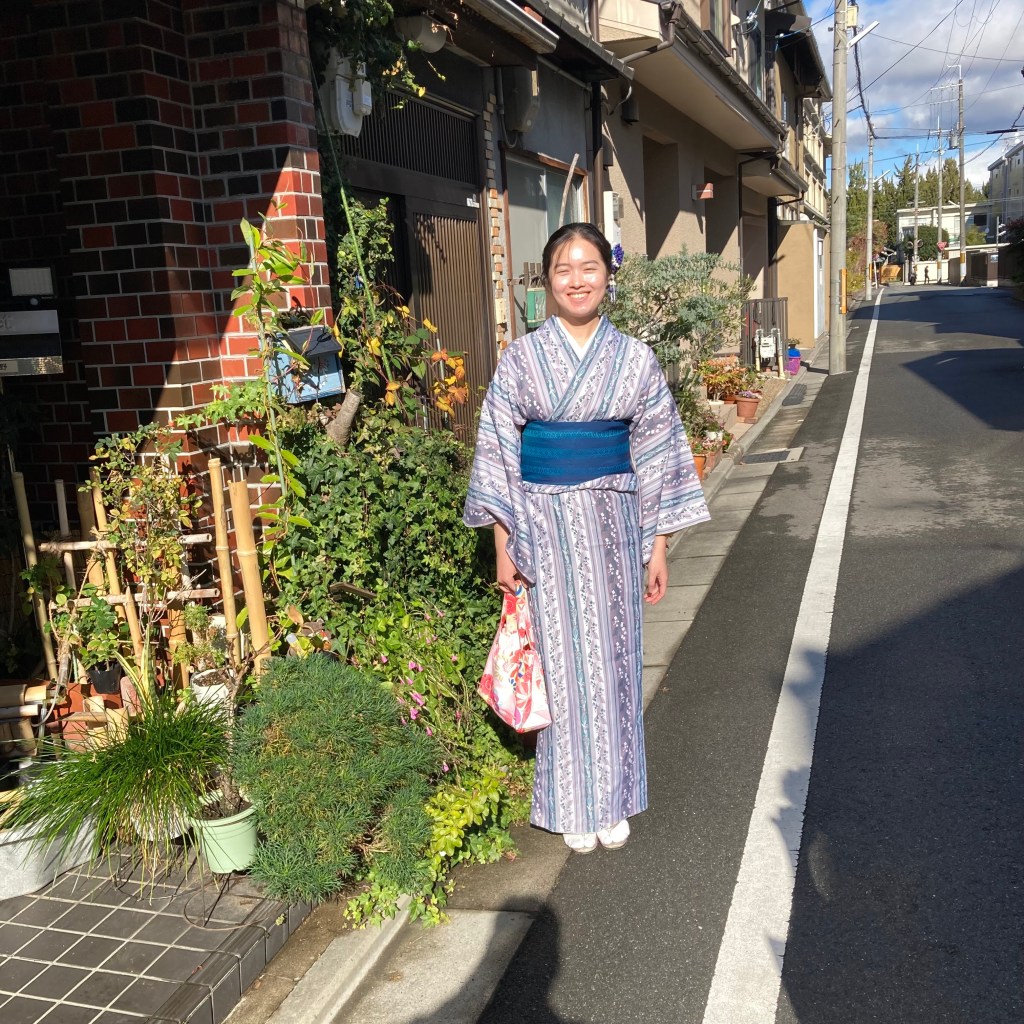
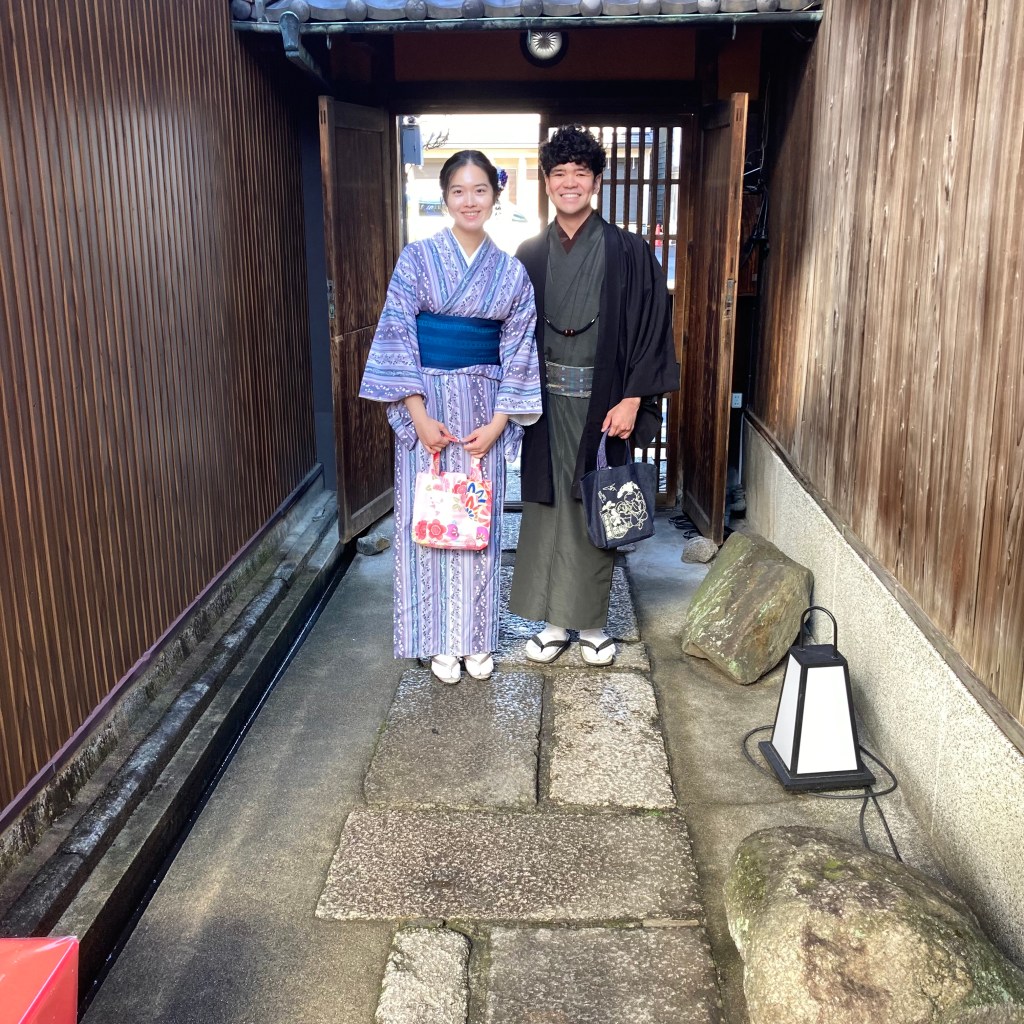
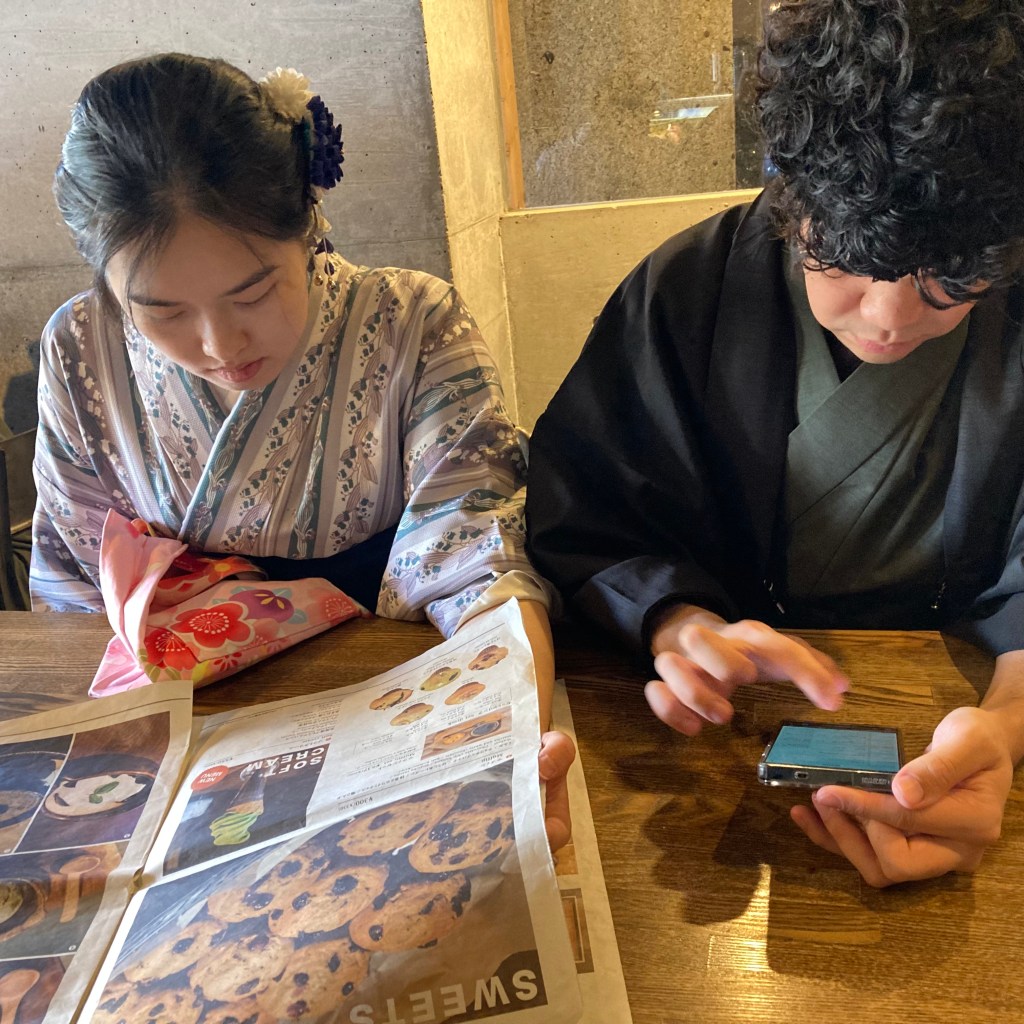
After a leisurely wander through the neighbourhood and a relaxed lunch, we returned our traditional dress and began the walk back to the hotel. Alex and Laorita set off to explore a bit more, while I headed back to check on Maree and take her for a gentle stroll around the older part of the district.
She was feeling much brighter, so I took her out for a late lunch—pancakes, simple and comforting—before we meandered through the surrounding streets and eventually made our way back to the hotel.
Tomorrow we leave Kyoto for Osaka.
Sunday, 21 December 2025
We checked out of our Kyoto hotel around 11:00. There was no rush to reach Osaka, since check‑in wasn’t until 15:00, so we took our time arranging to have our luggage forwarded using the Yamato delivery service. This hotel uses the Yamato QR system, which cuts down on paperwork considerably. Alex had used it before, so entering our details only took a few minutes. The staff measured each bag, entered everything into their system, printed the waybill labels, and that was that. Yamato would collect the bags later in the day.
From the hotel, we walked to the nearby station and boarded a local train that ran directly to the station closest to our Osaka hotel. Being a local service, it stopped at most stations along the way, so the journey took about an hour—but we weren’t in a hurry, and the slower pace gave us a lovely view of the countryside between the two cities.
Once we arrived, we headed straight to the hotel, dropped off our smaller bags, and went for a wander through the nearby shops. With about an hour to fill before our rooms were ready, Maree and I left Alex and Laorita to explore on their own while we went in search of lunch.
We eventually found a cosy, traditional katsudon noodle house—exactly the kind of simple, satisfying spot we love.
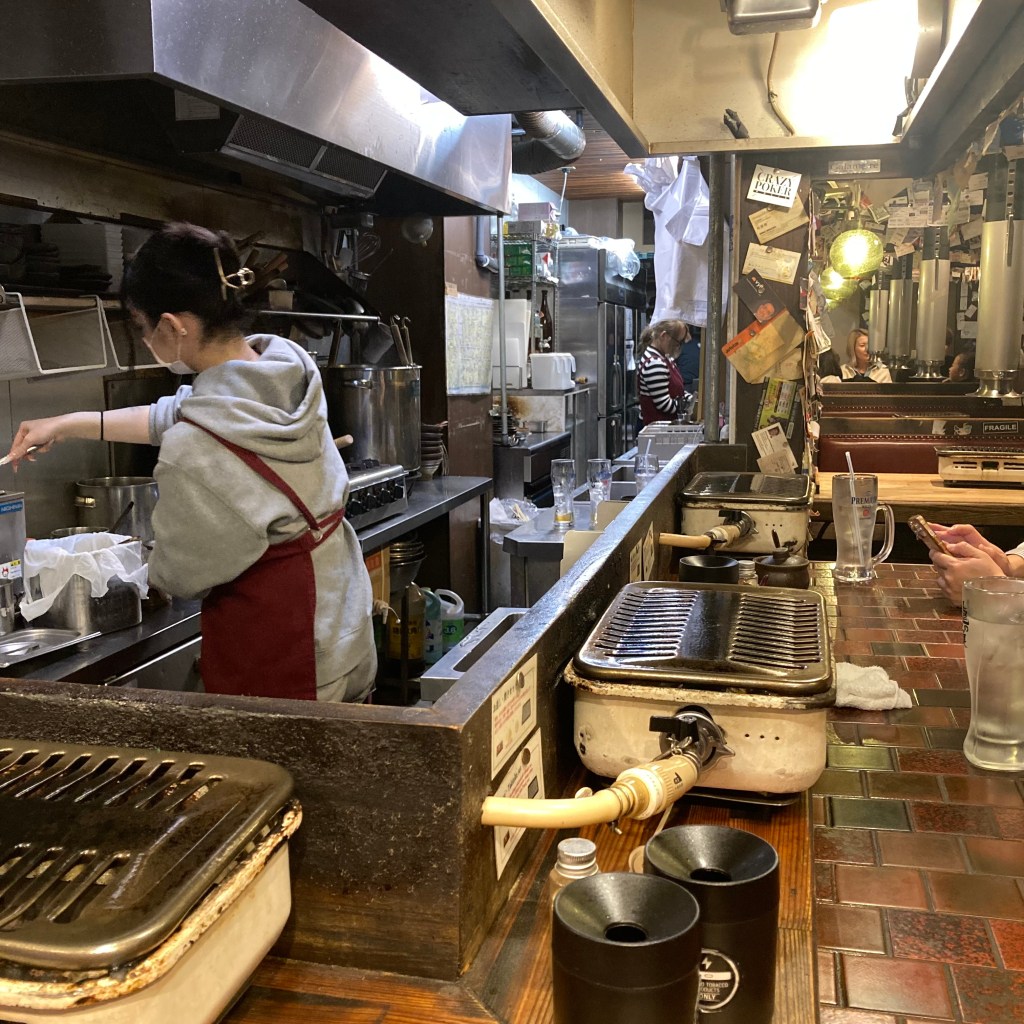
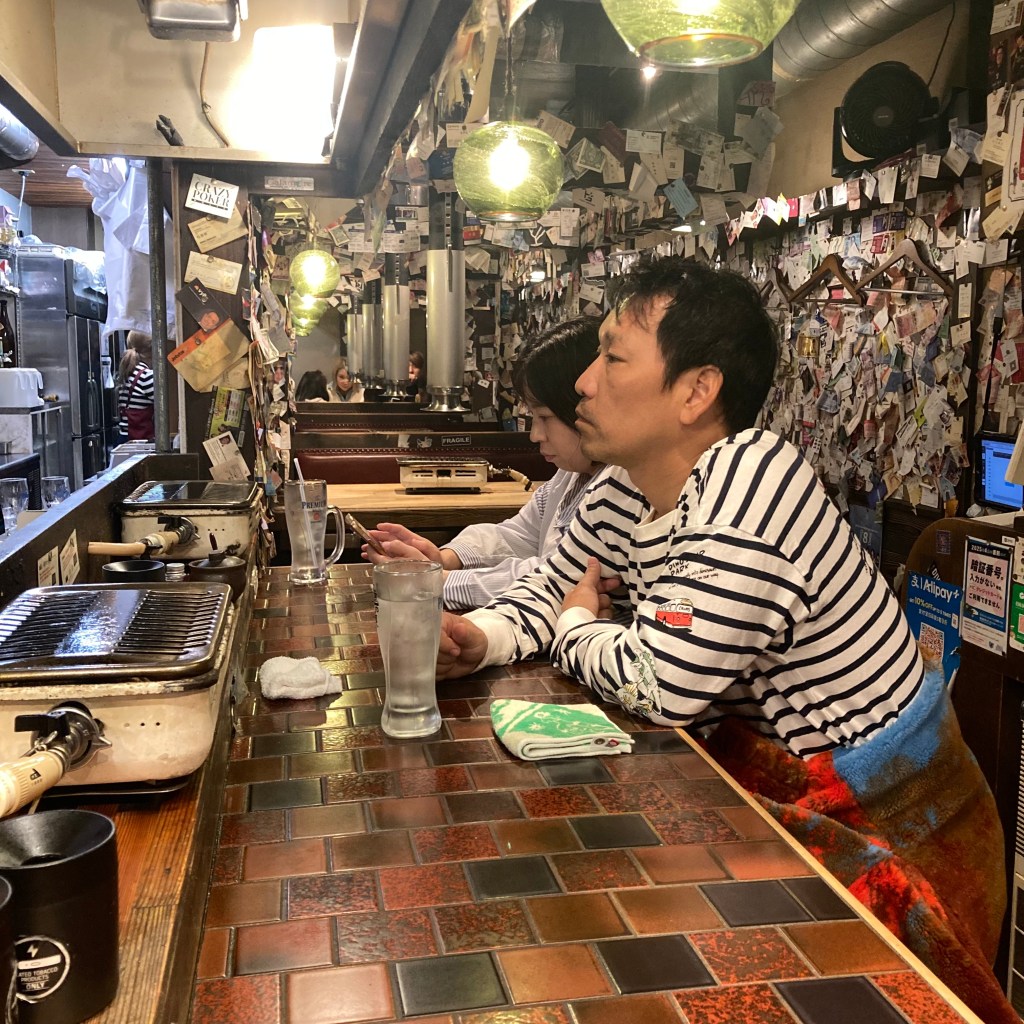
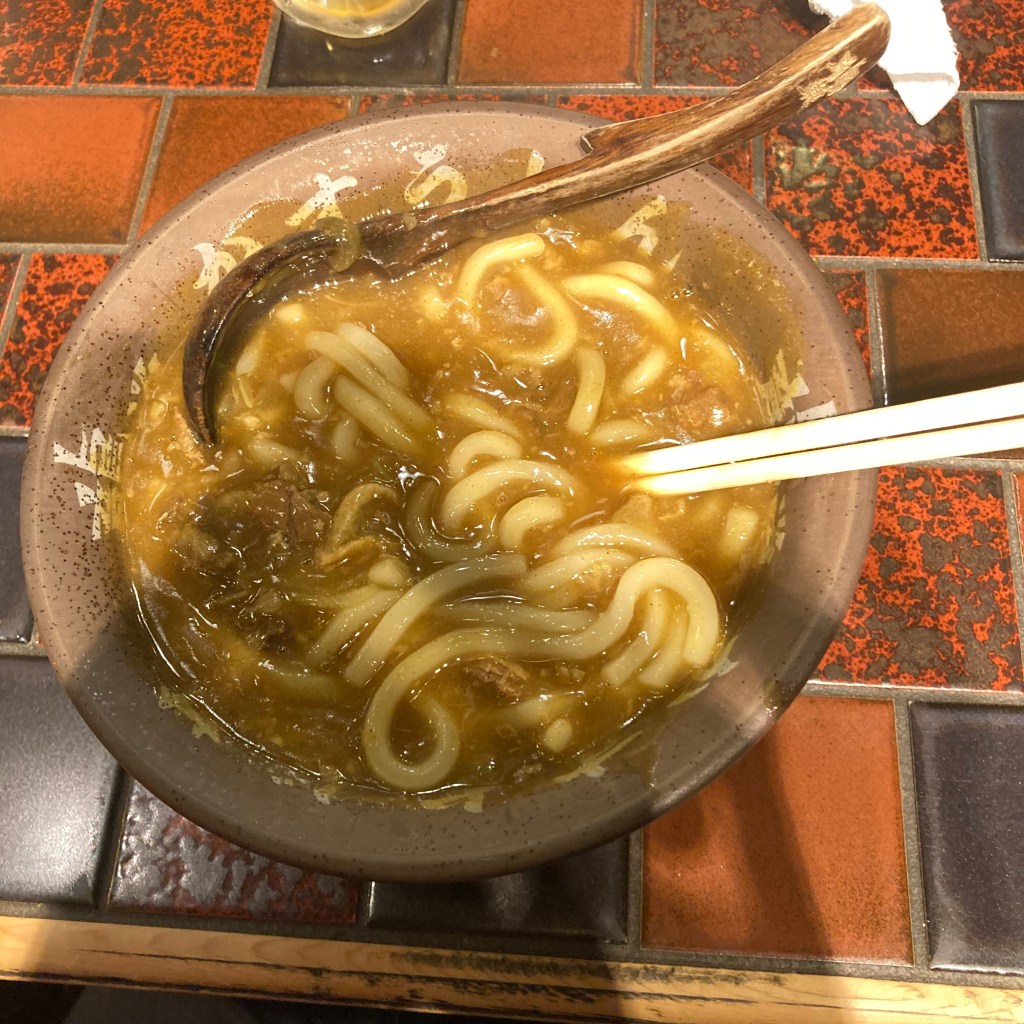
We both had the beef curry udon noodles dish. Very hot (cooking wise), flavoursome sweet curry and perfect udon noodles. The dish was very filling. These small places tend to serve the best food at great prices. This was all washed down with a glass of Asahi beer.
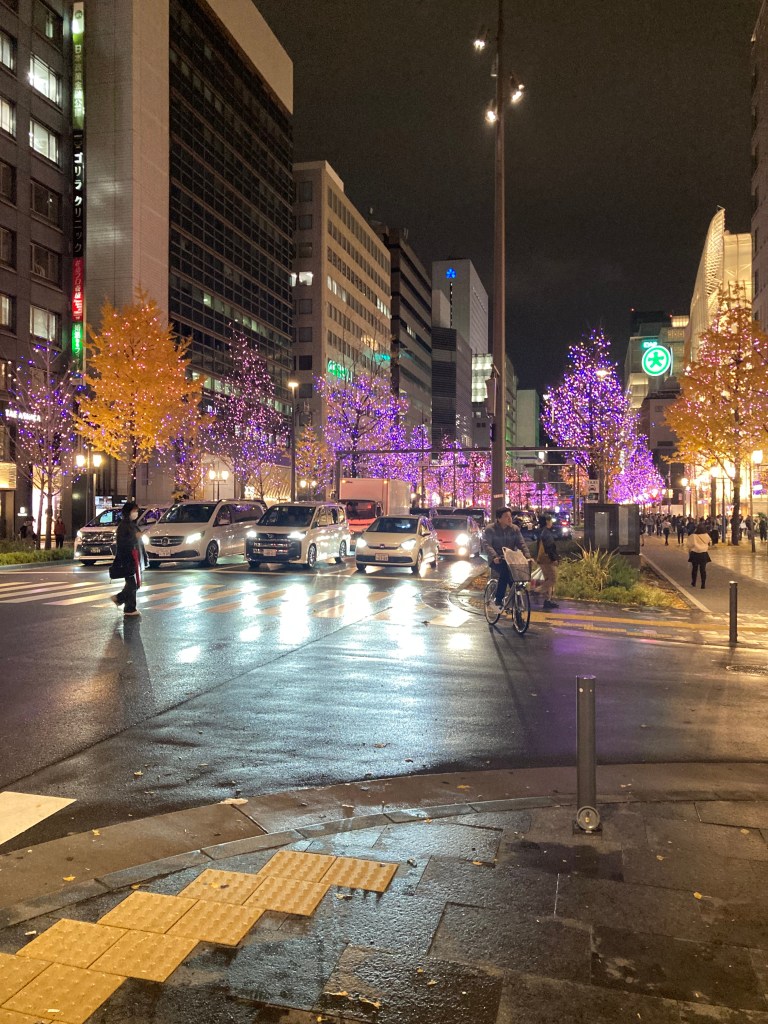
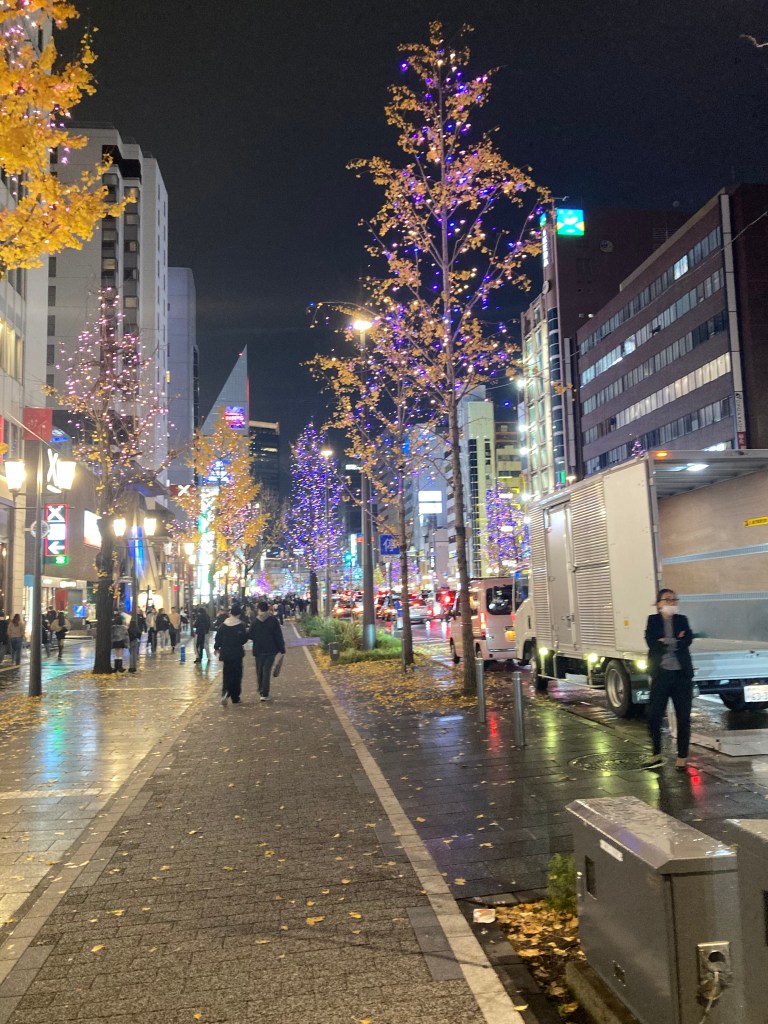
After lunch we made our way to the hotel and checked in, grateful for a chance to pause. The afternoon slipped by quietly as we rested, letting the pace of the day settle. Later on we met up with Alex and Laorita for dinner, sharing an easy, unhurried meal together. When we finished, we wandered through the streets, letting the glow of the city lights guide us as we took in the night.
After a nice day and evening it was time to get some sleep. Tomorrow Alex and Laorita are heading of for a day at Universal Studios and Maree and I will go shopping and explore the town some more.
Monday 22 December 2025
Today was a leisure day walking the streets visiting lots of shops and stopping for lunch along the way. Alex and Laorita spent the day at Universal Studios and had an enjoyable day. Maree and I bought some local sushi for dinner and then returned to the hotel.
Tuesday 23 December 2025
We let ourselves sleep in this morning and didn’t get up until around 10:00. By then it was far too late for the hotel breakfast, so we headed out to a nearby café for a relaxed brunch.
After eating, we wandered into a long arcade of shops that seemed to stretch endlessly into the distance. When we finally reached a major intersection, we looked across the road only to discover that the arcade continued on the other side—again disappearing as far as we could see.
We walked nearly three kilometres and still hadn’t reached the end of it, so we eventually decided to turn back. Rather than retrace our steps past the same shops, we chose a different route for the return walk.
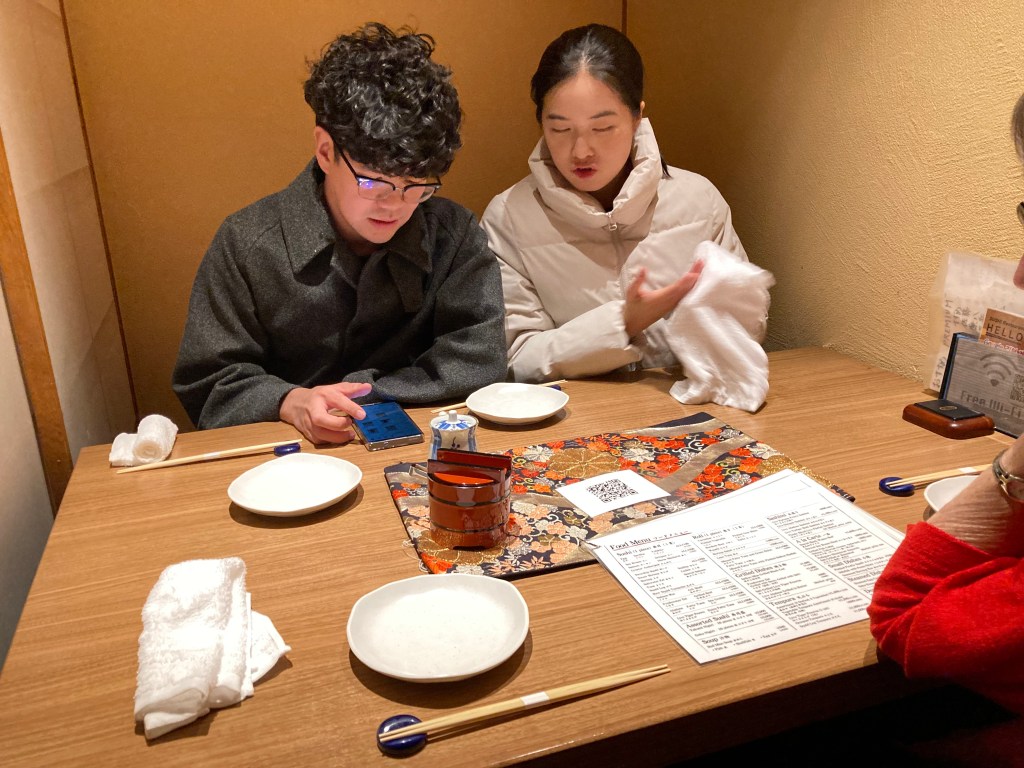
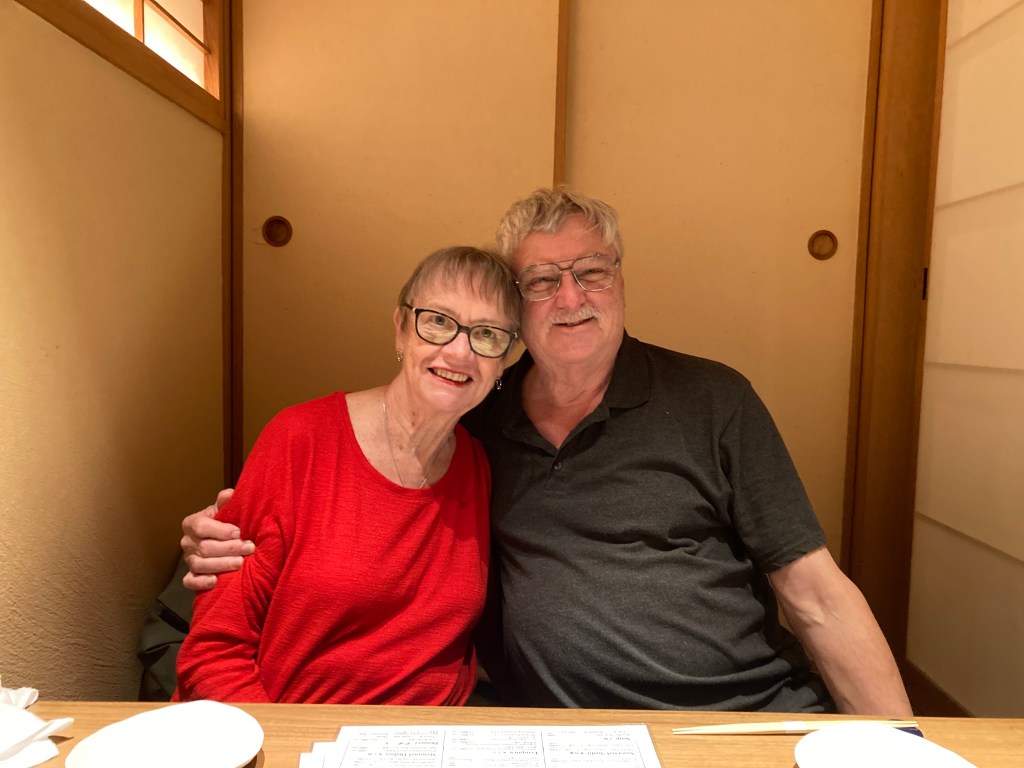
This evening the four of us went out for an early Christmas dinner. Alex and Laorita will be in Nagasaki at the “Miffy Resort” on Christmas Day, while Maree and I will be in Tokyo, so tonight felt like the perfect moment to celebrate together. Alex chose a lovely sushi restaurant close to our hotel.
When we arrived, the staff led us to a private room set up for four—a wonderful surprise that made the evening feel even more special. As you can see from the photos, we had a truly enjoyable night.
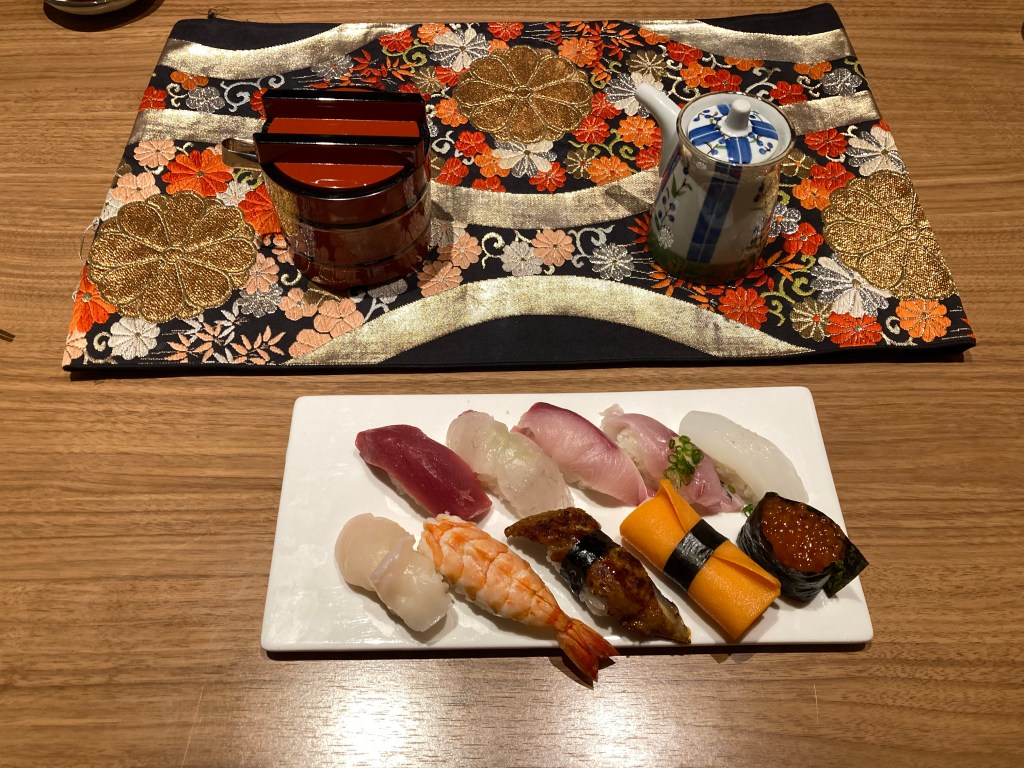
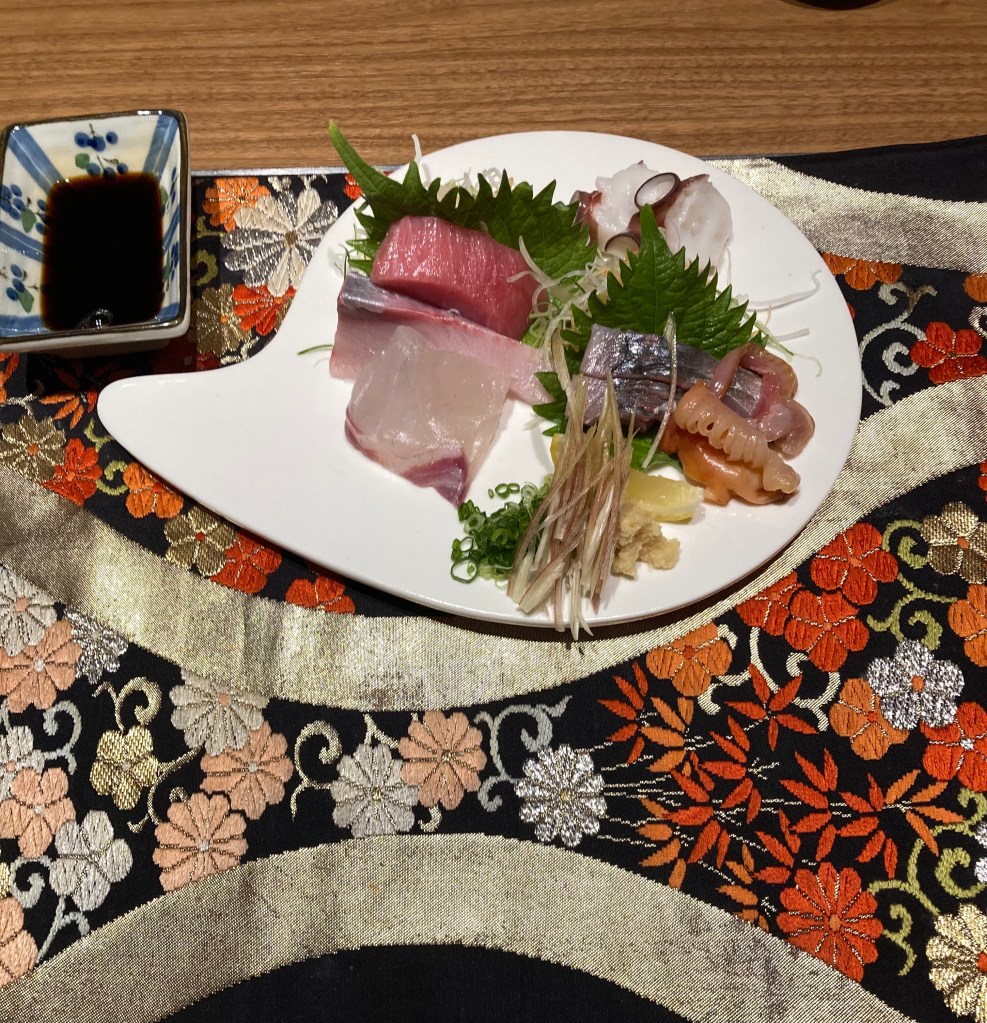
The yellow variety—milder and more aromatic than the pink—has always been my favourite, and I can never seem to get enough of it.
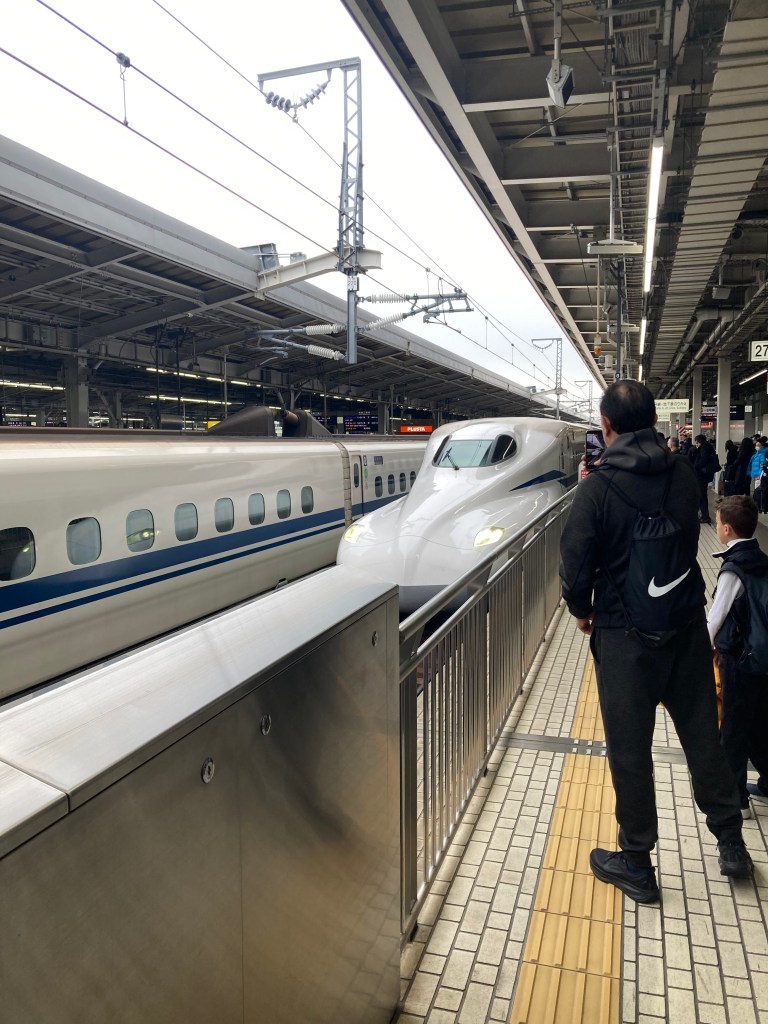
Tomorrow we head to Tokyo on the Shinkansen, Japan’s legendary high‑speed rail network. Introduced in 1964, the Shinkansen transformed travel across the country with its remarkable punctuality, quiet efficiency, and speeds that glide past 300 km/h. Trains depart with near‑surgical precision, linking major cities so seamlessly that the journey often feels as memorable as the destination itself.
Wednesday 24 December 2025
We left the hotel at 10:30 and caught a taxi to Shin-Osaka for our 11:45 Shinkansen to Tokyo. The timetable promised a 14:15 arrival, and—true to form—we pulled in at precisely that minute. Shinkansen services simply don’t run late. With trains departing only minutes apart, they can’t linger at any station. This morning alone, two services left ahead of ours: one at 11:33, another at 11:40, and then ours at 11:45. Three high‑speed trains bound for Tokyo, all within a tight twelve‑minute window.
We are travelling in the Green Car which is their First Class service. Lots of legroom and the seats recline giving a more relaxed ride.
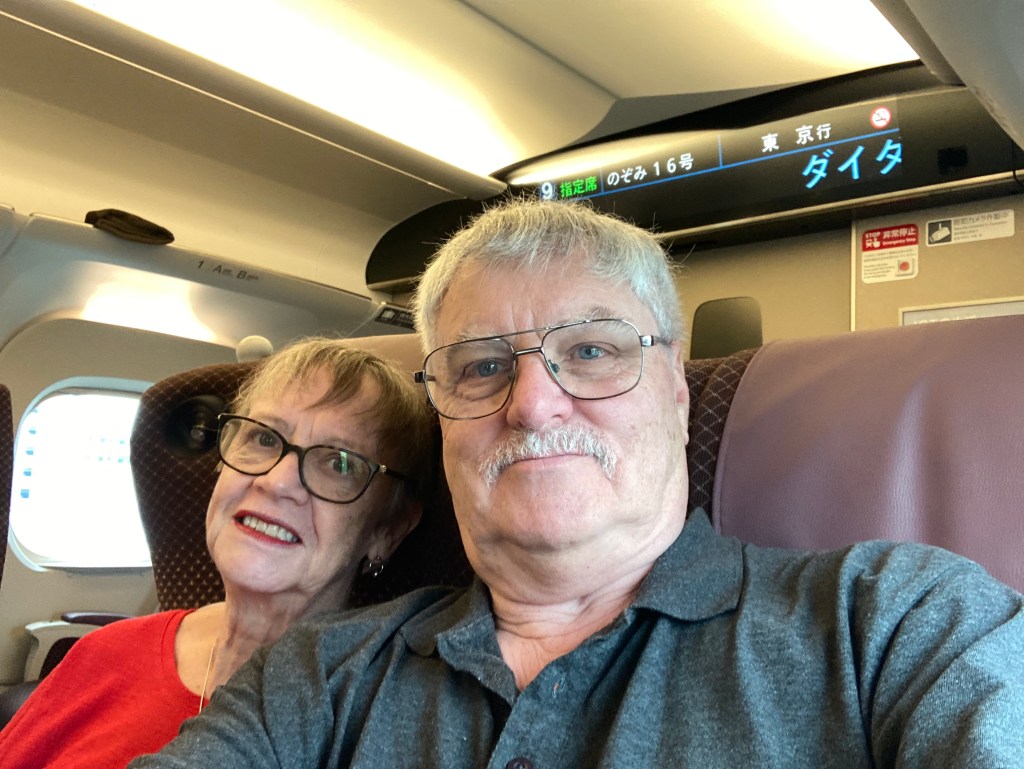
I’d even paid extra to ensure our seats were on the correct side for those classic views of Mt Fuji as we passed. Sadly, the weather had other ideas and the mountain never revealed itself. Fortunately, we already have plenty of Fuji photos from our four-year posting in Tokyo between 1994 and 1998.
These shots were taken through the train window while we were travelling at up to 300 kph. Most of my attempts were unusable—just blurs thanks to the speed—but a handful turned out well enough to capture the passing landscape.
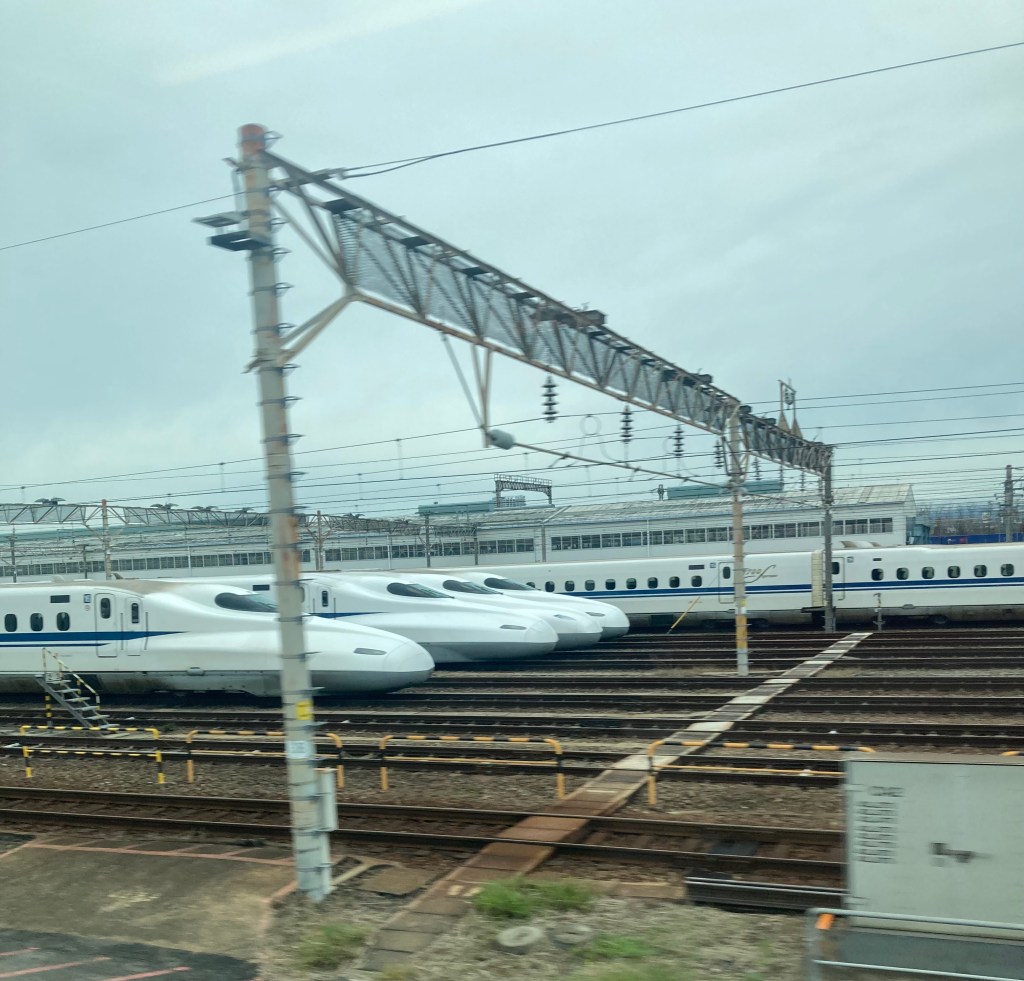
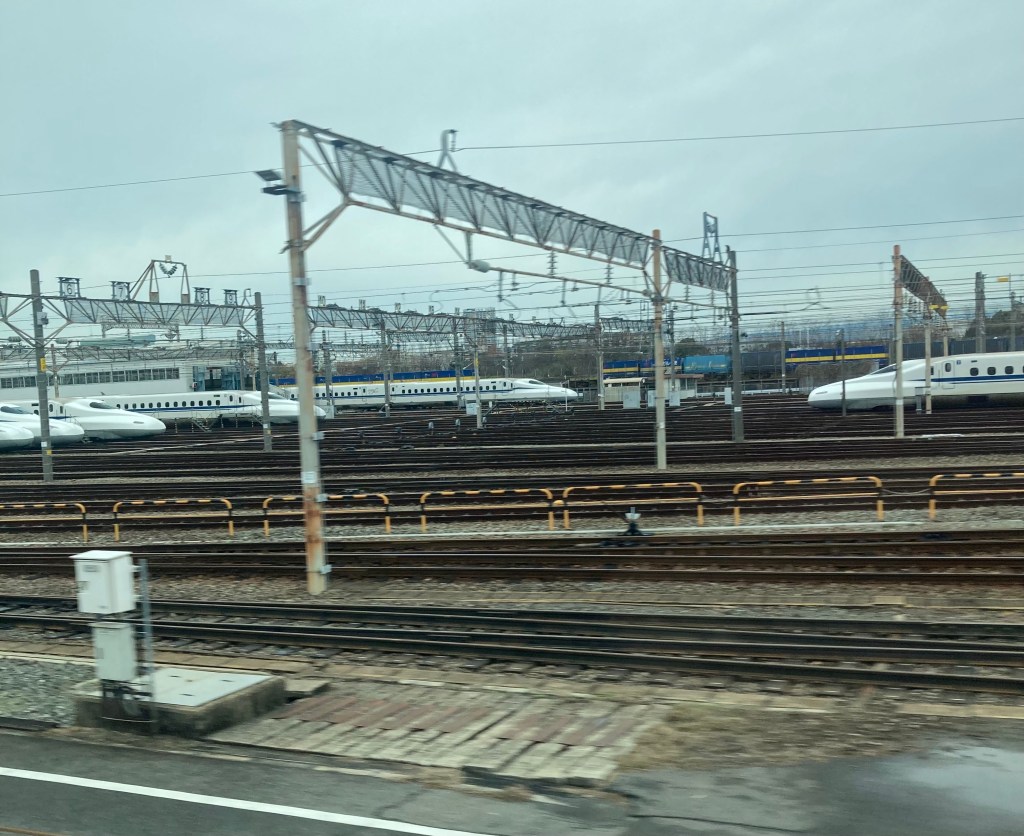
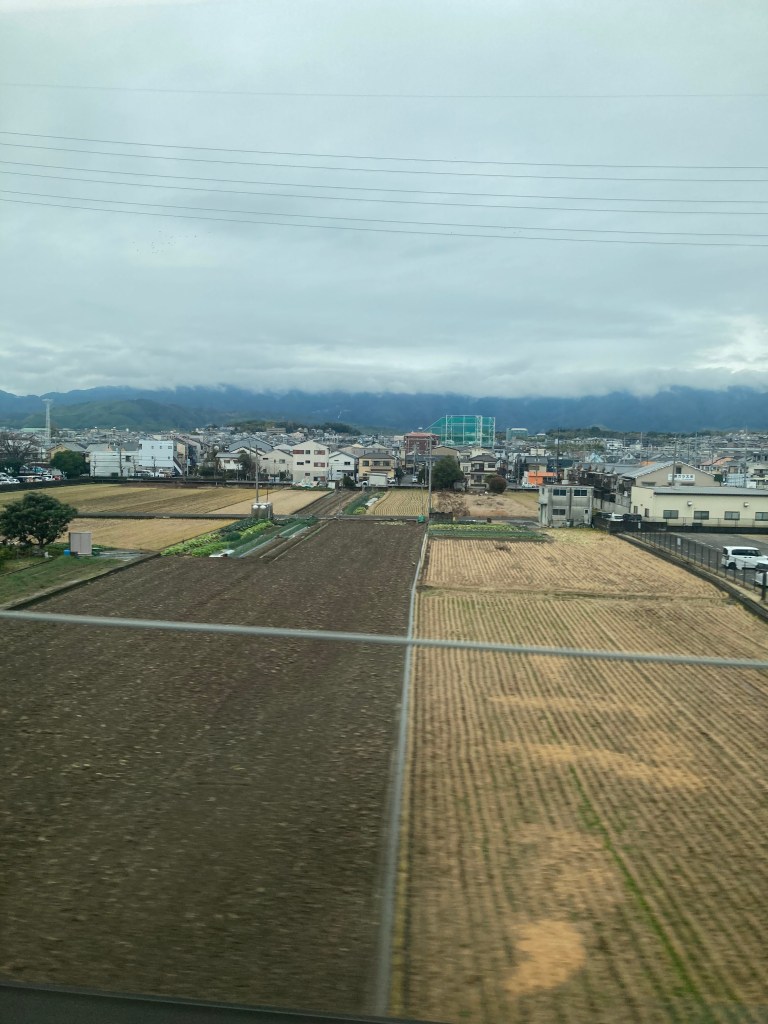
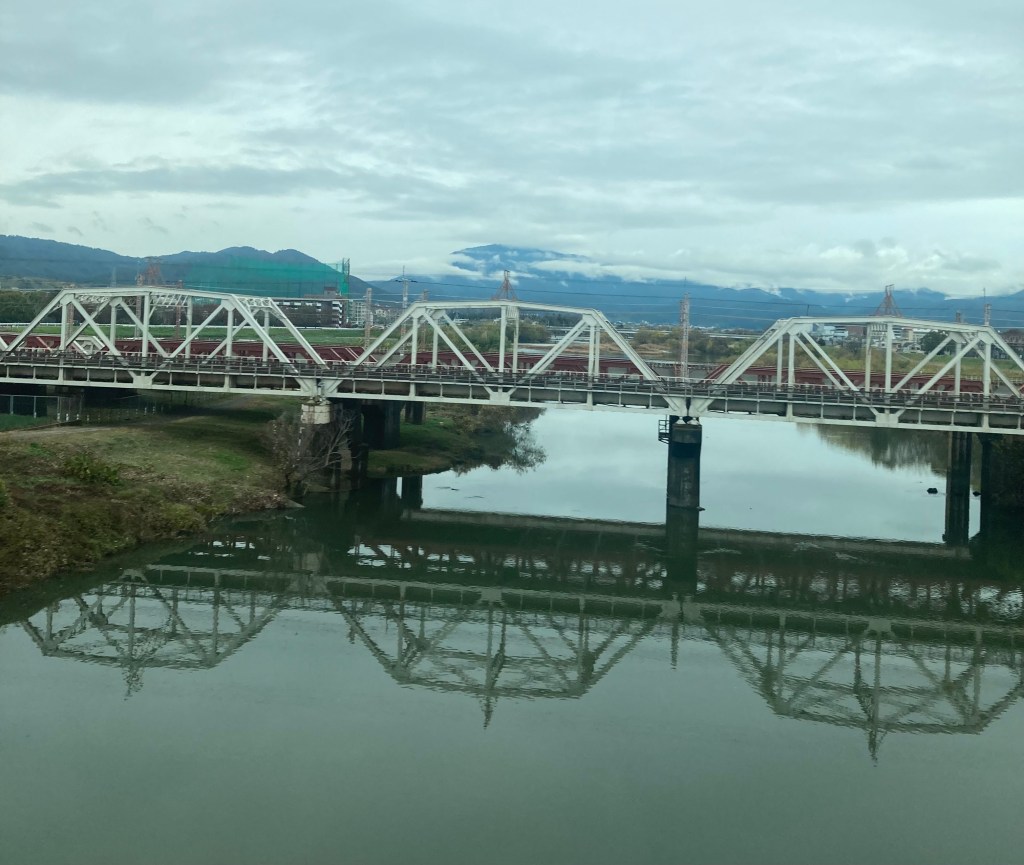
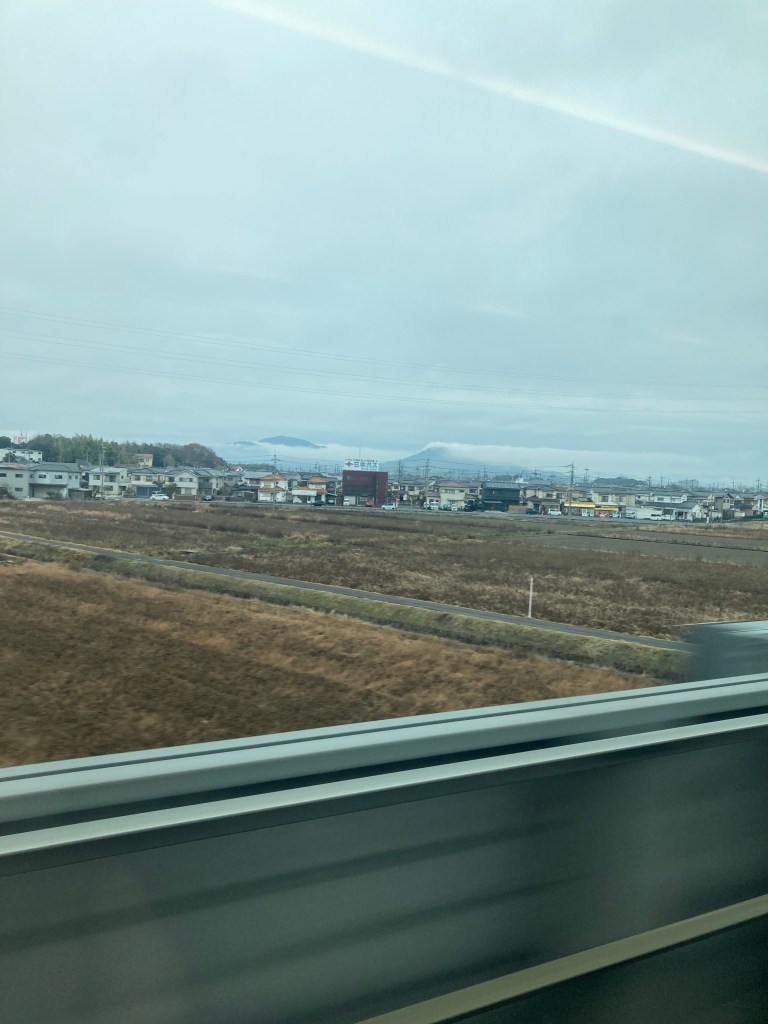
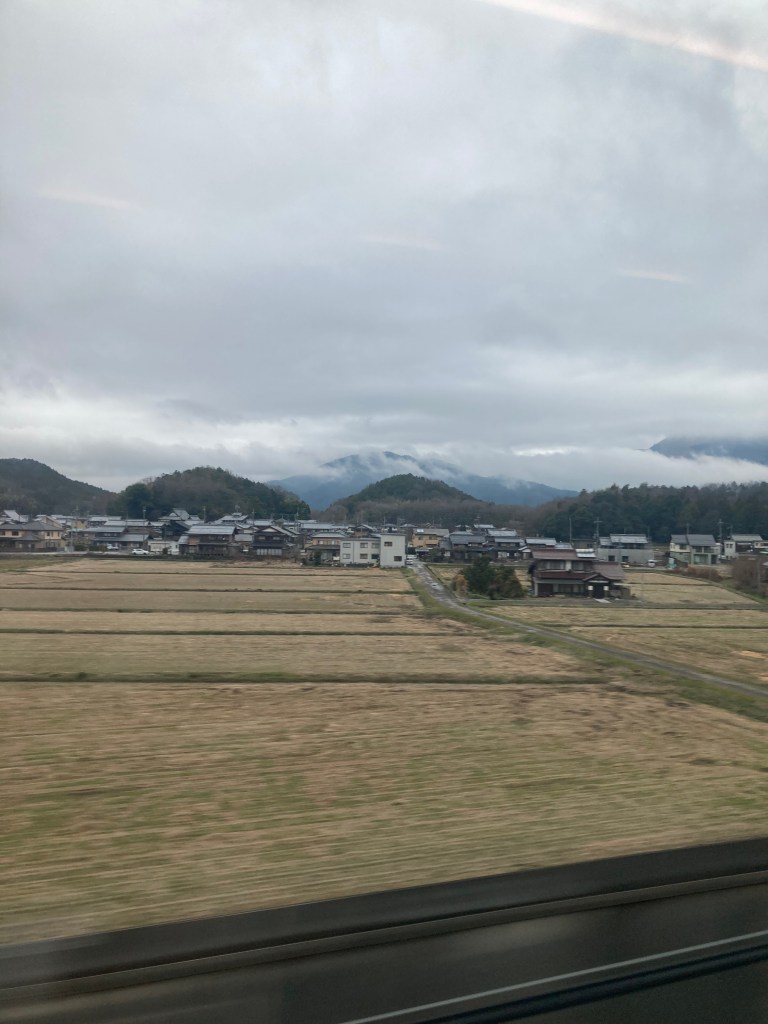
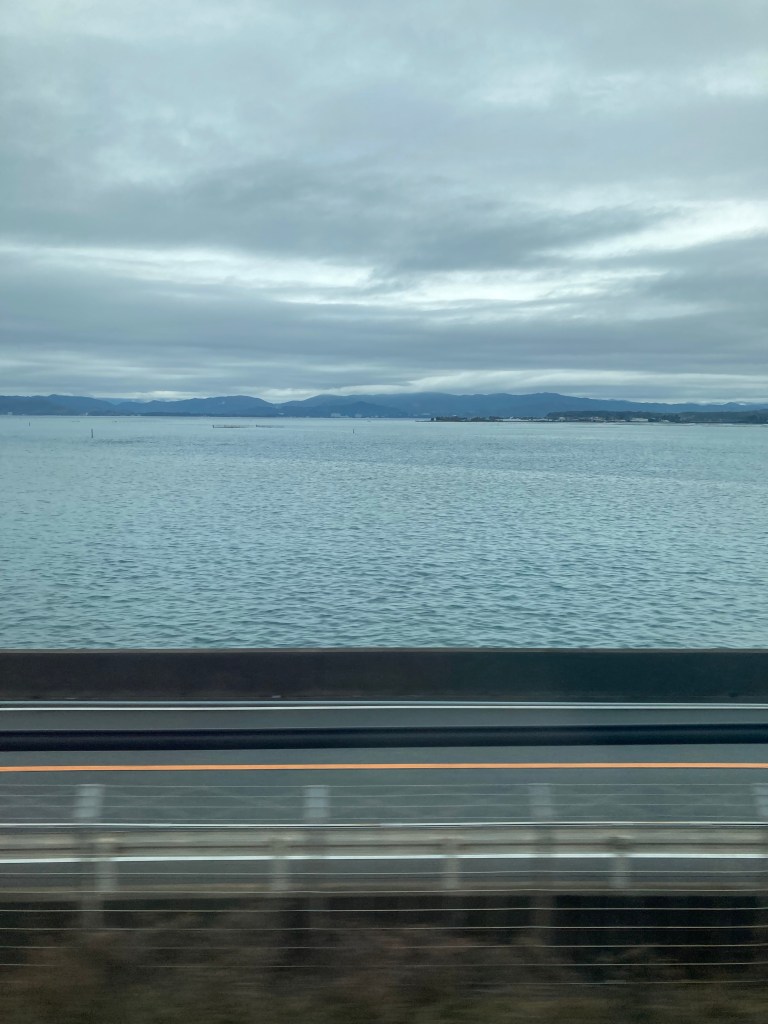
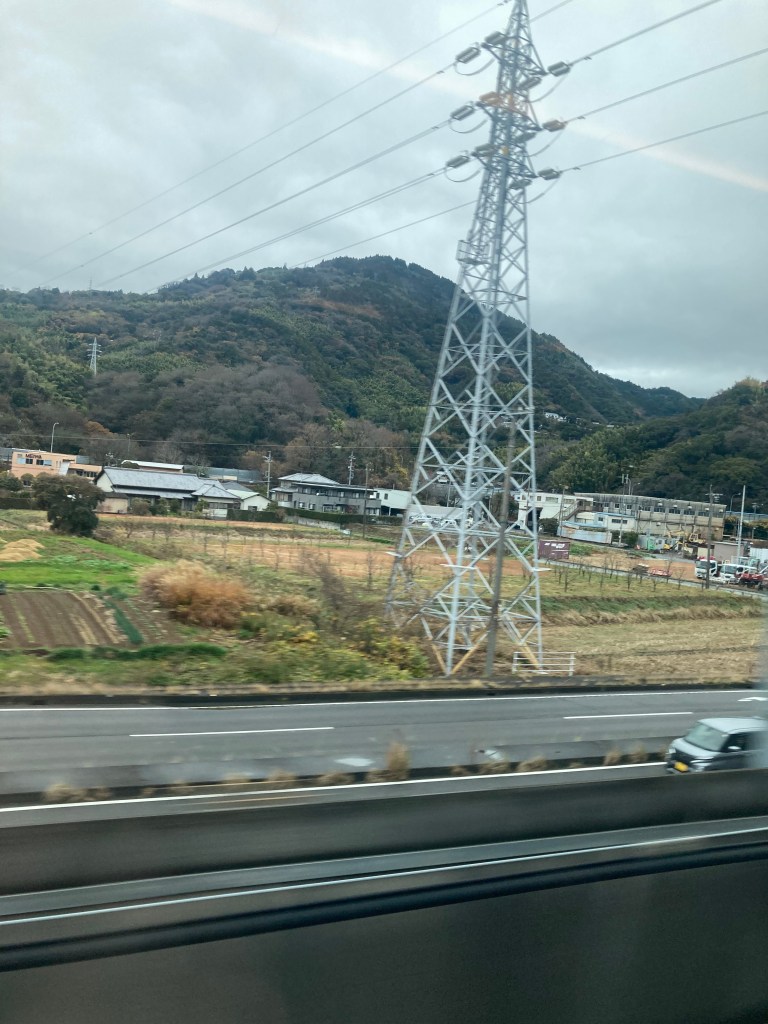
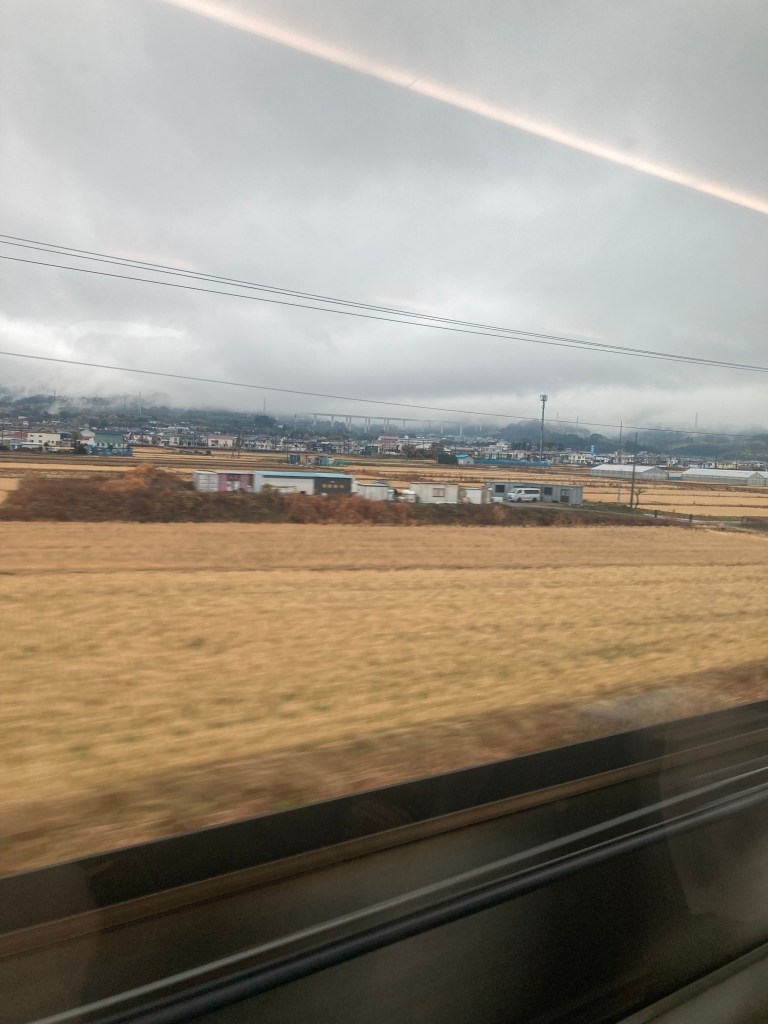
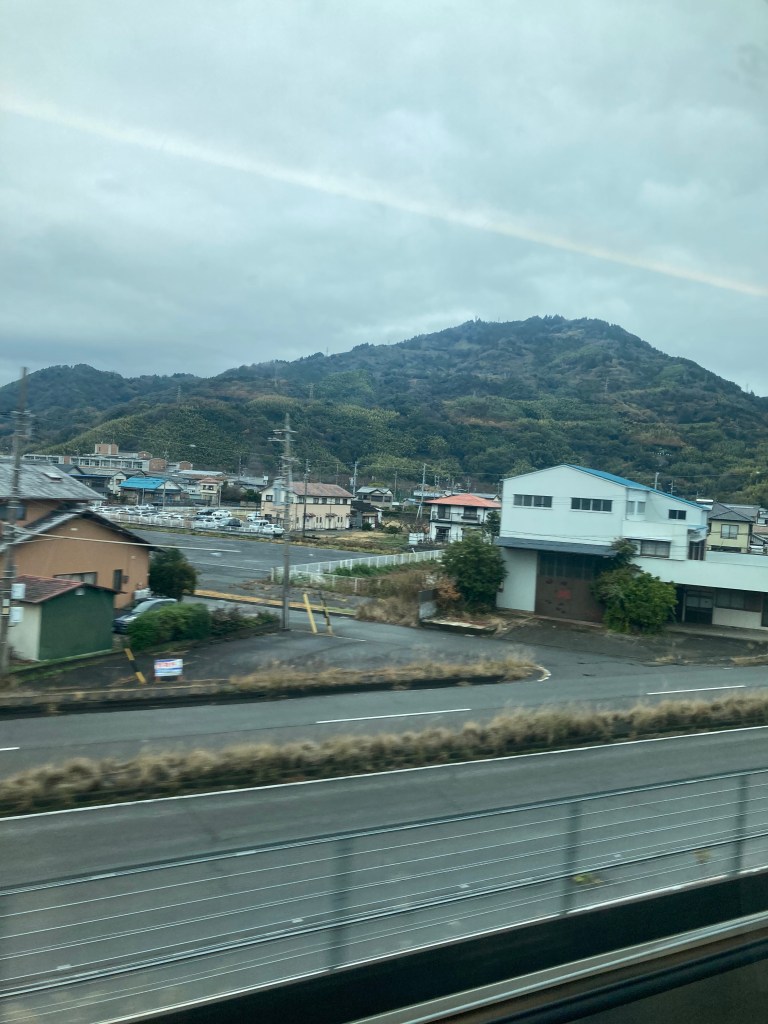
By the time we’d transferred to the local JR line for Hamamatsucho and then hopped onto the monorail bound for Haneda Airport, it was already 15:00—just right for checking in to our hotel. We’ll be based here for four nights, the same arrangement we had when we first arrived in Tokyo on 7 December. It’s an ideal spot, and the monorail makes slipping back to the main train network at Hamamatsucho Station wonderfully straightforward.
Alex also shared a few photos from the Miffy Resort where they’re staying in Huis Ten Bosch, Nagasaki.
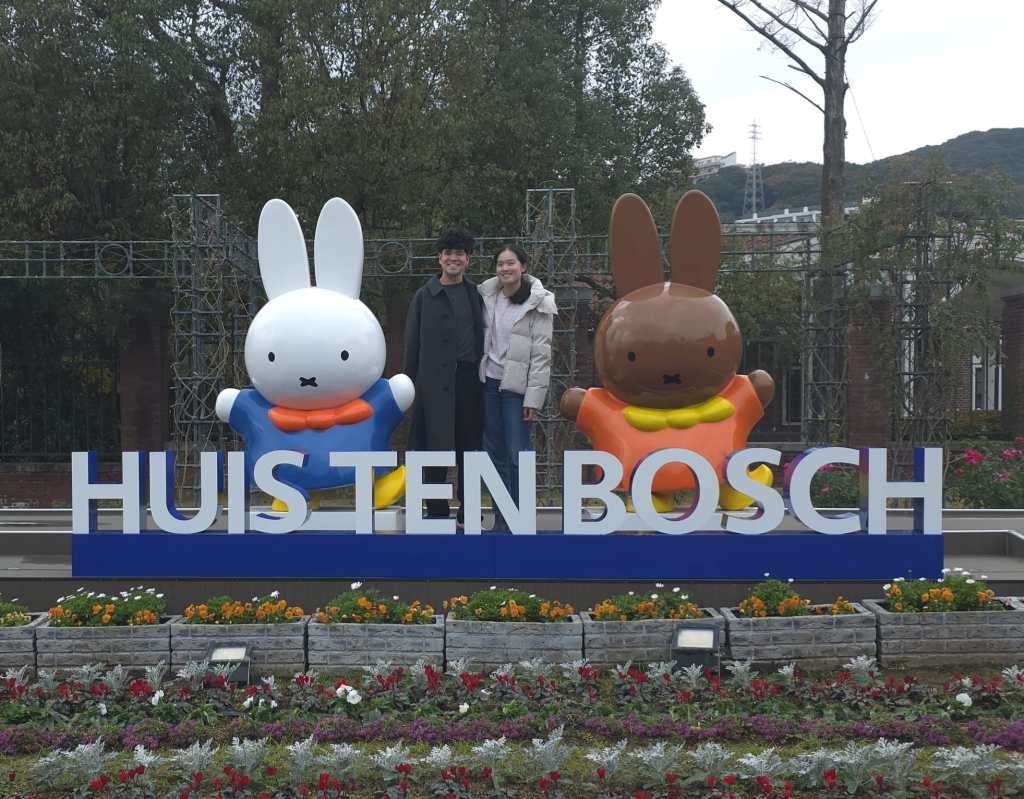
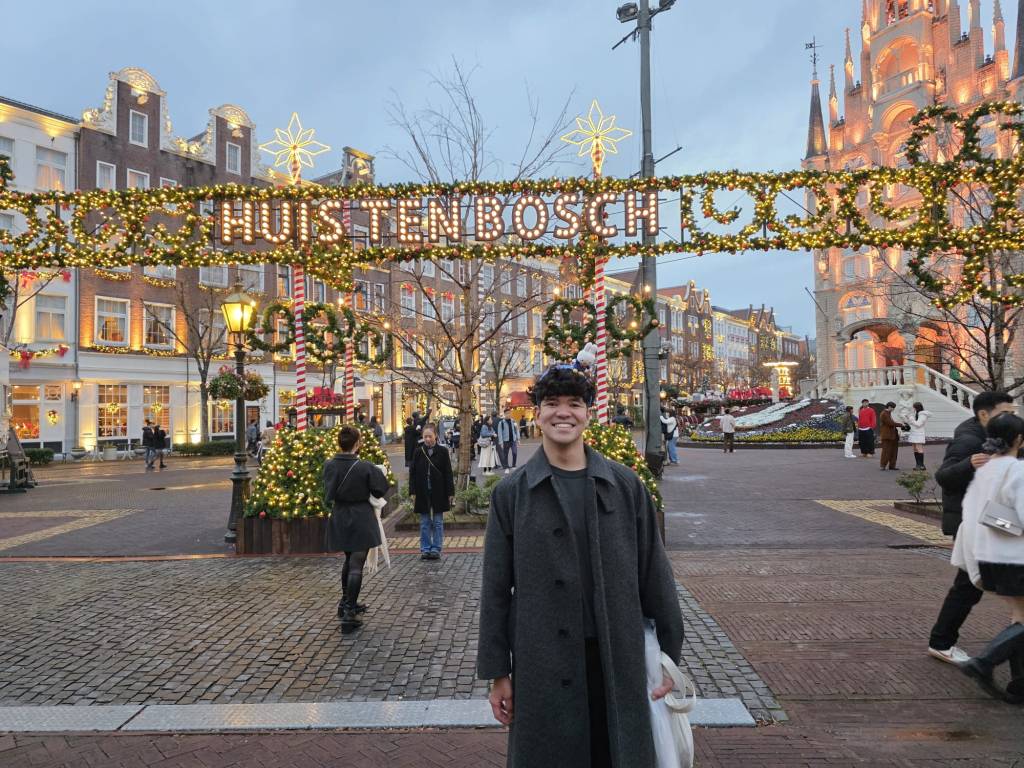
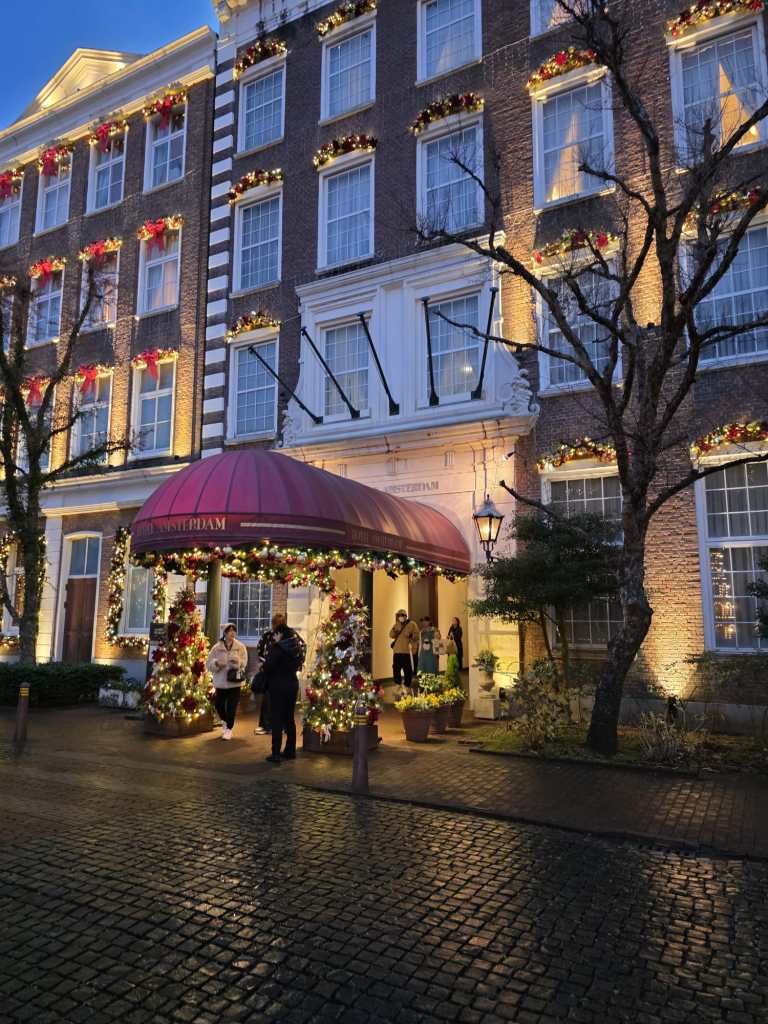
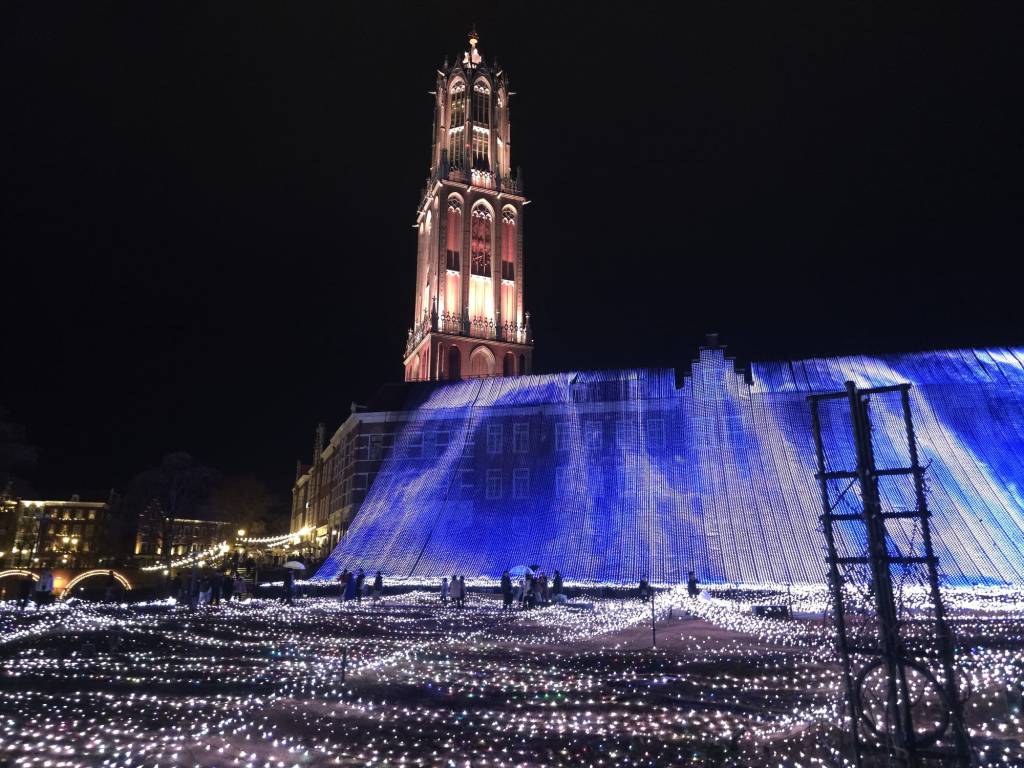
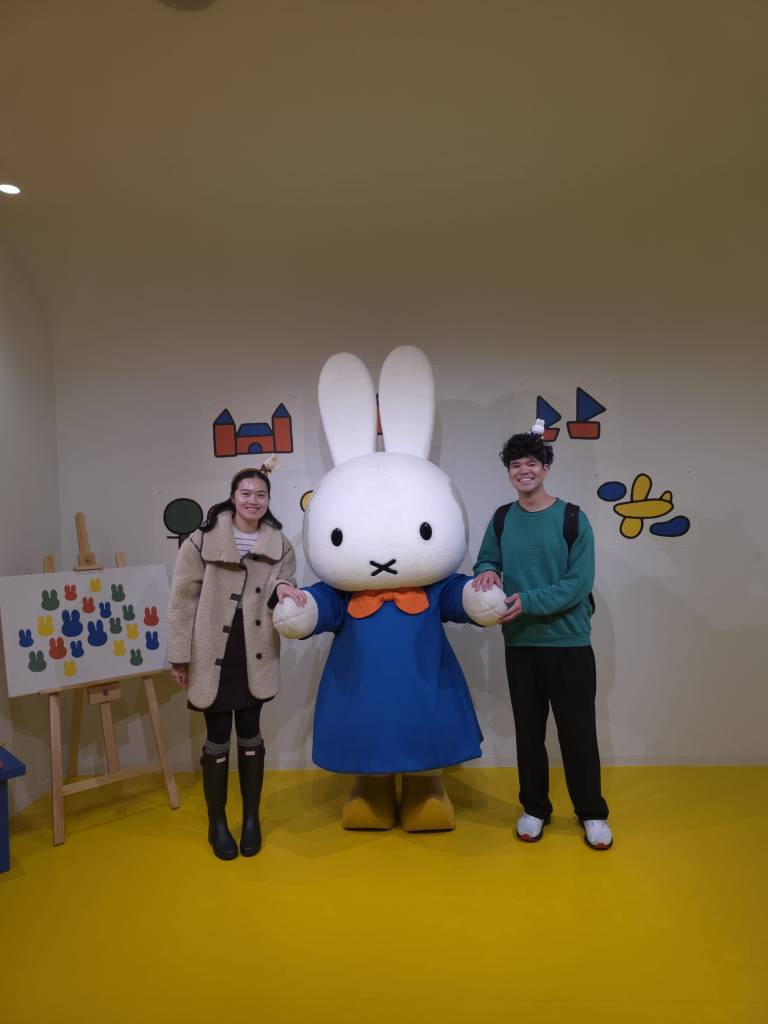
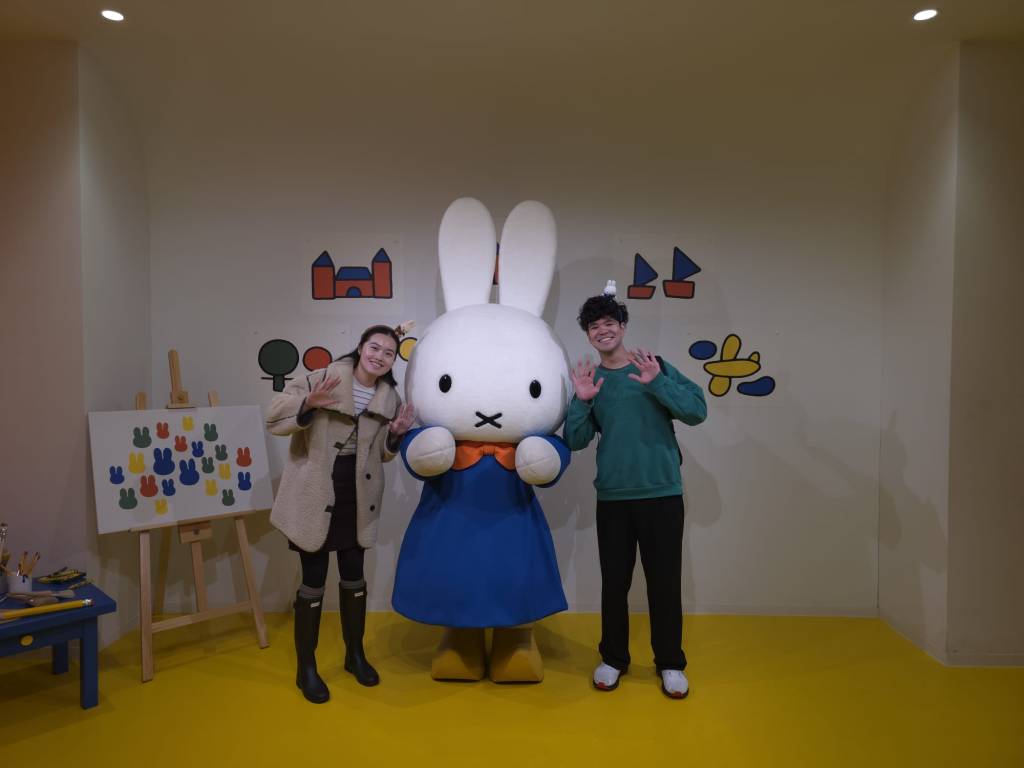
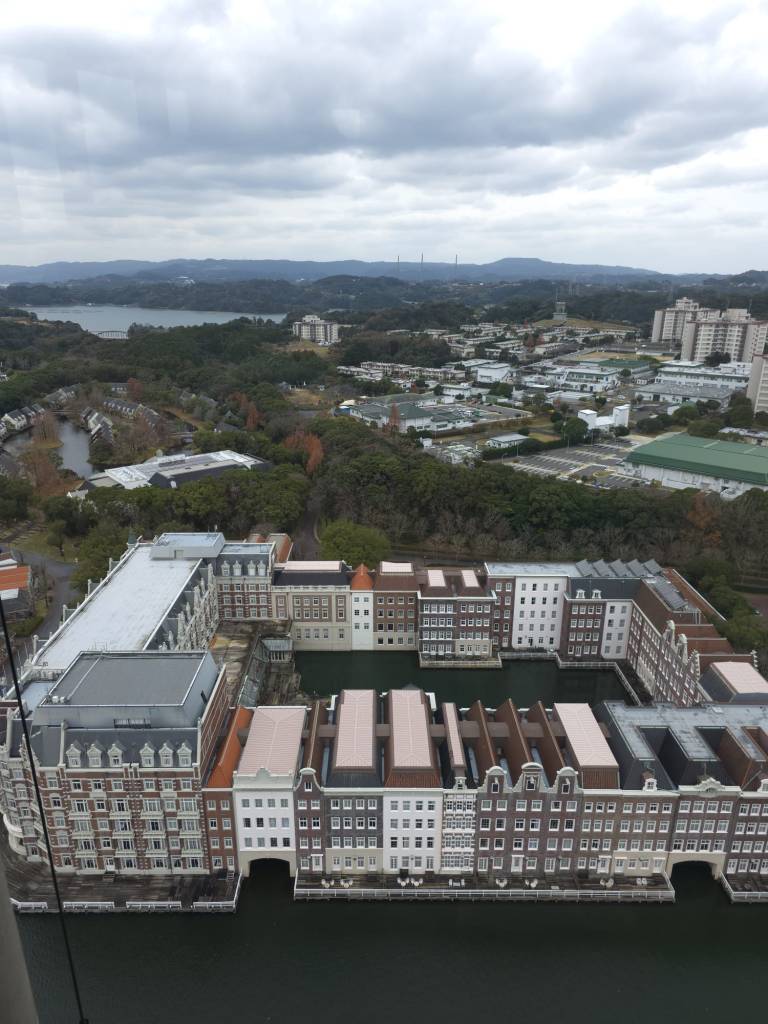
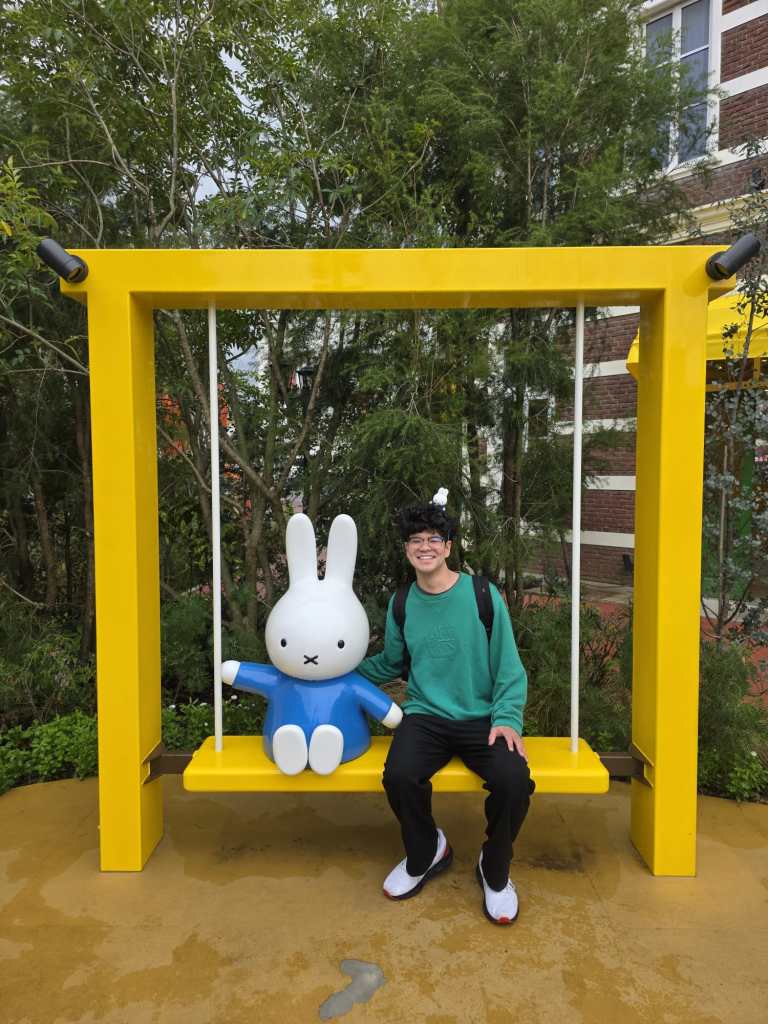
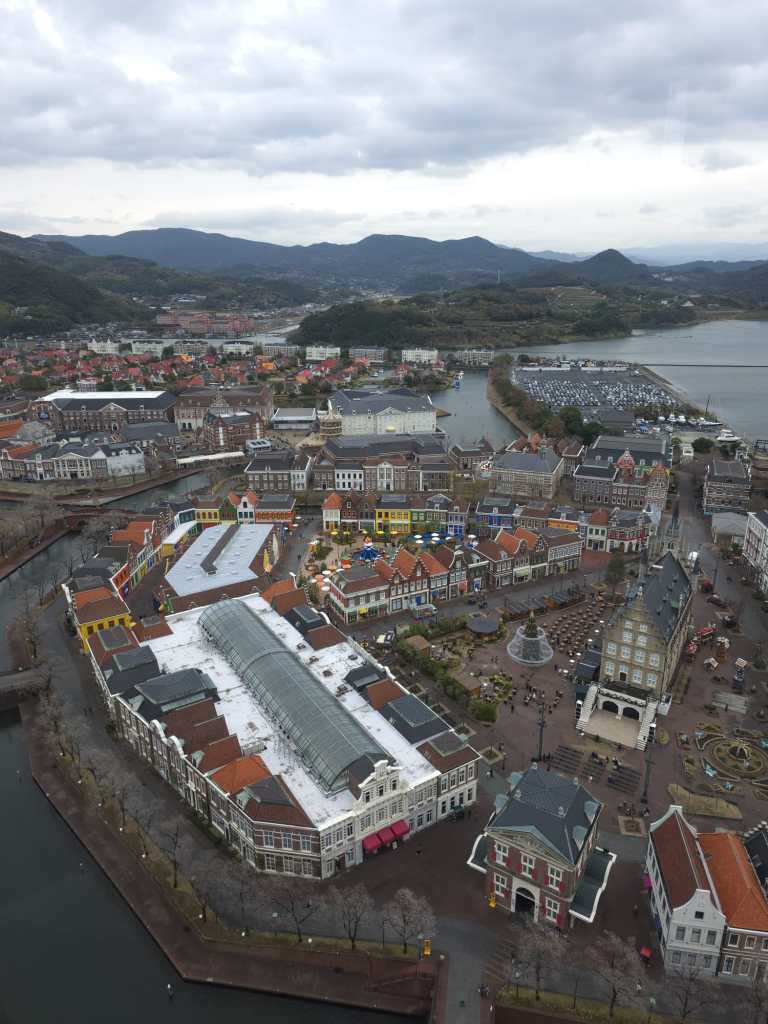
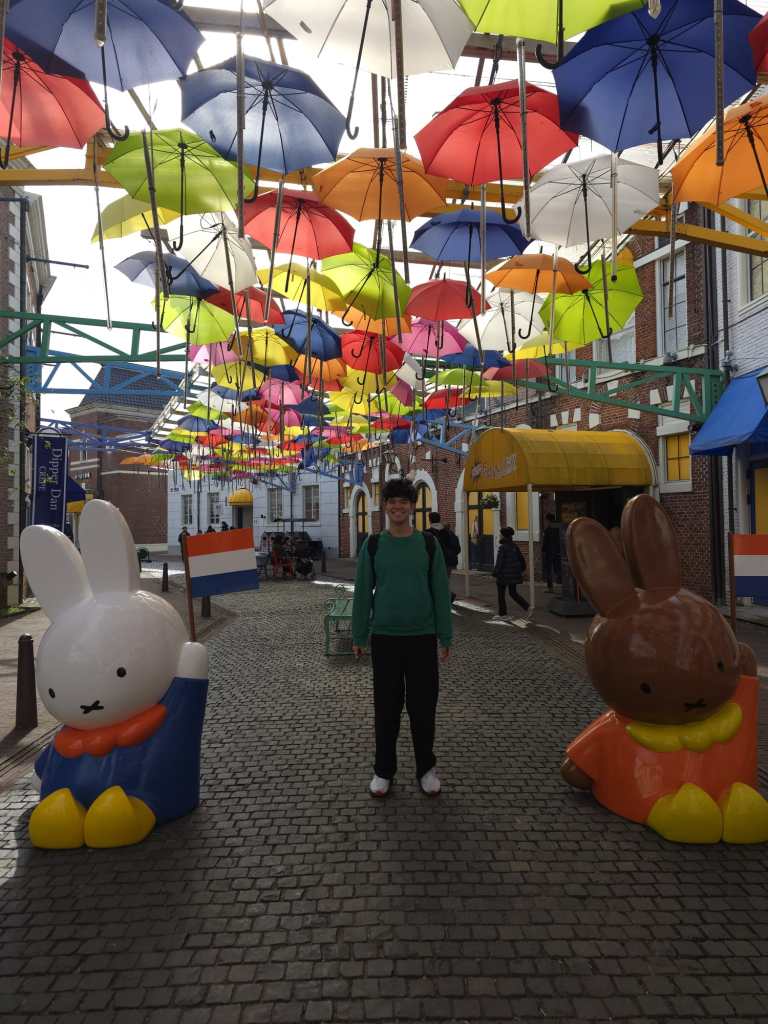
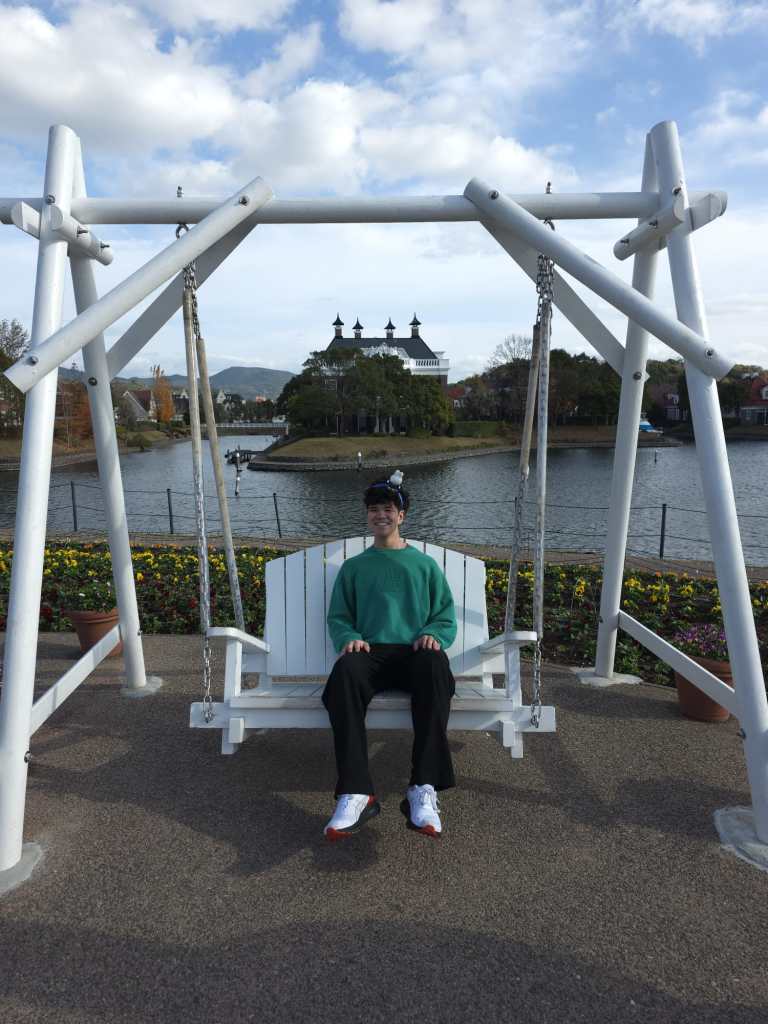
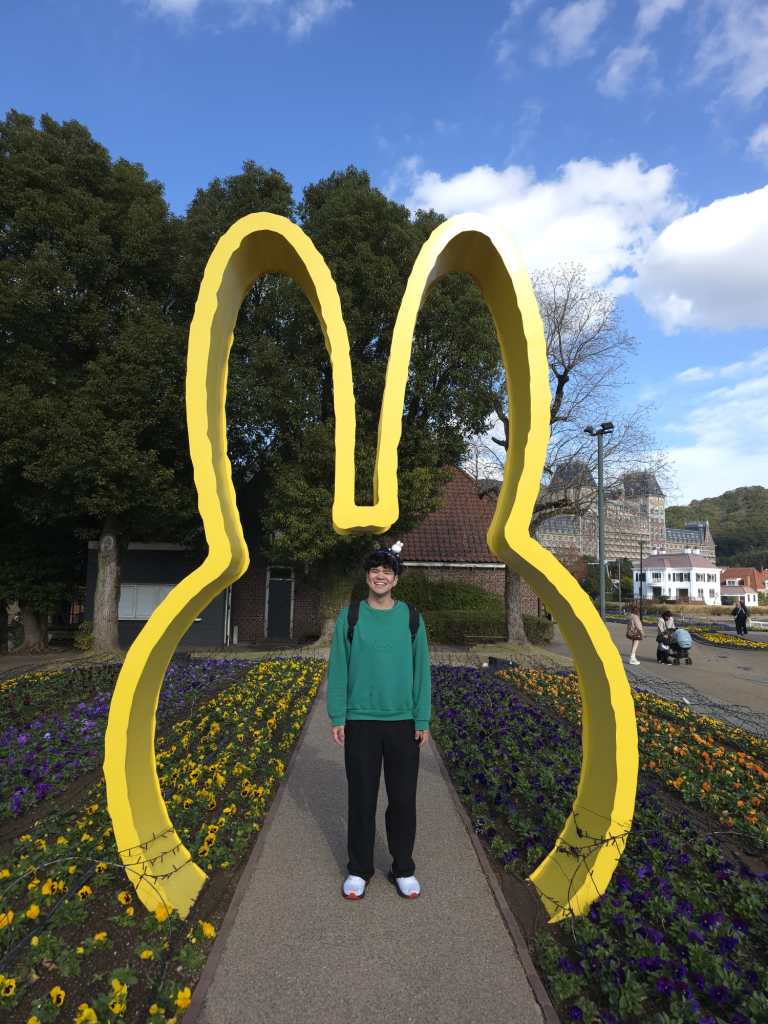
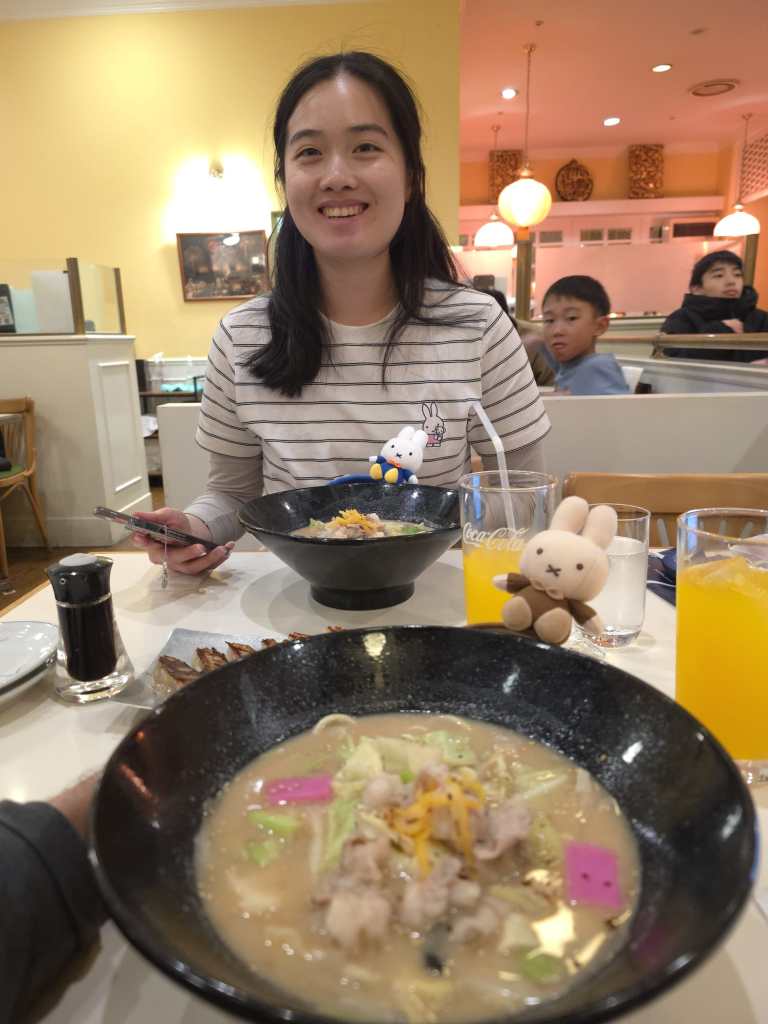
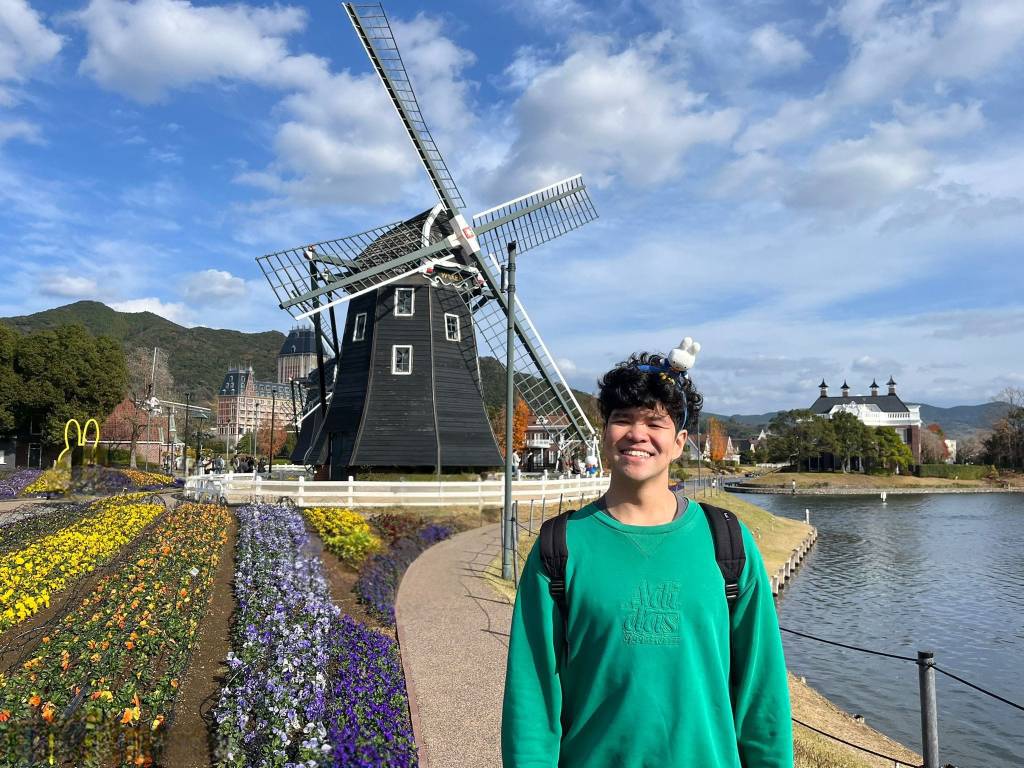
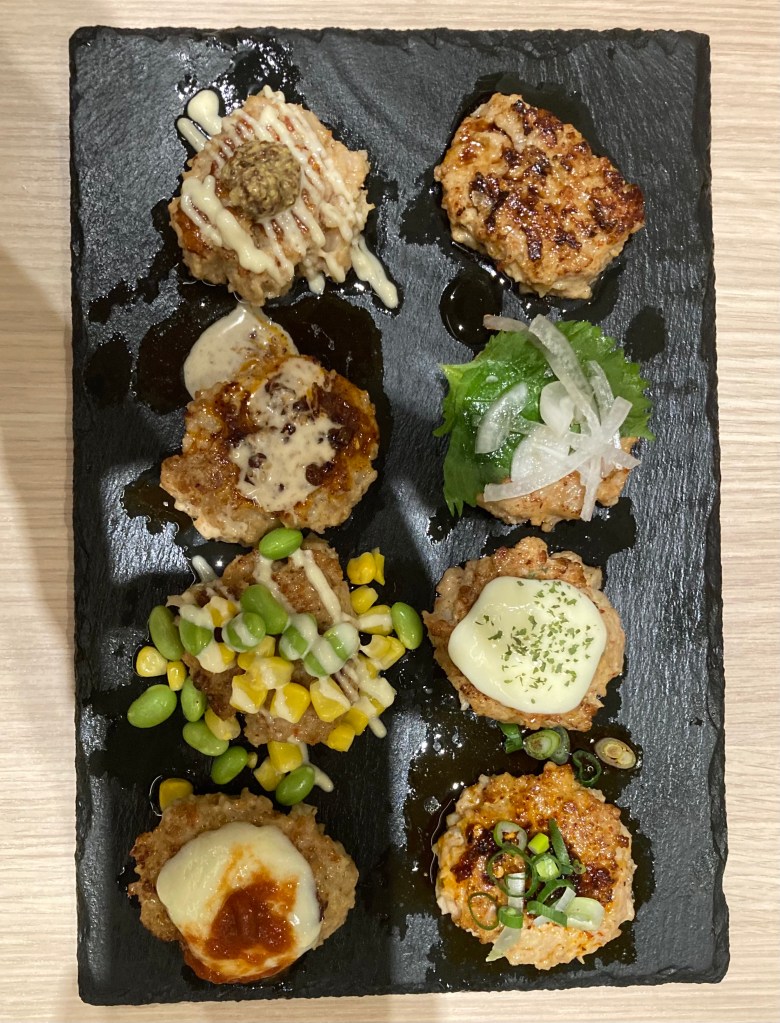
Tonight we headed into Hamamatsucho for dinner and returned to Ramen Bar Na Na Mi. As we’ve eaten there before, we found the food was just as good as we remembered. One of the standout dishes was a selection of their in‑house chicken patties, each with its own flavour. Very tasty.
Thursday 25 December 2025 (Christmas Day)
Merry Christmas, everyone.
This morning we set out for Ginza, right in the heart of Tokyo.
Ginza is the city’s iconic upscale district—an elegant mix of luxury department stores, designer boutiques, art galleries, and refined dining, all wrapped in a blend of historic charm and modern polish. On weekends its main avenue transforms into a pedestrian‑only promenade, turning the whole area into a relaxed “street paradise.”
The name itself has roots in its past: gin meaning silver and za meaning guild or office, a nod to the silver mint that operated here from 1612 to 1800.
After the Great Kanto Earthquake, Ginza was rebuilt as Tokyo’s first Western‑style shopping district, and it has continued to evolve into a place where traditional Japanese sensibilities meet global luxury.
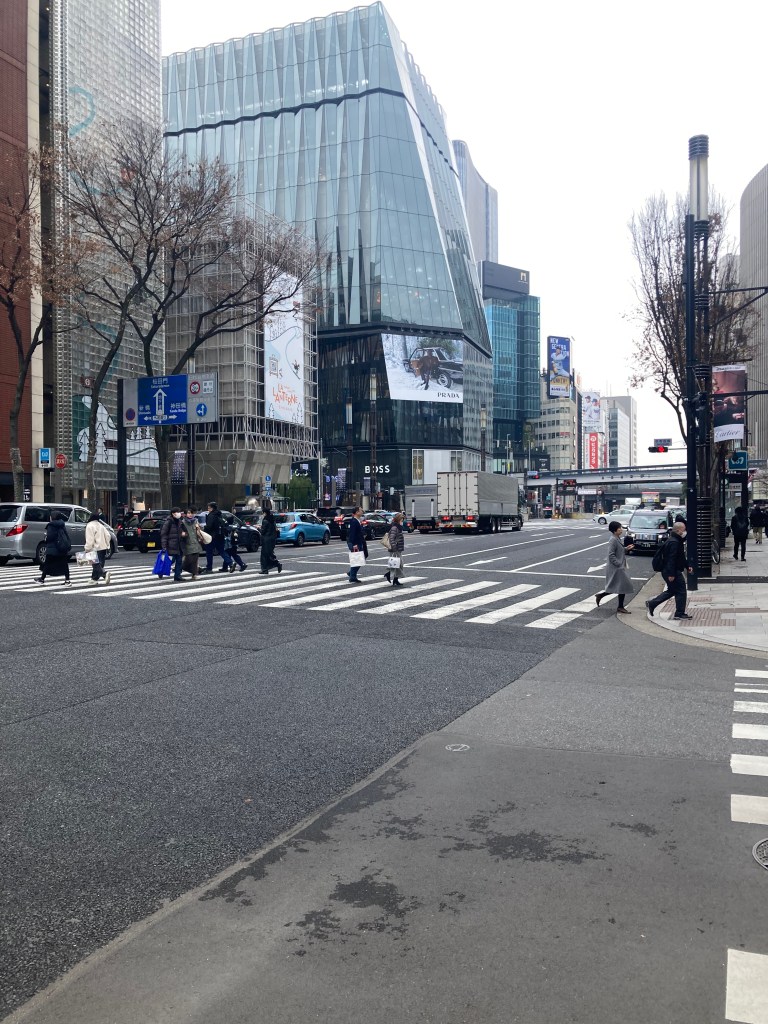
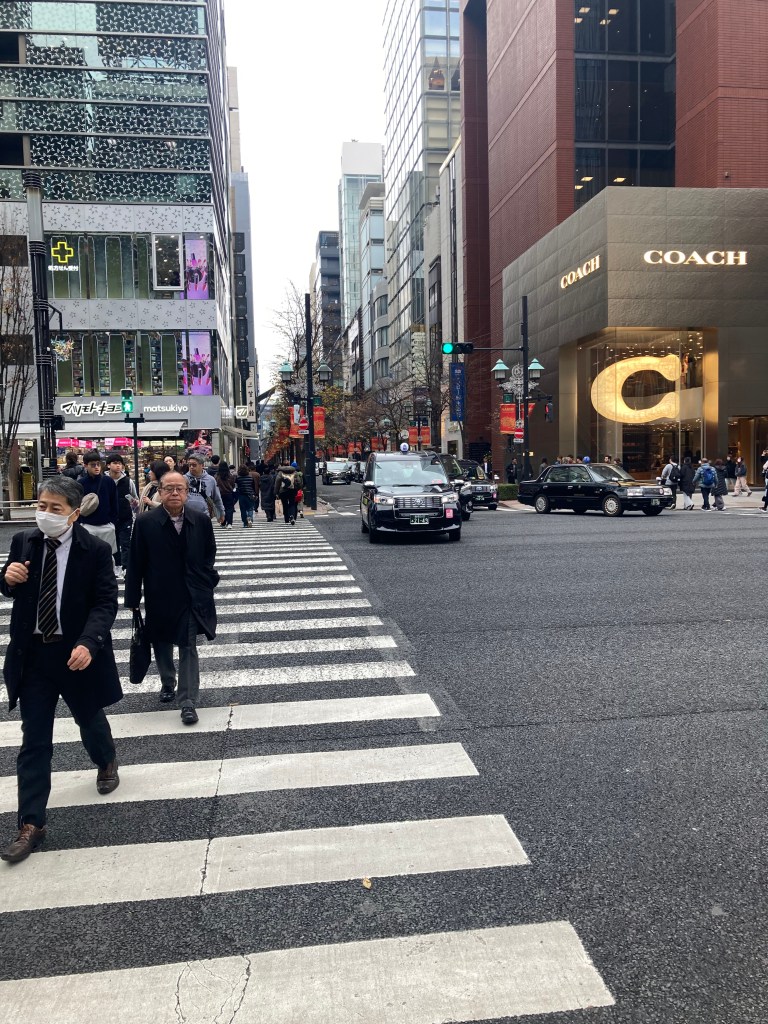
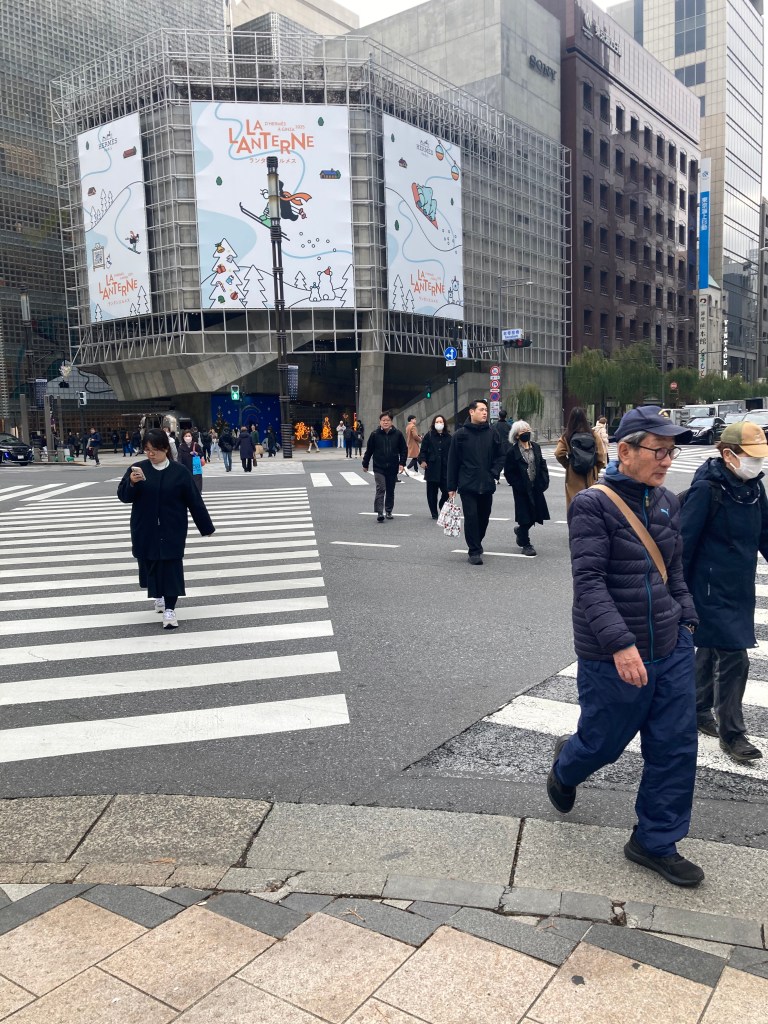
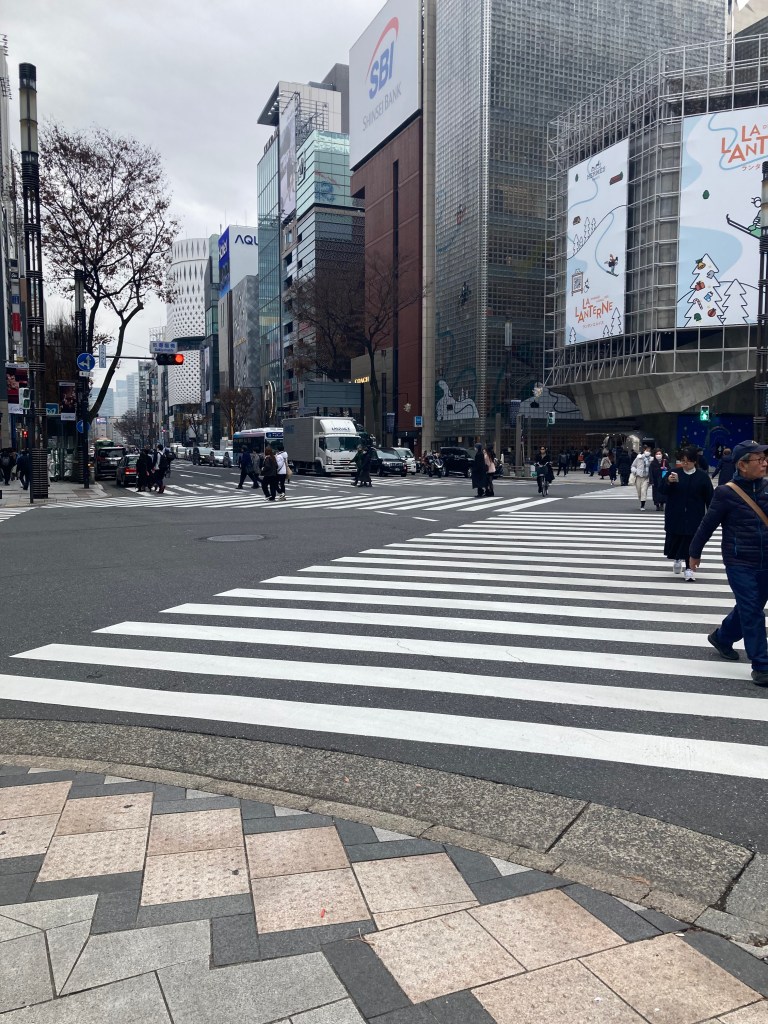
We wandered the streets for a while before heading to Hibiya Park.
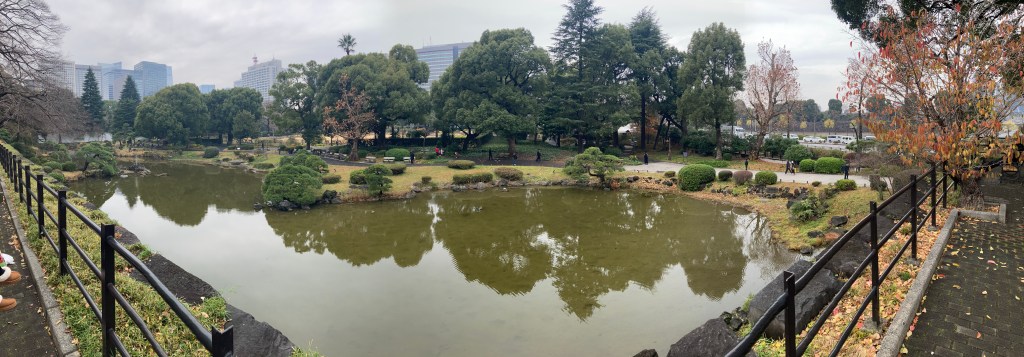
Hibiya Park sits in the heart of Chiyoda, Tokyo, spanning 161,636.66 m² (about 40 acres). It lies between the Imperial Palace’s East Gardens to the north, the Shinbashi district to the southeast, and the government quarter of Kasumigaseki to the west.
The area’s history stretches back centuries. What is now parkland was once part of a seawater inlet that extended northward to a cove around present‑day Hibiya and the Kokyo Gaien plaza, where the Kanda River originally emptied. Under Shogun Tokugawa Hidetada, the river was redirected toward the Sumida River, and the earth from that engineering project was used to reclaim the Hibiya cove. During the Edo period, the newly created land became the estates of the Mōri and Nabeshima clans, and in the Meiji era it served as a training ground for the army.
The site was transformed into a public park and officially opened on June 1, 1903. Just two years later, on September 5, 1905, it became the flashpoint for the Hibiya riots, a massive protest against the Treaty of Portsmouth, which ended the Russo‑Japanese War. Demonstrators were angered both by the treaty’s lenient terms toward Russia and by government officials who dismissed public sentiment on foreign policy. The unrest spread across the city, lasting two days, resulting in seventeen deaths, hundreds of arrests, and extensive property damage.
More views of the park.
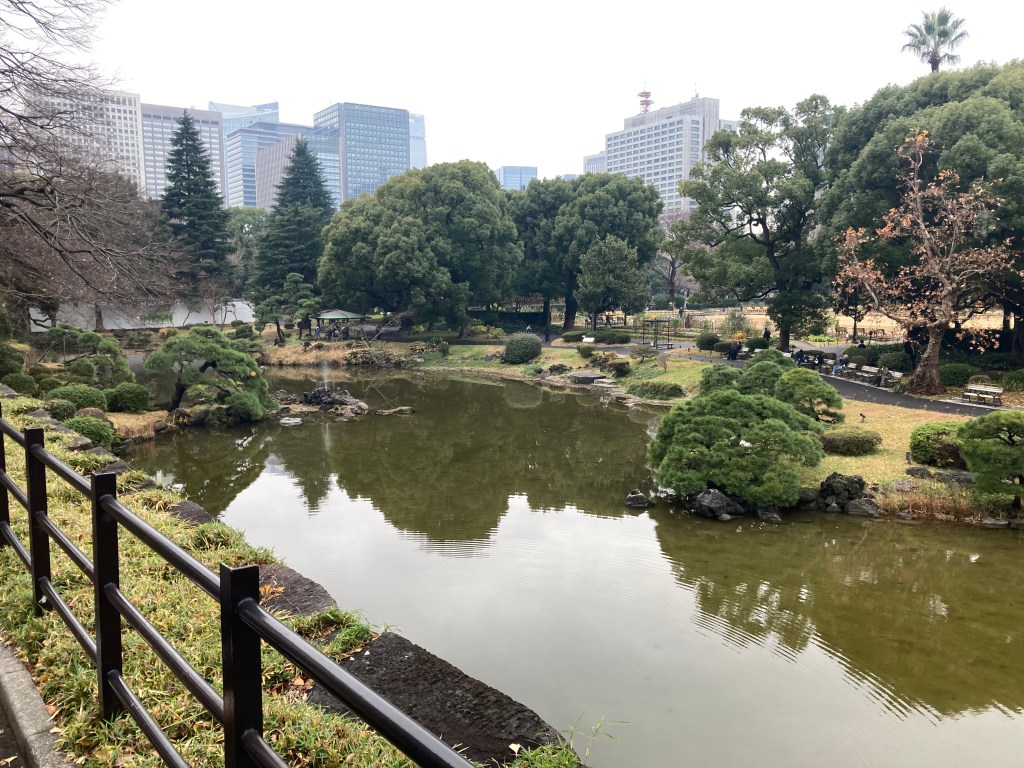
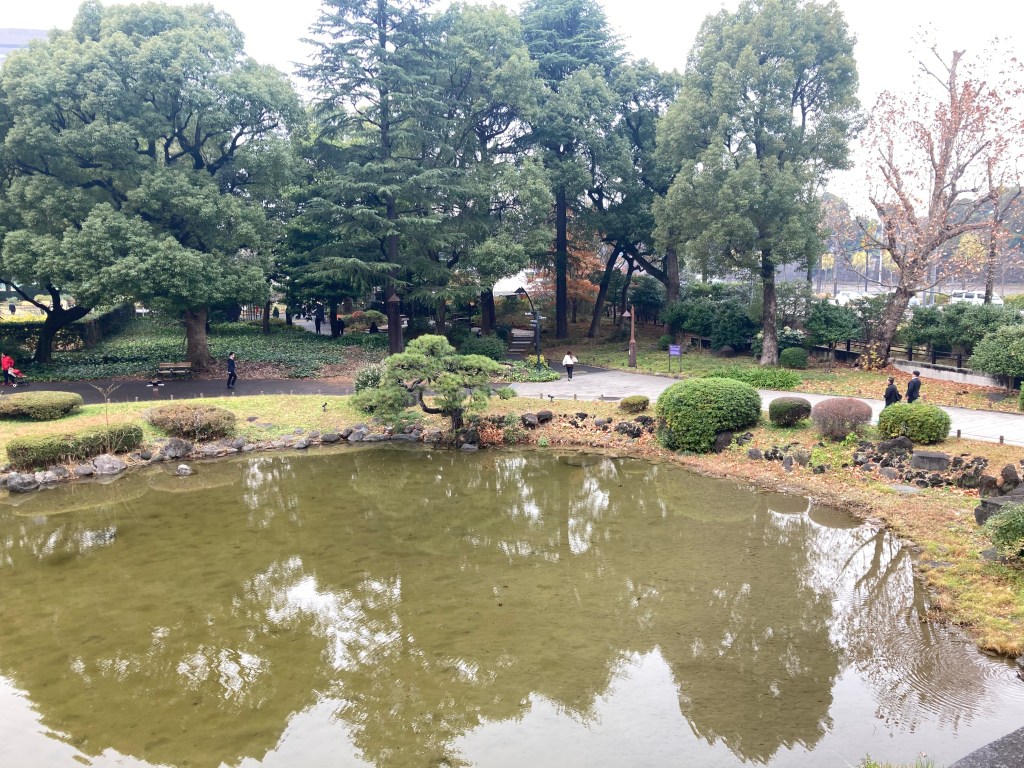
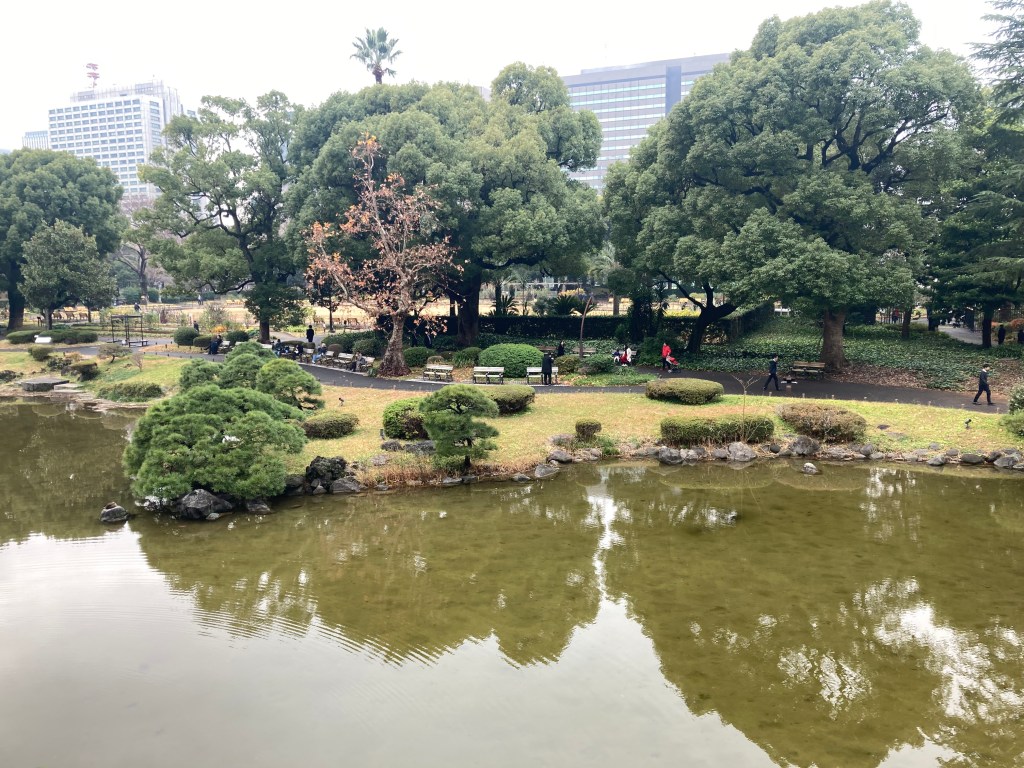
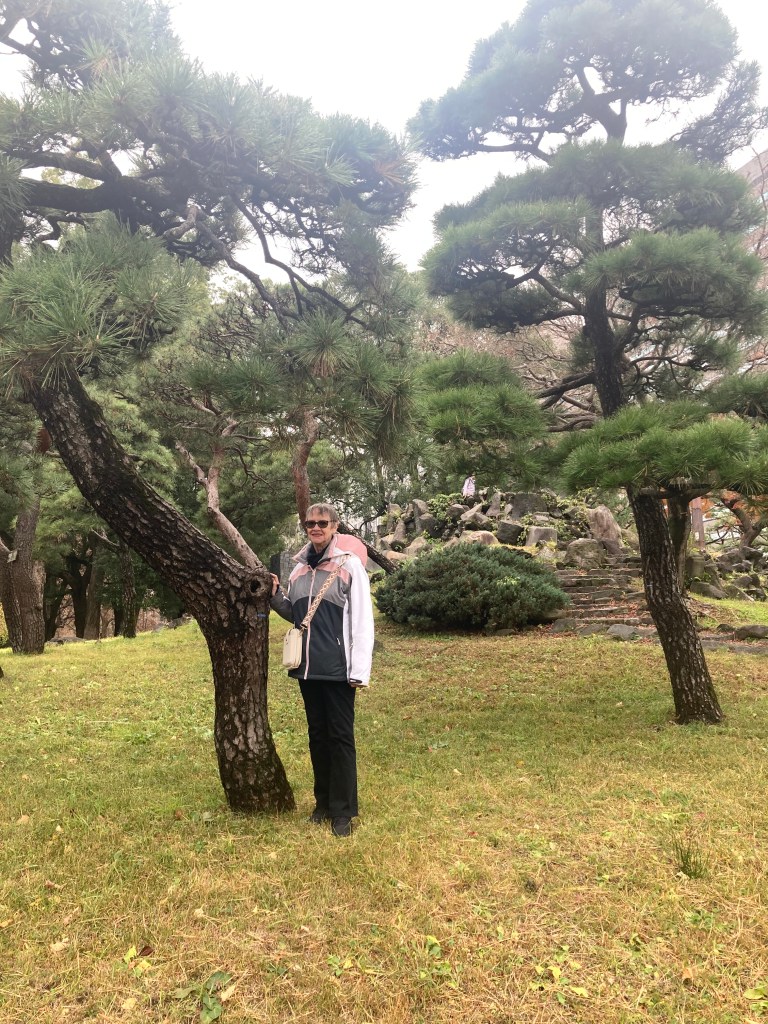
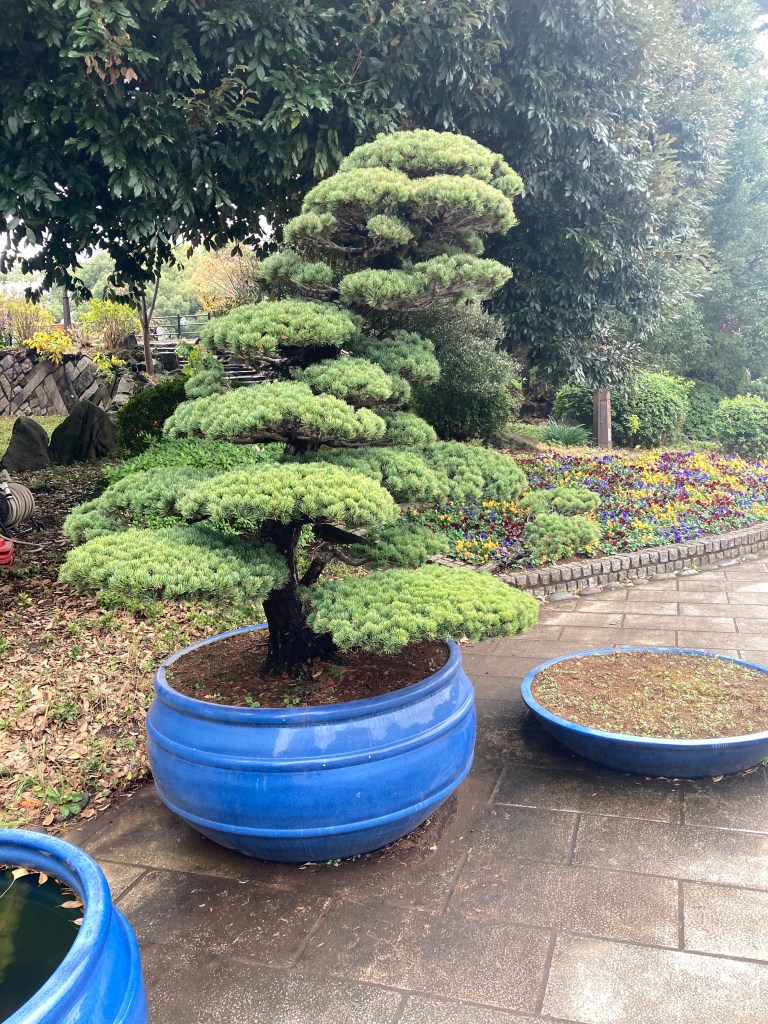
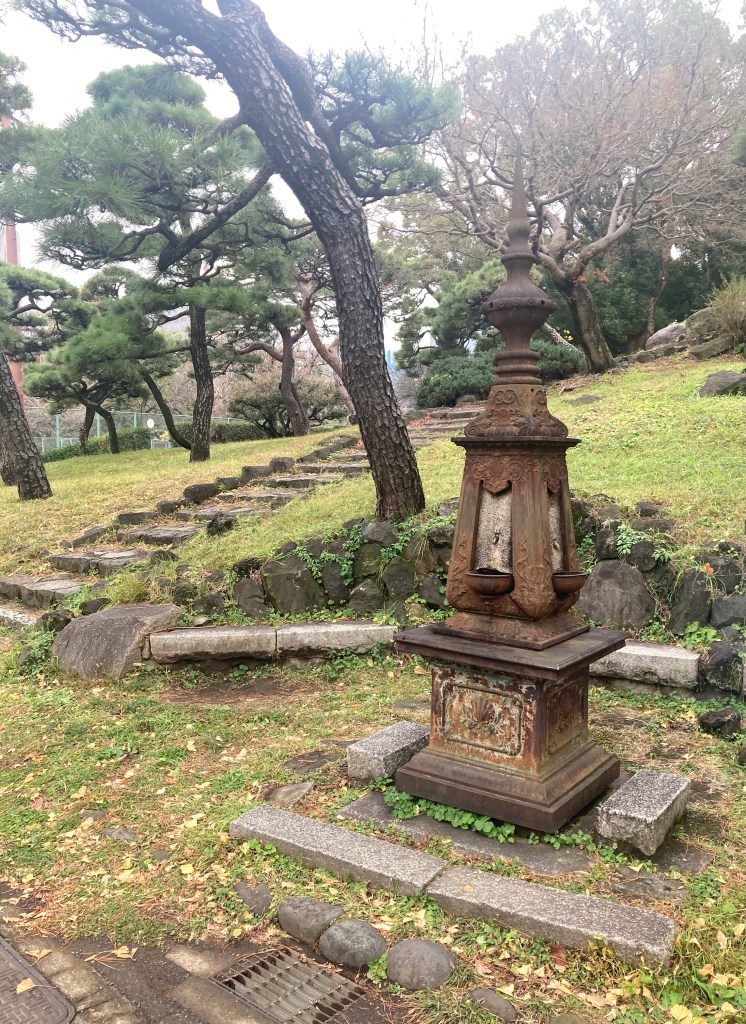
We wandered through the park, taking our time with the gardens. A cluster of striking trees caught our attention—tall yet shaped with the delicate precision of oversized bonsai. Later, we learned that the grounds are designed with traditional Japanese elements, including niwa-ki—carefully sculpted garden trees that echo the aesthetic of bonsai. Many of the species we admired, like zelkova, pines, oaks, wisteria, and even chrysanthemums, are all part of that tradition.
These are the trees we are referring to.
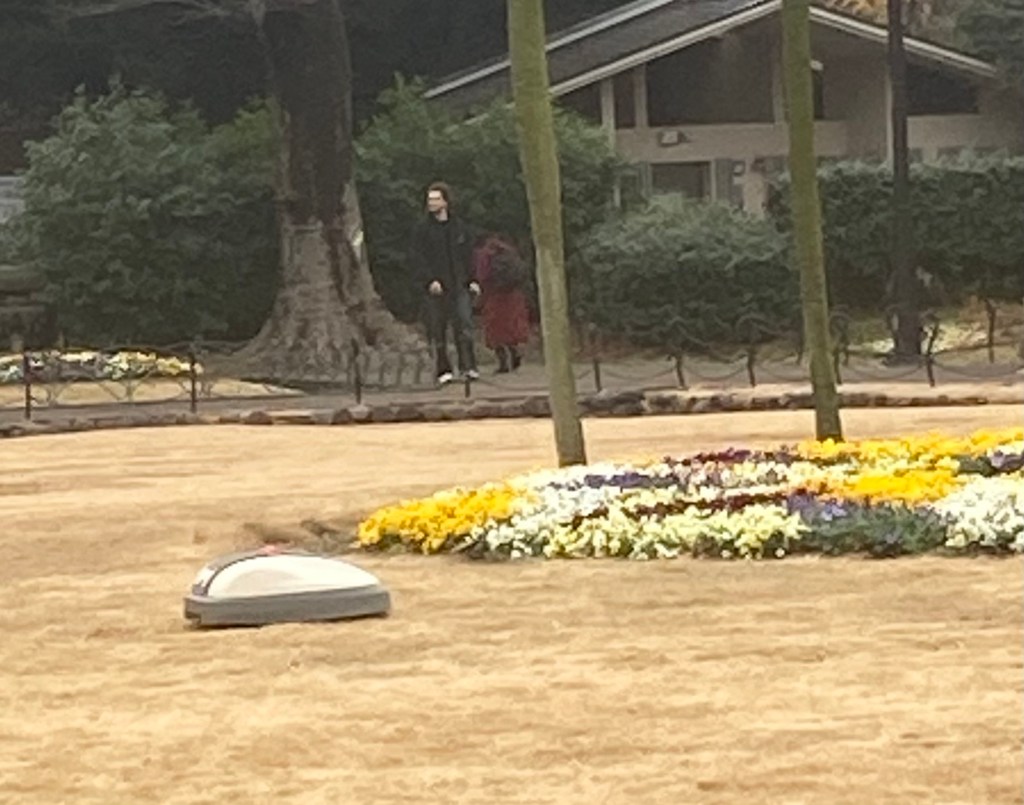
We also came across a Japanese mower quietly tending the garden lawns. It moved in steady lines, gliding back and forth with surprising precision. Each time it neared the edge of its section, it slowed, assessed its surroundings, then pivoted neatly before setting off on the next pass. Mesmerising in its own understated, methodical way.
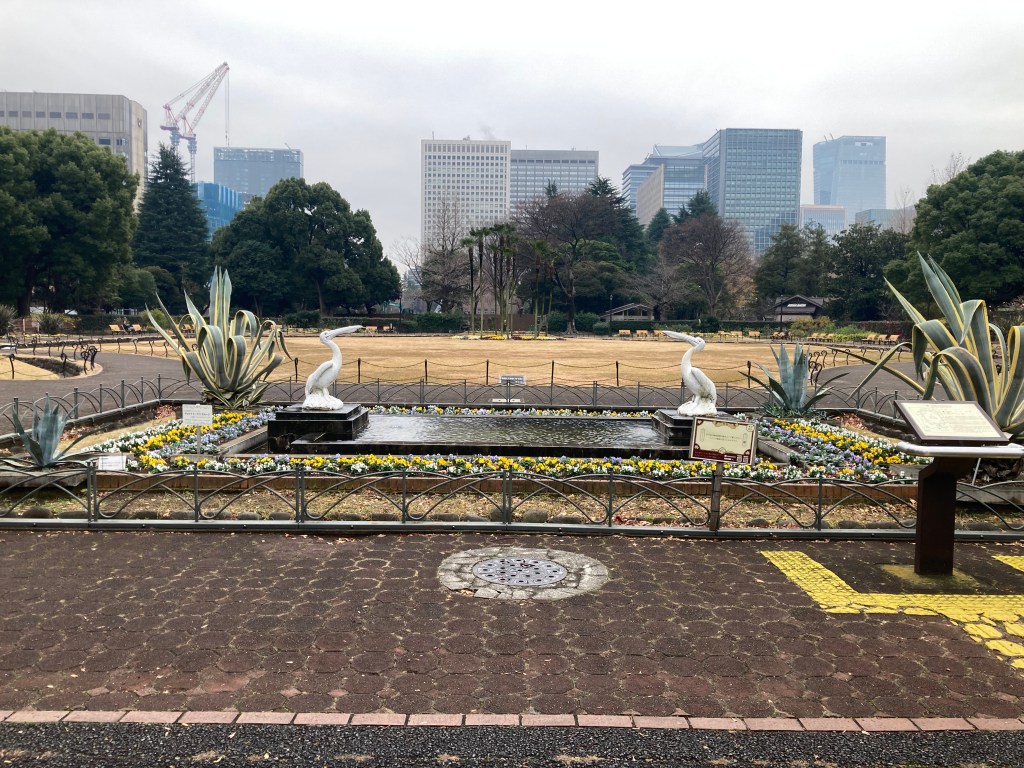
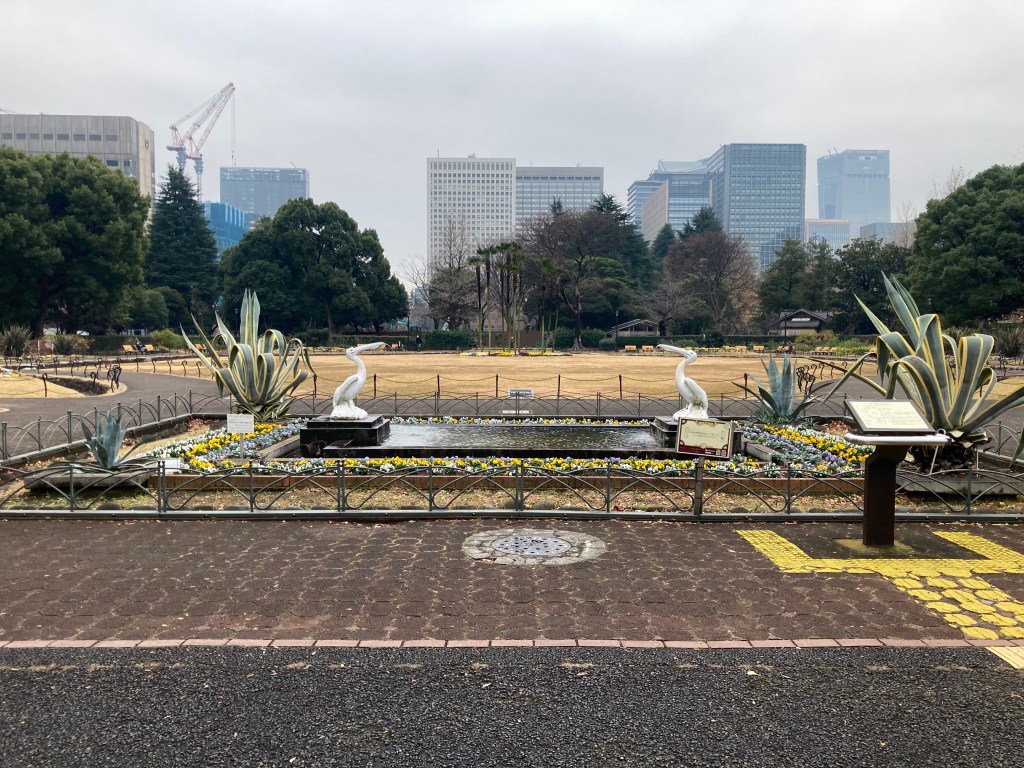
We wandered into a charming German‑style garden tucked inside Hibiya Park, a quiet reminder of Japan’s early fascination with Western landscape design. Created in the Meiji era, it holds the distinction of being the very first Western‑style garden in the country. Symmetrical paths, orderly flowerbeds, and a dignified stone fountain gave it a distinctly European character—an unexpected contrast to the surrounding modern skyline and the more traditional Japanese sections of the park.
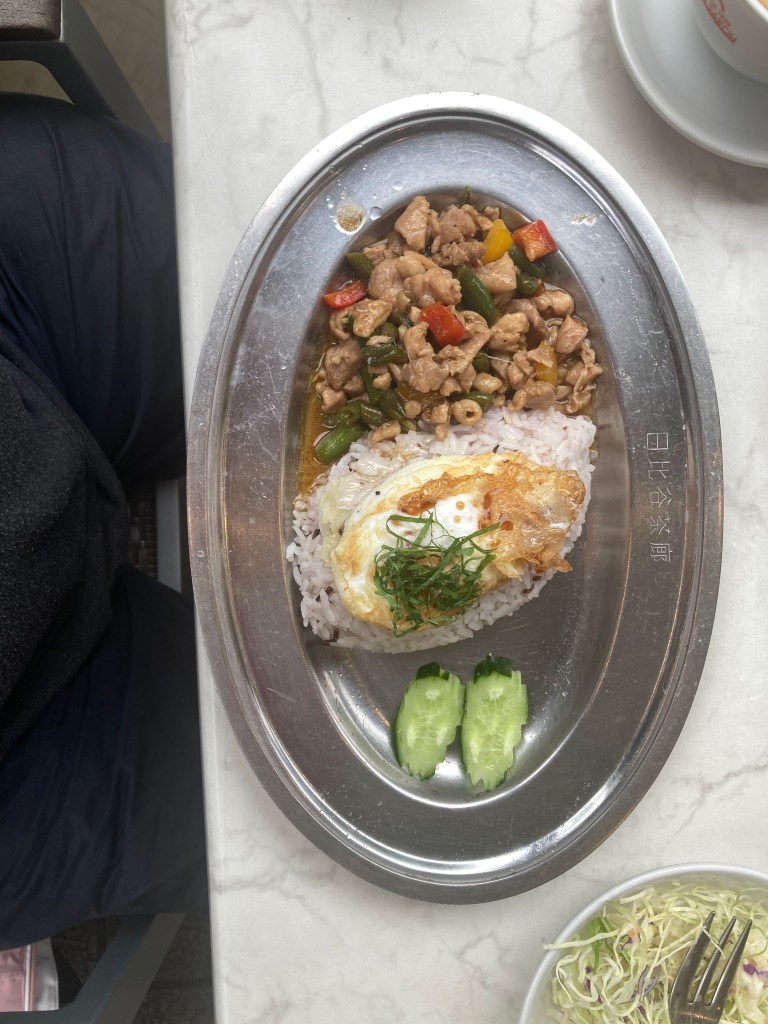
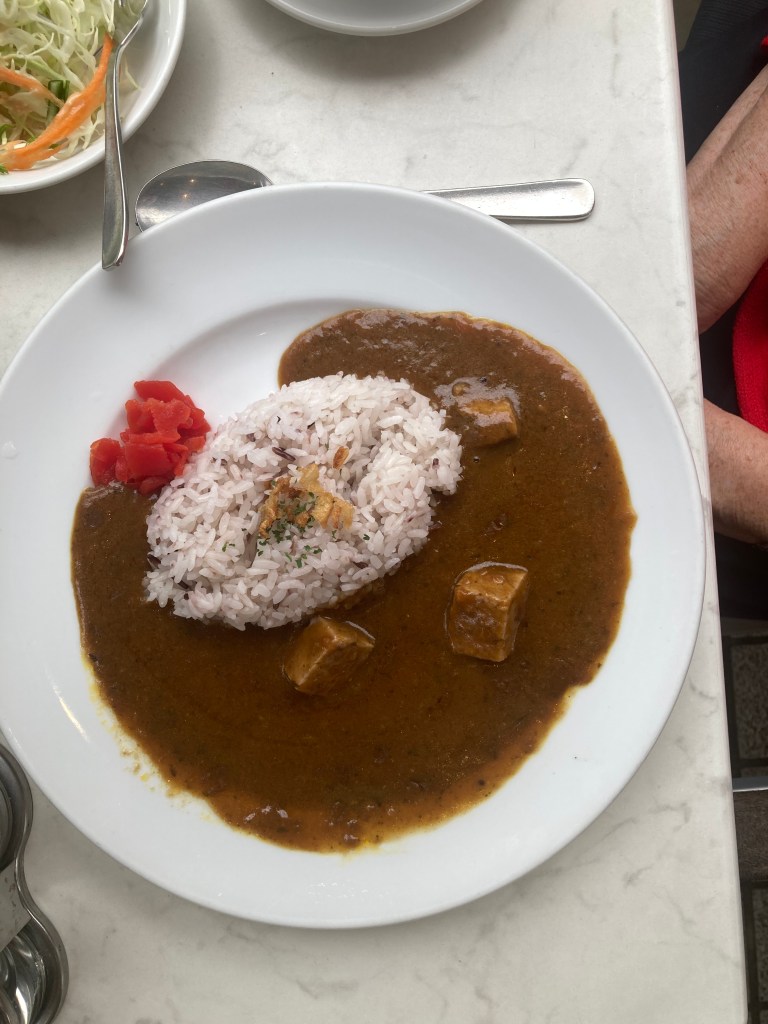
After a gentle wander through the park, we stumbled upon a small café and decided it was the perfect spot for a Christmas lunch—though, of course, the 25th is just another regular workday in Japan. Still, it felt special to us. Maree ordered a Japanese beef curry with rice, while I went for a simple rice and chicken dish. Both were oishikatta desu.
Oishikatta desu is a polite Japanese expression meaning “It was delicious” or “That was tasty,” something you say after finishing a meal. It’s become second nature for us whenever we dine out in Japan.
After a leisurely morning and afternoon wandering through the streets of Ginza and strolling beneath the trees of Hibiya Park, we made our way back to the subway. From there it was a smooth trip: Shimbashi first, then the Yamanote Line to Hamamatsuchō, and finally the familiar monorail ride out to Haneda Terminal 3.
We had hoped to explore the Imperial Palace grounds, but access to the inner areas requires booking a free guided tour through the Imperial Household Agency. The residence itself is only open to the public on special occasions such as New Year’s and the Emperor’s Birthday, so that adventure will have to wait for another visit.
Dinner tonight was set to be at one of the many Japanese specialty restaurants in Terminal 3—there’s no shortage of tempting options. We promised ourselves we’d report back, and now we can.
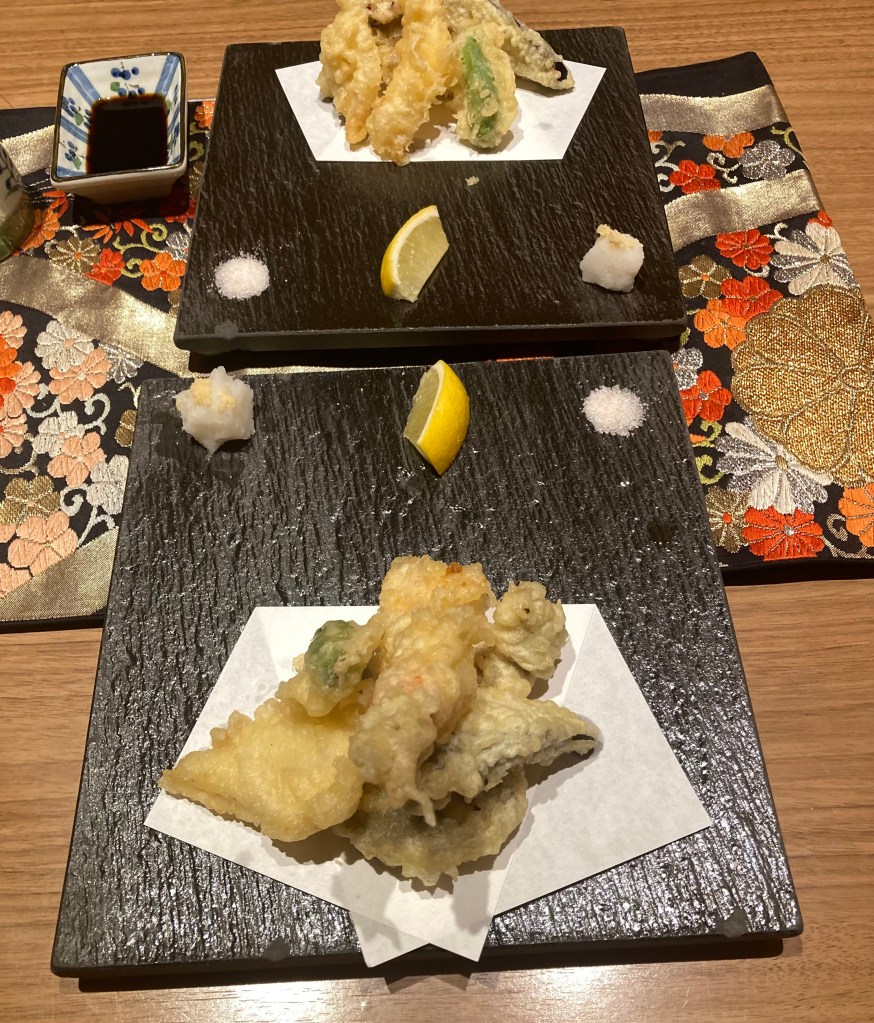
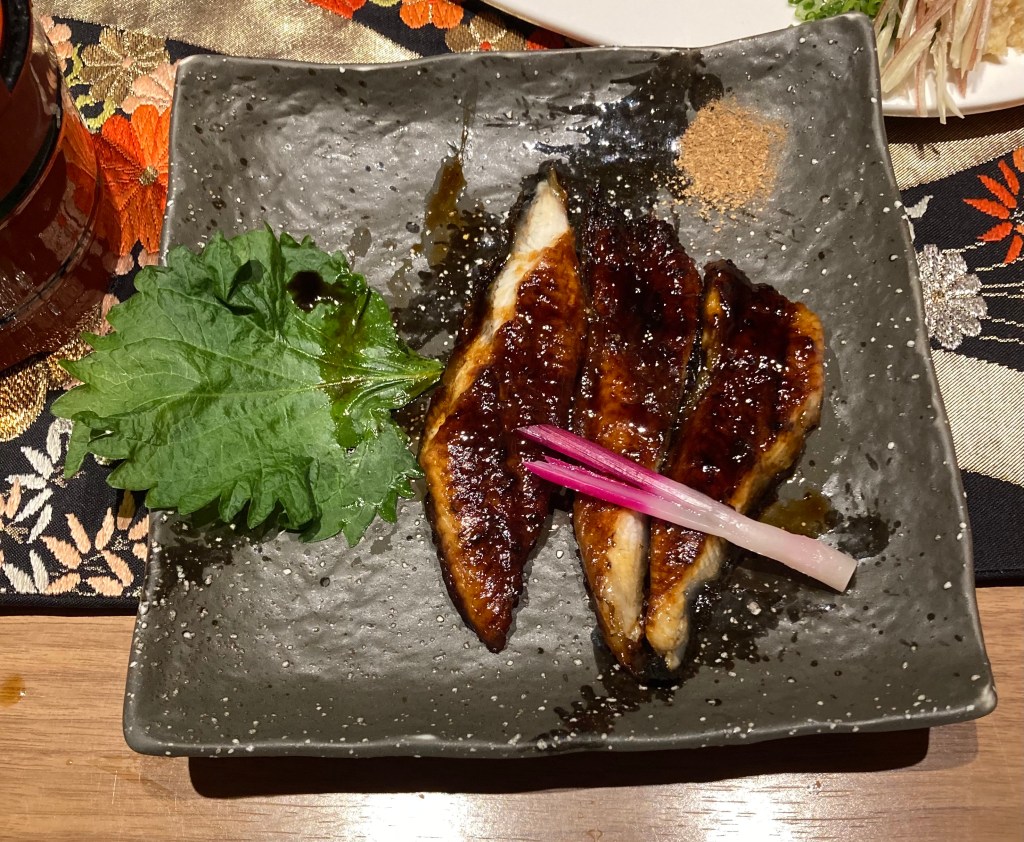
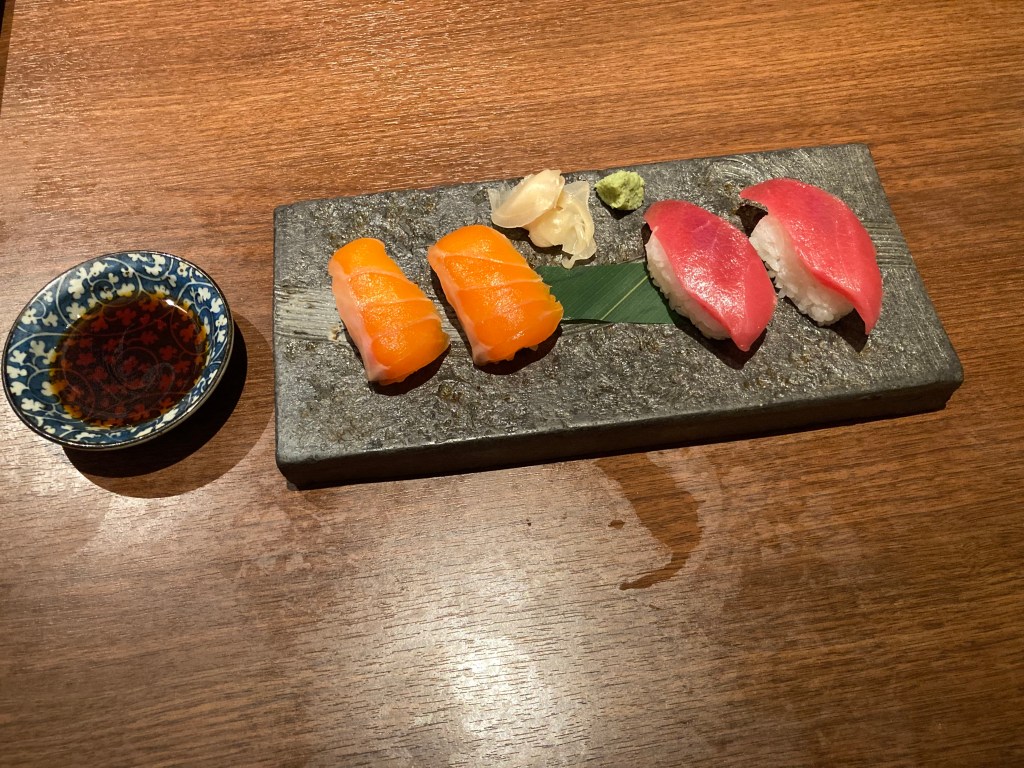
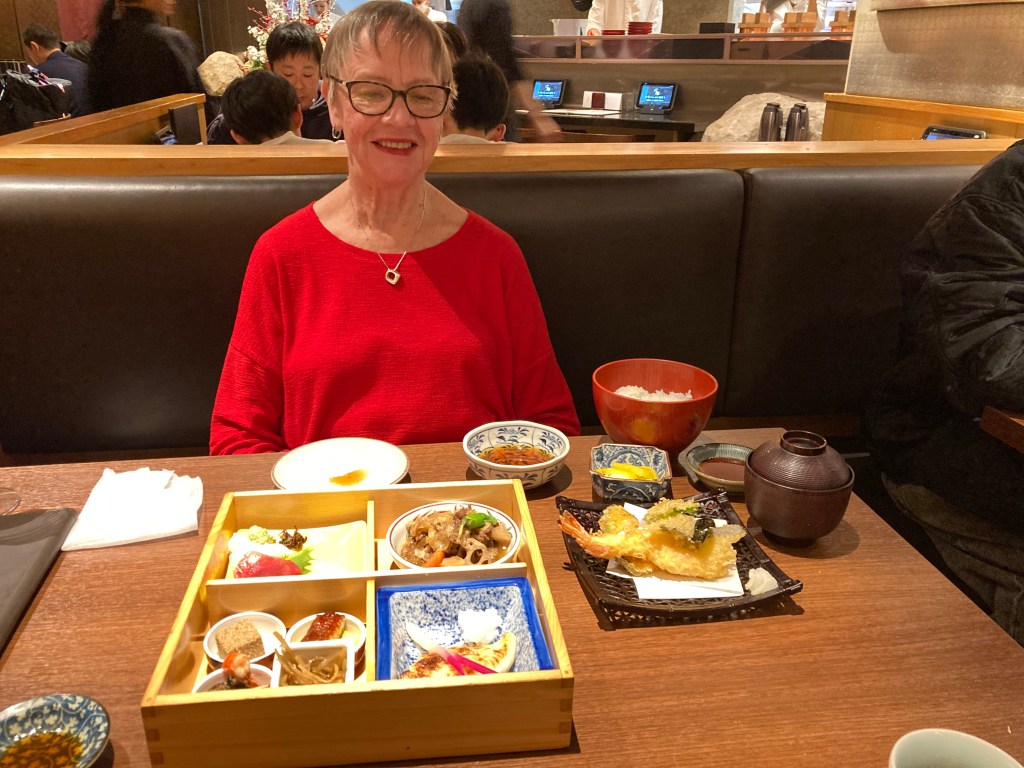
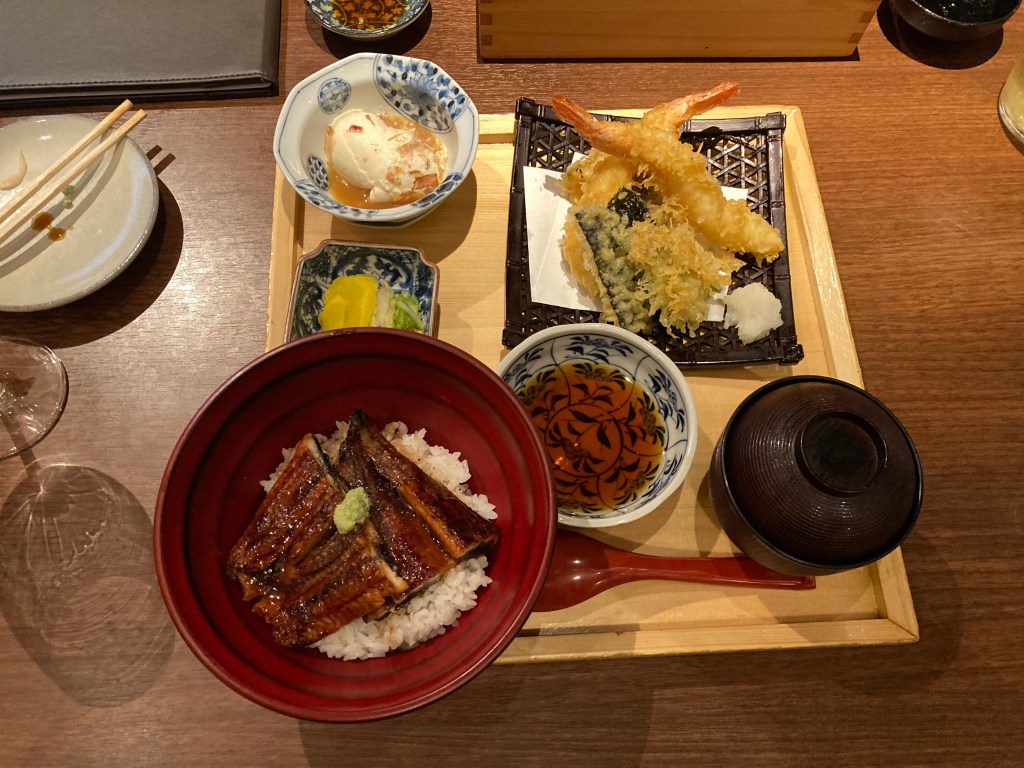
We chose Hyakuzen Restaurant, and it turned out to be an excellent decision. We each ordered a different bento-style set meal: I went for the Unagi Set with Tempura, while Maree enjoyed the Shokado Set, also with Tempura. We shared a plate of nigiri—tuna and salmon—and everything was beautifully prepared. Very oishikatta desu.
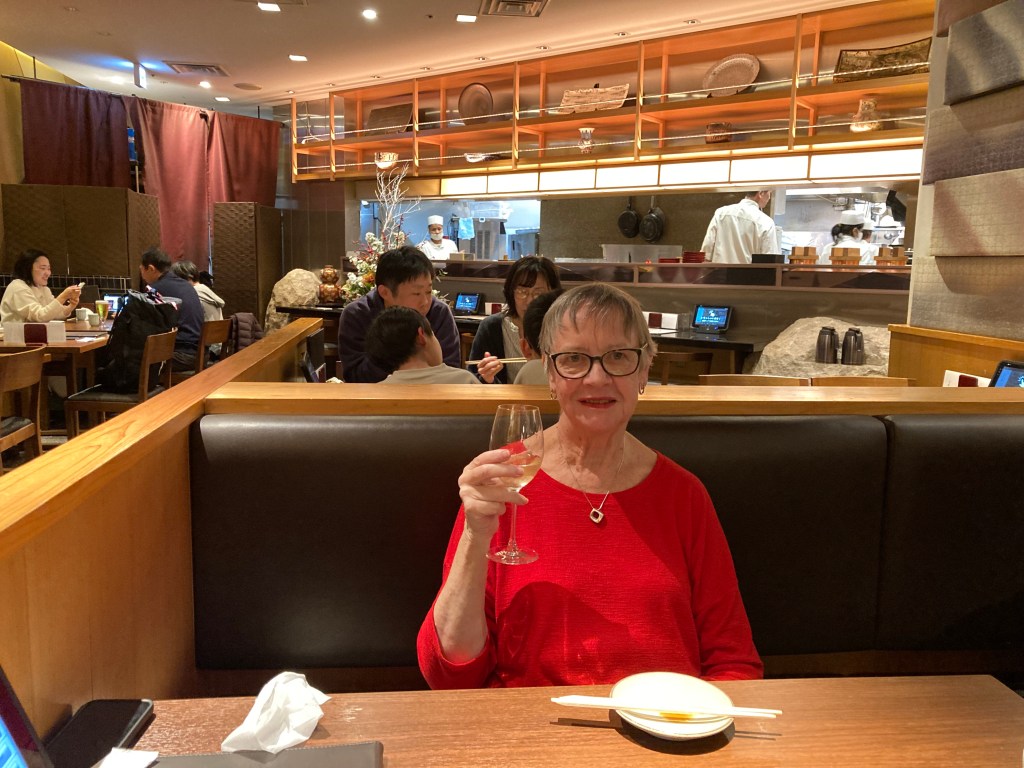
We truly had a wonderful Christmas dinner — plenty of laughter, beautifully prepared food, and a lovely sense of togetherness. We hope everyone reading this enjoyed a joyful Christmas Day of their own. Wishing you all a peaceful night.
Friday 26 December 2025 (Boxing Day)
This morning began with a brilliant blue sky, though the wind was strong. When we looked out the window, Mt Fuji was visible but wrapped in a thick shroud of cloud. It took us a moment to realise that the “cloud” wasn’t weather at all — it was the wind sweeping across the snow‑covered peak, lifting plumes of white into the air. With nothing else forming in the sky, it looked almost like steam rising from the summit.
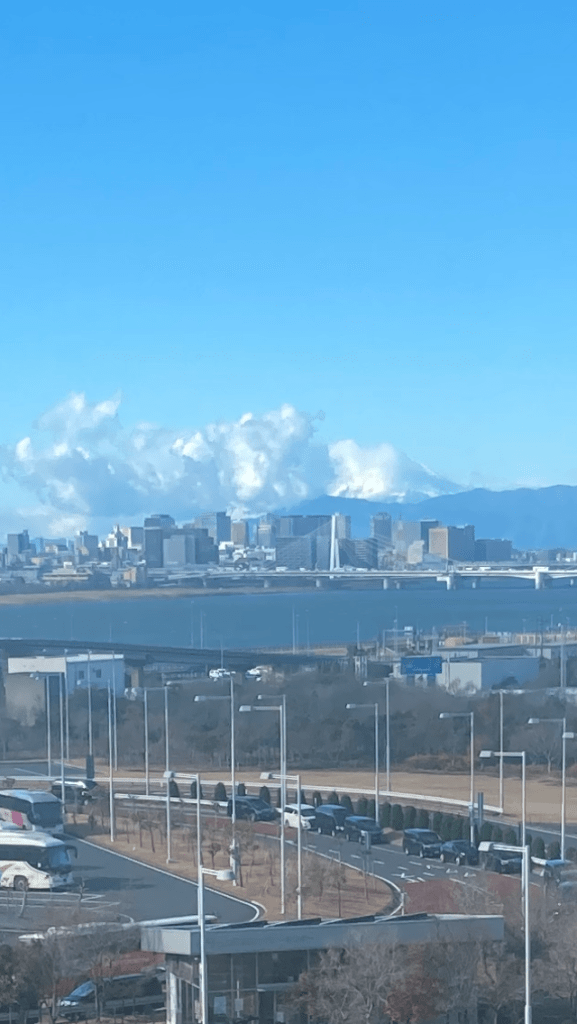
Today we made our way out to see the new fish market that replaced the historic Tsukiji site.
Toyosu itself sits on reclaimed land first developed in 1937. For decades it was an industrial zone filled with dockyards, power and gas plants, freight stations, and warehouses. That landscape remained largely unchanged until the early 1990s, when its proximity to central Tokyo made the area ripe for redevelopment. Since then, high‑rise apartments, office towers, and shopping complexes have transformed the skyline—many of which appear in our photos.
In 2001, Tokyo’s then‑governor, Shintarō Ishihara, selected the former gas plant site in Toyosu as the new home for the Tsukiji fish market. The decision sparked immediate controversy due to concerns about soil contamination. Despite the debate, plans moved ahead, with the relocation originally scheduled for November 2016 as part of preparations for the 2020 Tokyo Olympics. A smaller retail market was intended to remain in Tsukiji, preserving a portion of its long‑standing role.
However, on 31 August 2016, the move was abruptly postponed. Local shop owners around Tsukiji protested fiercely, fearing the loss of their livelihoods. After years of uncertainty, the wholesale market finally relocated on 11 October 2018. That day marked both the closure of the historic Tsukiji site, in operation since 1935, and the opening of the modern, expansive Toyosu Market.
By the time we’d navigated several train changes and climbed more stairs and escalators than either of us expected, Maree’s knee had begun to swell. With her clearly uncomfortable, I flagged down a taxi so we could head back to the hotel and let her rest. Before leaving, though, we paused to capture a few photos of the area.
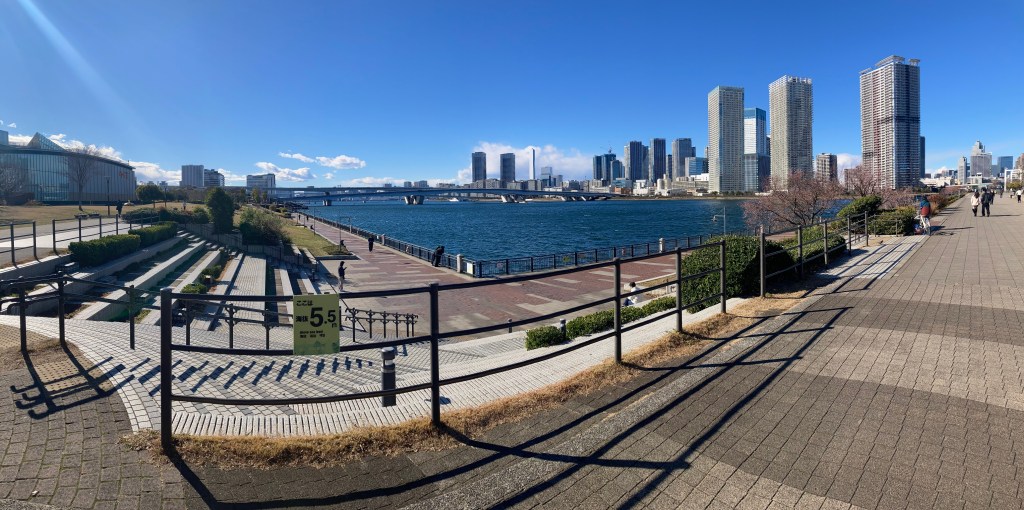
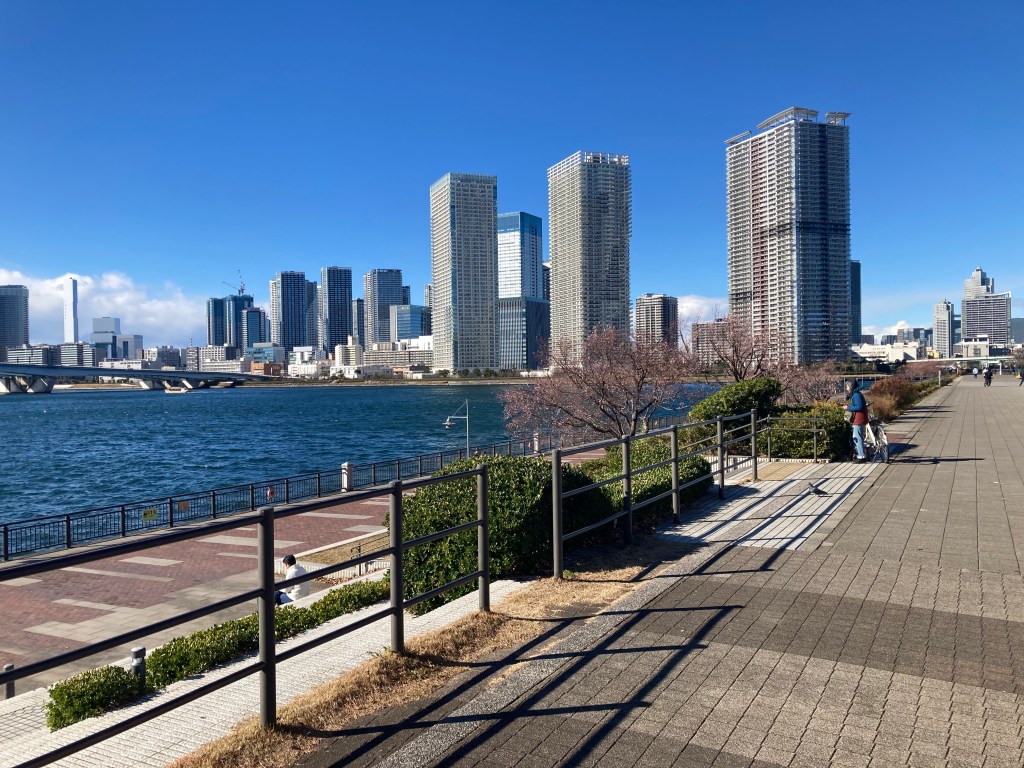
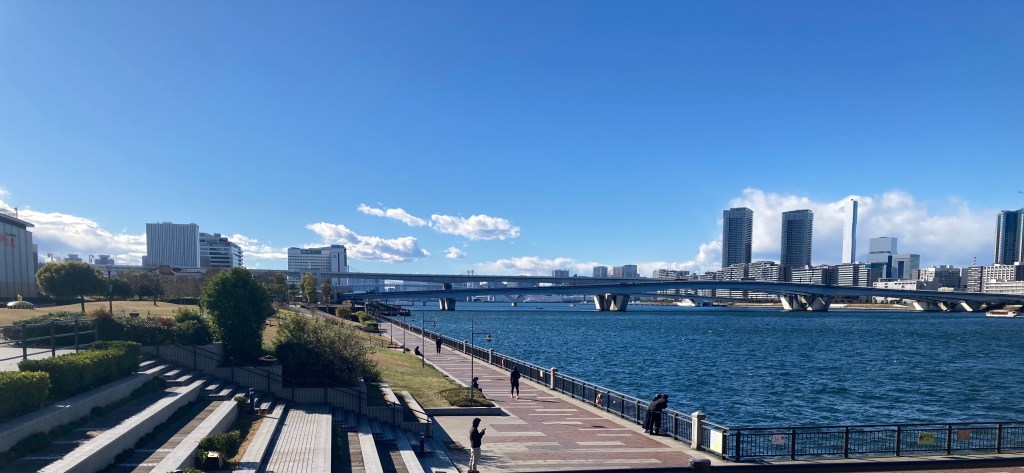
The taxi ride back to the hotel was quick, helped along by a driver who knew exactly how to avoid the worst of the traffic. Maree is now resting her knee and feeling a little better, though the swelling is still quite noticeable. She’s had enough of lying down and is keen to get out for a bit, so we’ll head to one of the Japanese restaurants in T3 again tonight. It keeps the walking to a minimum, the elevators make things easier, and after last night’s meal, we know the food will be excellent.
But before we left the room we took some photos of Mt Fuji as the sun was setting.
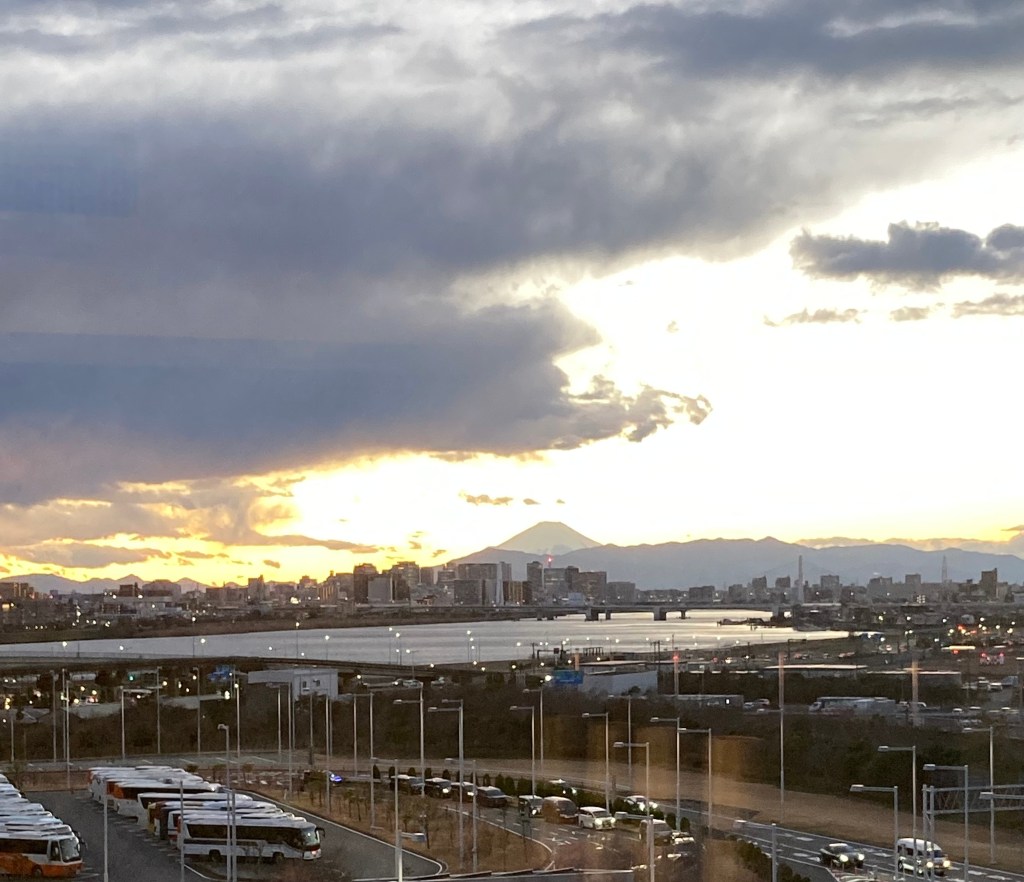
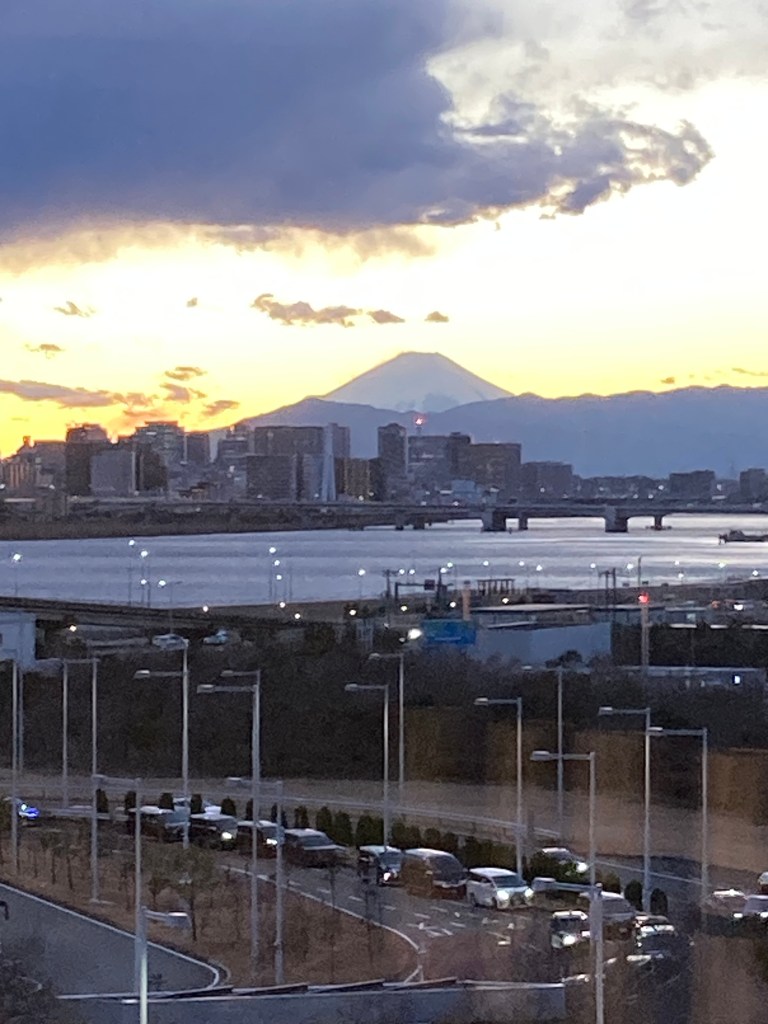
Dinner tonight was at a katsudon restaurant, simple comfort food done exceptionally well. The katsu itself—pork loin or fillet—comes coated in flour, egg, and panko before being fried to a golden, satisfying crunch. It’s served over warm Japanese short‑grain rice and blanketed with a rich curry sauce made from a classic roux, that lovely balance of sweet and savory you only get from Japanese curry.
A few pickles, often fukujinzuke, round out the plate. I always enjoy those bright, tangy bites, though Maree remains unconvinced.

Fukujinzuke is a popular Japanese pickle—a crisp, finely chopped mix of vegetables such as daikon, eggplant, lotus root, and cucumber, soaked in a sweet–savory blend of soy sauce, mirin, and sugar. It’s a classic companion to Japanese curry or plain rice, adding a bright, refreshing counterpoint in both taste and texture. Its name nods to the Seven Lucky Gods, a reference to the traditional use of seven different ingredients. Unlike fermented pickles, this one is simply marinated, and it’s often tinted red for its distinctive appearance.
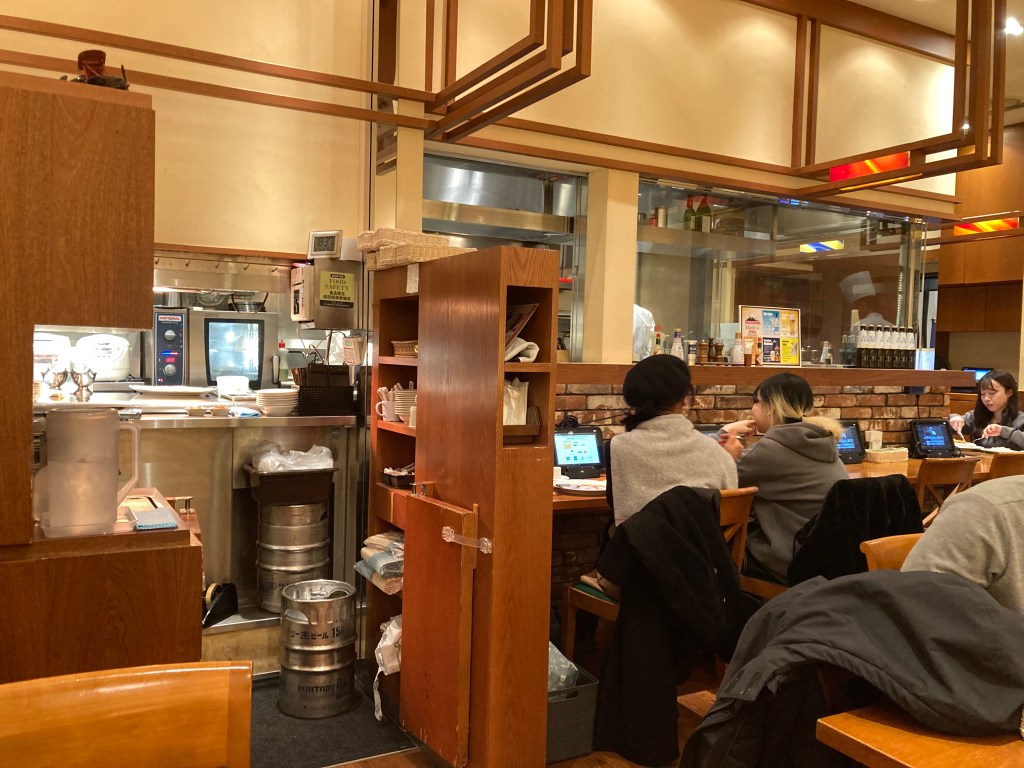
Once again, the food didn’t disappoint. The pork cutlet was beautifully tender and, for an airport restaurant, surprisingly well‑priced. We’re not sure what we’ll do tomorrow—our final day in Japan—but if Maree’s knee doesn’t improve (it’s very swollen), we’ll need to keep things low‑key. So, until tomorrow.
Saturday 27 December 2025
We woke this morning to an SMS from Qantas about our flight tomorrow:
We are pleased to confirm your Upgrade Reward request to Business on QF26 from HND to SYD on 28 Dec at 06:55. We look forward to welcoming you on board and thanks for flying Qantas.
Very welcome news. It means Maree will be able to stretch out on the lie‑flat bed during the ten‑hour flight, which should make things far more comfortable for her. I won’t pretend I’m not looking forward to the extra comfort as well.
We decided to stay put today—walking is simply too difficult for Maree—but we will meet Alex and Laorita for a farewell dinner this evening. After that, it’s an early night. We need to drop our bags at the Qantas counter at 04:00. The flight departs at 06:55 and arrives in Sydney at 19:50.
Tonight we returned to the same restaurant as last night. The four of us enjoyed a wonderful final Japanese meal together. We’ll all miss the food we’ve indulged in over these three weeks.
Time for bed now—tomorrow starts very early. Goodnight all.
Sunday 28 December 2025
Today we flew to Sydney, marking the end of our three‑week holiday in Japan.
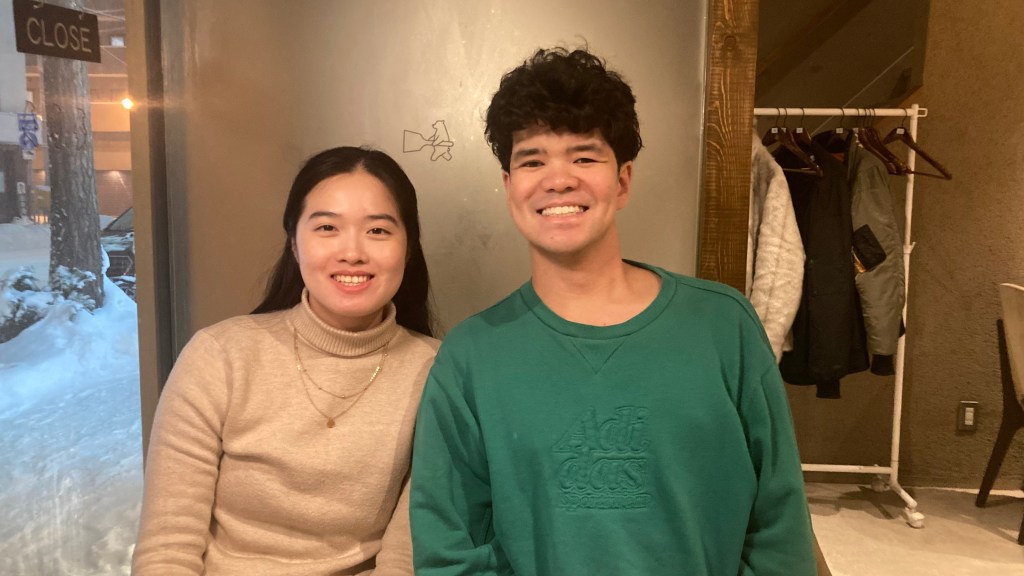
A final snapshot: Maree, Laorita, and Alex waiting for our flight—Alex completely absorbed in his game, as always.
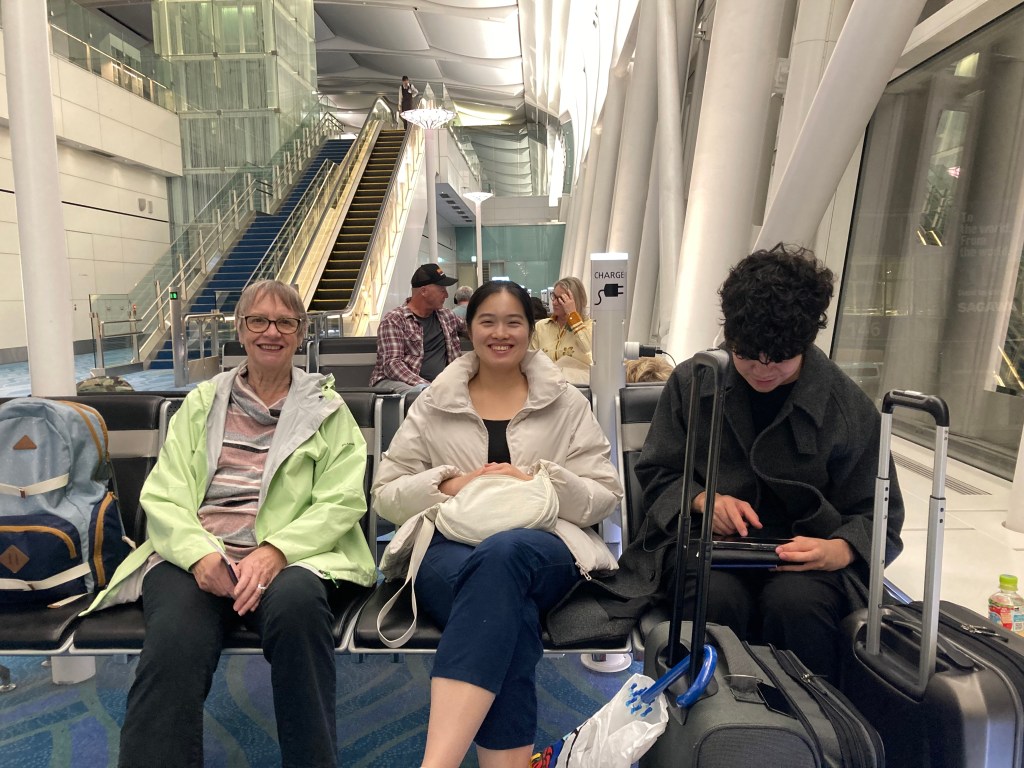
Our Business Class flight was wonderfully relaxing, and the Qantas catering was excellent as always. Their international meals have never let me down, and this flight was no exception.
Breakfast was a highlight: banana pancakes topped with a blueberry sauce—light, flavourful, and a refreshing way to start the day. Lunch began with tuna sashimi for me and chicken yakitori for Maree. Both dishes were beautifully prepared, with the sashimi especially fresh and delicate. We followed that with beef ribs for our main course and finished with a rich chocolate mousse. Every course was consistently enjoyable and made the journey feel even more comfortable.
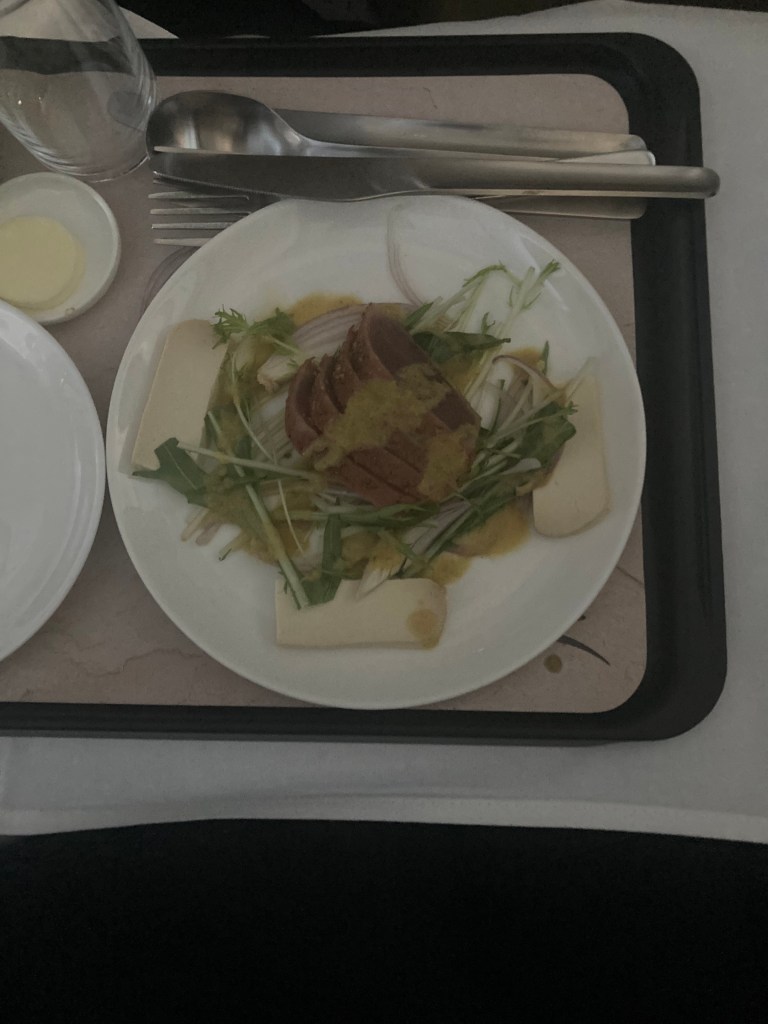
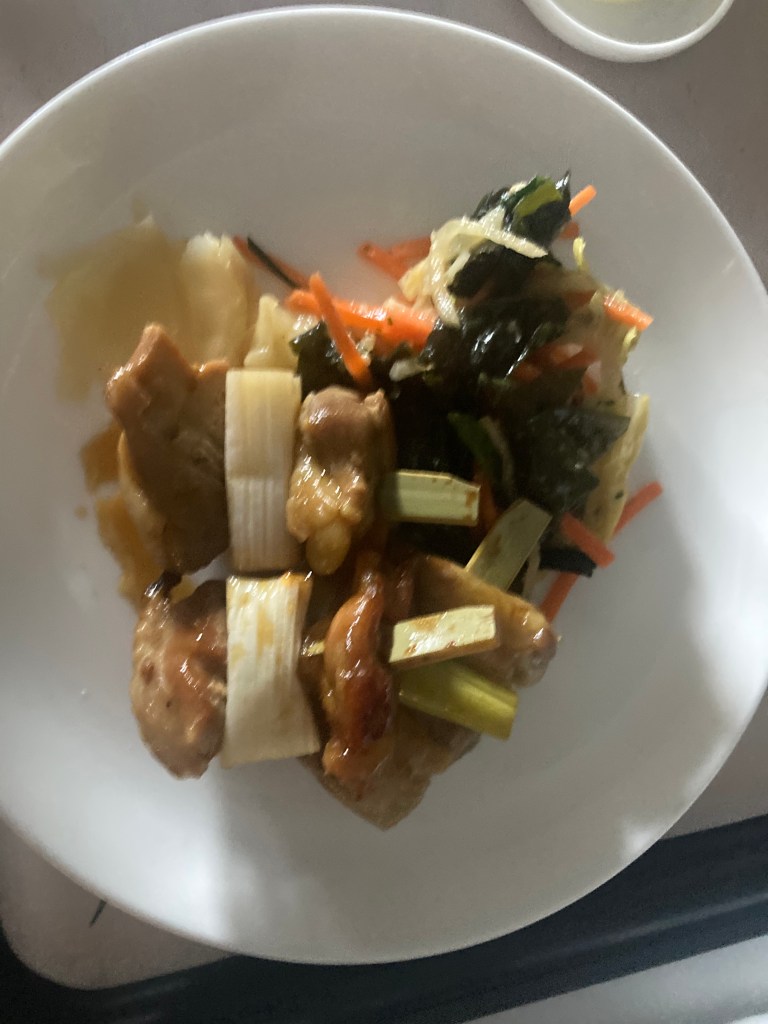
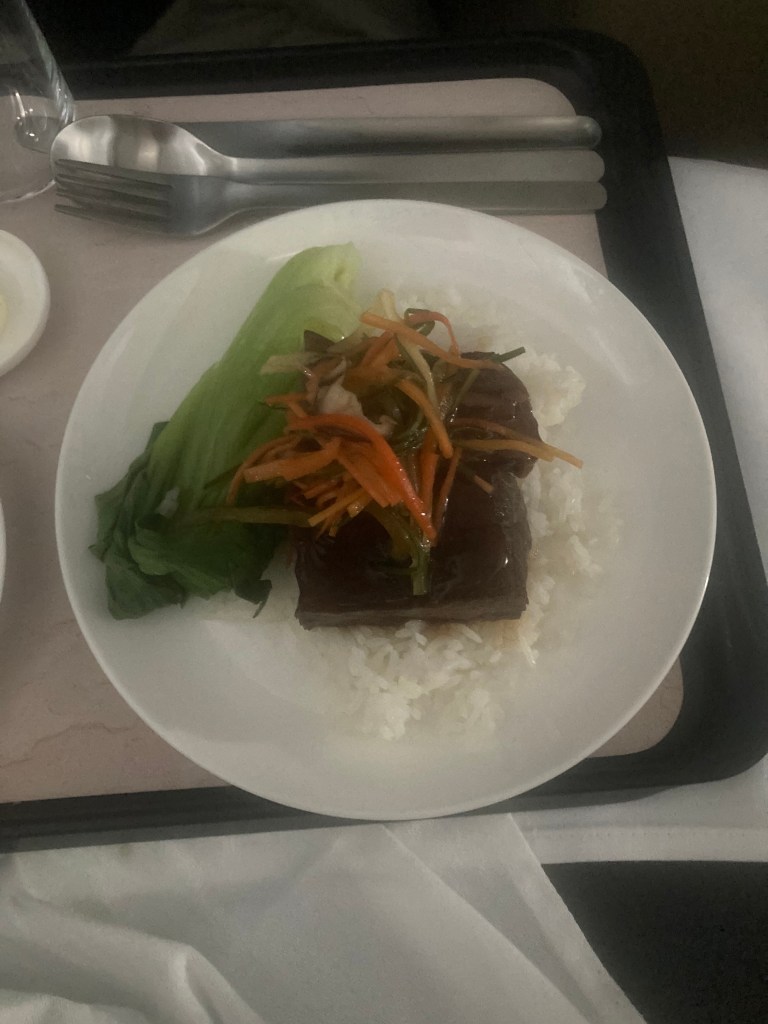
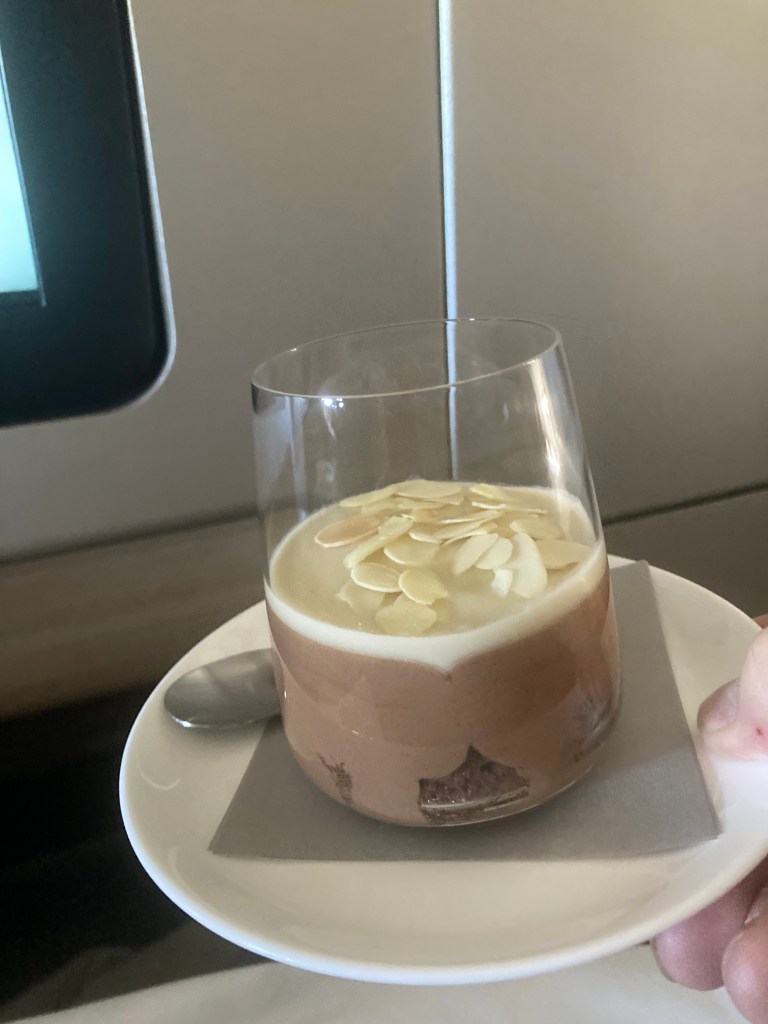
Tonight, Maree and I are settling in at the Rydges Hotel by Sydney Airport, ready for an early start tomorrow when we’ll head back to Canberra on the Murrays bus.
Thank you for travelling with us through these three weeks in Japan. So much of this journey has been about small, shared moments—choosing the next stop over morning coffee, finding comfort in familiar routines even in unfamiliar cities, and adjusting our plans with the kind of ease that only comes from travelling side by side. We hope that following along has given you a feel for the rhythm of our days — the things that caught our interest, the moments that made us smile, and the way we moved through the trip together.
 Steve and Maree Ringrose
Leave a comment